 Add to Chrome
 Add to Firefox
 Add to Edge
Knowledge- and Gradient-Guided Reinforcement Learning for Parametrized Action Markov Decision Processes
Jul 14, 2026
In this paper, we study Reinforcement Learning in Parametrized Action Markov Decision Processes (PAMDP), where each decision consists of a symbolic action and numerical parameters. In such settings Reinforcement Learning algorithms typically determine parameters with one-shot estimators, which makes their training sample inefficient. Though in most PAMDP environments explicit but incomplete knowledge (e.g., rules, safety constraints, or expert heuristics) is available, it is rarely directly used to increase the sample-efficiency of training Reinforcement Learning agents. We step into this gap and propose our novel Neuro-Symbolic Knowledge- and Gradient-Guided Reinforcement Learning (KGRL) algorithm. KGRL uses domain knowledge in a Datalog knowledge base to derive the set of applicable actions and feasible parameters for a given state. This allows it to prune non-applicable actions from the decision-space and constrain the parameter spaces of the remaining actions. We then use a gradient-based parameter refinement loop to estimate the optimal parameters during training and deployment of the agent. By recording activated rules along the trajectory, KGRL additionally provides local procedural explanations on the pruning of actions and constraining of parameters. Overall, KGRL guides the agent's exploration and deployment toward feasible and constraint-aware decisions, while increasing sample efficiency during training. KGRL outperforms state-of-the-art RL baselines for PAMDPs in both, sample efficiency and episodic return.

AAAI Workshop on AI Planning for Cyber-Physical Systems -- CAIPI24
Oct 08, 2024The workshop 'AI-based Planning for Cyber-Physical Systems', which took place on February 26, 2024, as part of the 38th Annual AAAI Conference on Artificial Intelligence in Vancouver, Canada, brought together researchers to discuss recent advances in AI planning methods for Cyber-Physical Systems (CPS). CPS pose a major challenge due to their complexity and data-intensive nature, which often exceeds the capabilities of traditional planning algorithms. The workshop highlighted new approaches such as neuro-symbolic architectures, large language models (LLMs), deep reinforcement learning and advances in symbolic planning. These techniques are promising when it comes to managing the complexity of CPS and have potential for real-world applications.
Diagnosis driven Anomaly Detection for CPS
Nov 27, 2023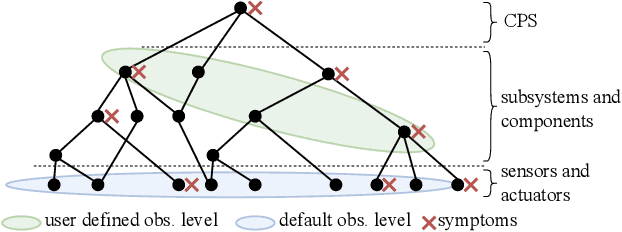
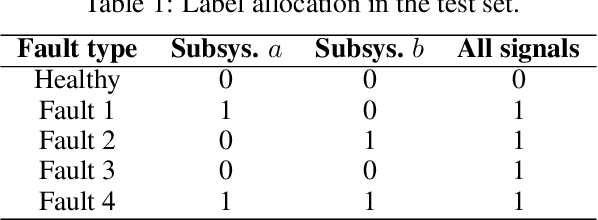
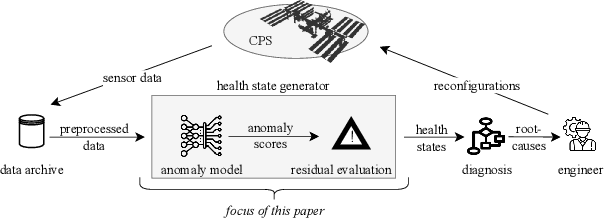
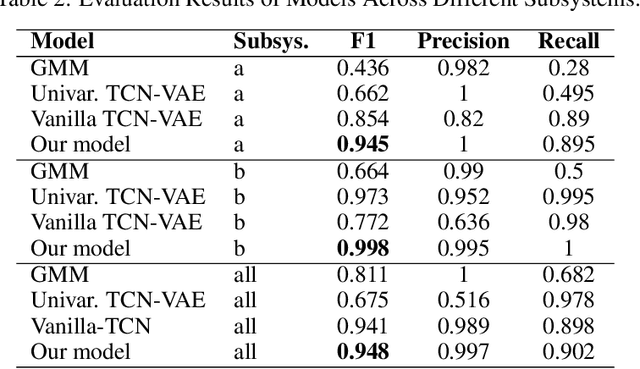
In Cyber-Physical Systems (CPS) research, anomaly detection (detecting abnormal behavior) and diagnosis (identifying the underlying root cause) are often treated as distinct, isolated tasks. However, diagnosis algorithms require symptoms, i.e. temporally and spatially isolated anomalies, as input. Thus, anomaly detection and diagnosis must be developed together to provide a holistic solution for diagnosis in CPS. We therefore propose a method for utilizing deep learning-based anomaly detection to generate inputs for Consistency-Based Diagnosis (CBD). We evaluate our approach on a simulated and a real-world CPS dataset, where our model demonstrates strong performance relative to other state-of-the-art models.