 Add to Chrome
 Add to Firefox
 Add to Edge
Toward Secure and Compliant AI: Organizational Standards and Protocols for NLP Model Lifecycle Management
Dec 26, 2025
Natural Language Processing (NLP) systems are increasingly used in sensitive domains such as healthcare, finance, and government, where they handle large volumes of personal and regulated data. However, these systems introduce distinct risks related to security, privacy, and regulatory compliance that are not fully addressed by existing AI governance frameworks. This paper introduces the Secure and Compliant NLP Lifecycle Management Framework (SC-NLP-LMF), a comprehensive six-phase model designed to ensure the secure operation of NLP systems from development to retirement. The framework, developed through a systematic PRISMA-based review of 45 peer-reviewed and regulatory sources, aligns with leading standards, including NIST AI RMF, ISO/IEC 42001:2023, the EU AI Act, and MITRE ATLAS. It integrates established methods for bias detection, privacy protection (differential privacy, federated learning), secure deployment, explainability, and secure model decommissioning. A healthcare case study illustrates how SC-NLP-LMF detects emerging terminology drift (e.g., COVID-related language) and guides compliant model updates. The framework offers organizations a practical, lifecycle-wide structure for developing, deploying, and maintaining secure and accountable NLP systems in high-risk environments.

Securing Agentic AI Systems -- A Multilayer Security Framework
Dec 19, 2025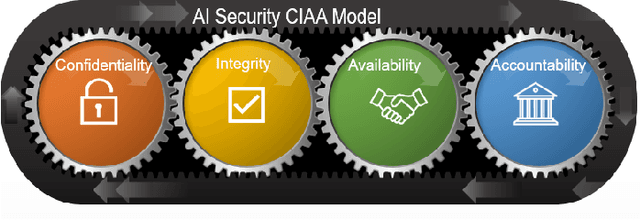
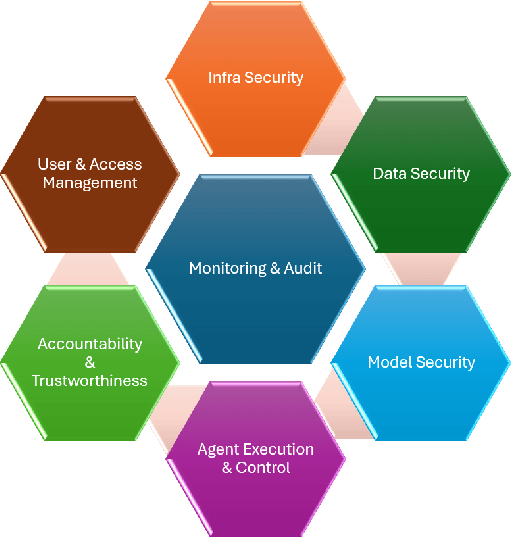
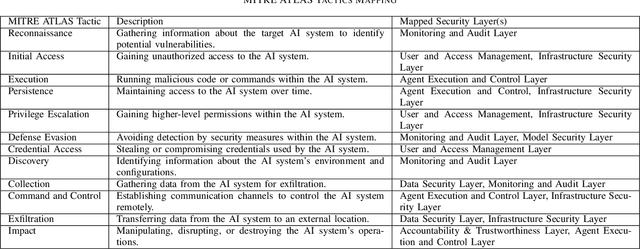
Securing Agentic Artificial Intelligence (AI) systems requires addressing the complex cyber risks introduced by autonomous, decision-making, and adaptive behaviors. Agentic AI systems are increasingly deployed across industries, organizations, and critical sectors such as cybersecurity, finance, and healthcare. However, their autonomy introduces unique security challenges, including unauthorized actions, adversarial manipulation, and dynamic environmental interactions. Existing AI security frameworks do not adequately address these challenges or the unique nuances of agentic AI. This research develops a lifecycle-aware security framework specifically designed for agentic AI systems using the Design Science Research (DSR) methodology. The paper introduces MAAIS, an agentic security framework, and the agentic AI CIAA (Confidentiality, Integrity, Availability, and Accountability) concept. MAAIS integrates multiple defense layers to maintain CIAA across the AI lifecycle. Framework validation is conducted by mapping with the established MITRE ATLAS (Adversarial Threat Landscape for Artificial-Intelligence Systems) AI tactics. The study contributes a structured, standardized, and framework-based approach for the secure deployment and governance of agentic AI in enterprise environments. This framework is intended for enterprise CISOs, security, AI platform, and engineering teams and offers a detailed step-by-step approach to securing agentic AI workloads.
CEKER: A Generalizable LLM Framework for Literature Analysis with a Case Study in Unikernel Security
Dec 14, 2024Literature reviews are a critical component of formulating and justifying new research, but are a manual and often time-consuming process. This research introduces a novel, generalizable approach to literature analysis called CEKER which uses a three-step process to streamline the collection of literature, the extraction of key insights, and the summarized analysis of key trends and gaps. Leveraging Large Language Models (LLMs), this methodology represents a significant shift from traditional manual literature reviews, offering a scalable, flexible, and repeatable approach that can be applied across diverse research domains. A case study on unikernel security illustrates CEKER's ability to generate novel insights validated against previous manual methods. CEKER's analysis highlighted reduced attack surface as the most prominent theme. Key security gaps included the absence of Address Space Layout Randomization, missing debugging tools, and limited entropy generation, all of which represent important challenges to unikernel security. The study also revealed a reliance on hypervisors as a potential attack vector and emphasized the need for dynamic security adjustments to address real-time threats.