 Add to Chrome
 Add to Firefox
 Add to Edge
A Distribution Mapping Approach to Counterfactually Fair Reinforcement Learning
Aug 09, 2026
Reinforcement learning (RL) seeks to optimize sequential decisions to maximize population-level benefits over time. However, when deployed in high-stakes settings such as healthcare, RL decisions might systematically restrict some subpopulation's access to valuable services in a manner contrary to the values and goals of stakeholders. Counterfactual fairness (CF) offers a promising framework to address this problem based on causal reasoning. This paper develops a data preprocessing algorithm that, when used in tandem with policy learning, enables CF in RL. Our algorithm relies on a novel quantile distribution mapping method for sequentially estimating the counterfactual states and rewards in the data preprocessing step, subsuming common additivity assumptions used for counterfactual prediction as a special case. We theoretically prove that the per-step level of counterfactual unfairness and infinite-horizon suboptimality gap can be bounded under mild regularity conditions. We also empirically test our algorithm in numerical experiments as well as in application to a real-world interventional digital health dataset.

PyCFRL: A Python library for counterfactually fair offline reinforcement learning via sequential data preprocessing
Oct 08, 2025Reinforcement learning (RL) aims to learn and evaluate a sequential decision rule, often referred to as a "policy", that maximizes the population-level benefit in an environment across possibly infinitely many time steps. However, the sequential decisions made by an RL algorithm, while optimized to maximize overall population benefits, may disadvantage certain individuals who are in minority or socioeconomically disadvantaged groups. To address this problem, we introduce PyCFRL, a Python library for ensuring counterfactual fairness in offline RL. PyCFRL implements a novel data preprocessing algorithm for learning counterfactually fair RL policies from offline datasets and provides tools to evaluate the values and counterfactual unfairness levels of RL policies. We describe the high-level functionalities of PyCFRL and demonstrate one of its major use cases through a data example. The library is publicly available on PyPI and Github (https://github.com/JianhanZhang/PyCFRL), and detailed tutorials can be found in the PyCFRL documentation (https://pycfrl-documentation.netlify.app).
Counterfactually Fair Reinforcement Learning via Sequential Data Preprocessing
Jan 14, 2025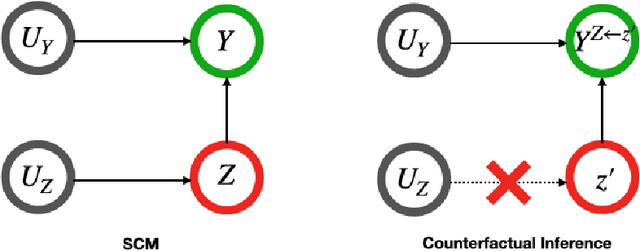
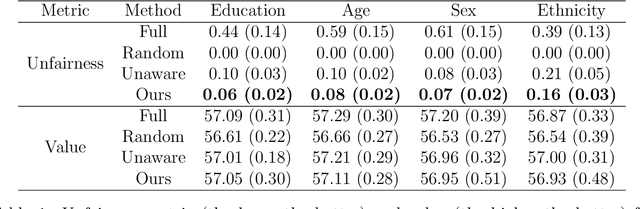
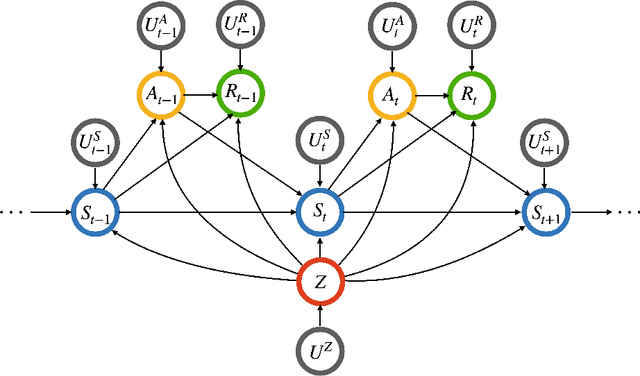

When applied in healthcare, reinforcement learning (RL) seeks to dynamically match the right interventions to subjects to maximize population benefit. However, the learned policy may disproportionately allocate efficacious actions to one subpopulation, creating or exacerbating disparities in other socioeconomically-disadvantaged subgroups. These biases tend to occur in multi-stage decision making and can be self-perpetuating, which if unaccounted for could cause serious unintended consequences that limit access to care or treatment benefit. Counterfactual fairness (CF) offers a promising statistical tool grounded in causal inference to formulate and study fairness. In this paper, we propose a general framework for fair sequential decision making. We theoretically characterize the optimal CF policy and prove its stationarity, which greatly simplifies the search for optimal CF policies by leveraging existing RL algorithms. The theory also motivates a sequential data preprocessing algorithm to achieve CF decision making under an additive noise assumption. We prove and then validate our policy learning approach in controlling unfairness and attaining optimal value through simulations. Analysis of a digital health dataset designed to reduce opioid misuse shows that our proposal greatly enhances fair access to counseling.
Investigating Gender Fairness in Machine Learning-driven Personalized Care for Chronic Pain
Feb 29, 2024This study investigates gender fairness in personalized pain care recommendations using machine learning algorithms. Leveraging a contextual bandits framework, personalized recommendations are formulated and evaluated using LinUCB algorithm on a dataset comprising interactions with $164$ patients across $10$ sessions each. Results indicate that while adjustments to algorithm parameters influence the quality of pain care recommendations, this impact remains consistent across genders. However, when certain patient information, such as self-reported pain measurements, is absent, the quality of pain care recommendations for women is notably inferior to that for men.