 Add to Chrome
 Add to Firefox
 Add to Edge
ECLIPSE: An Evolutionary Computation Library for Instrumentation Prototyping in Scientific Engineering
Jan 08, 2026
Designing scientific instrumentation often requires exploring large, highly constrained design spaces using computationally expensive physics simulations. These simulators pose substantial challenges for integrating evolutionary computation (EC) into scientific design workflows. Evolutionary computation typically requires numerous design evaluations, making the integration of slow, low-throughput simulators particularly challenging, as they are optimized for accuracy and ease of use rather than throughput. We present ECLIPSE, an evolutionary computation framework built to interface directly with complex, domain-specific simulation tools while supporting flexible geometric and parametric representations of scientific hardware. ECLIPSE provides a modular architecture consisting of (1) Individuals, which encode hardware designs using domain-aware, physically constrained representations; (2) Evaluators, which prepare simulation inputs, invoke external simulators, and translate the simulator's outputs into fitness measures; and (3) Evolvers, which implement EC algorithms suitable for high-cost, limited-throughput environments. We demonstrate the utility of ECLIPSE across several active space-science applications, including evolved 3D antennas and spacecraft geometries optimized for drag reduction in very low Earth orbit. We further discuss the practical challenges encountered when coupling EC with scientific simulation workflows, including interoperability constraints, parallelization limits, and extreme evaluation costs, and outline ongoing efforts to combat these challenges. ECLIPSE enables interdisciplinary teams of physicists, engineers, and EC researchers to collaboratively explore unconventional designs for scientific hardware while leveraging existing domain-specific simulation software.

A Scalable Trie Building Algorithm for High-Throughput Phyloanalysis of Wafer-Scale Digital Evolution Experiments
Aug 20, 2025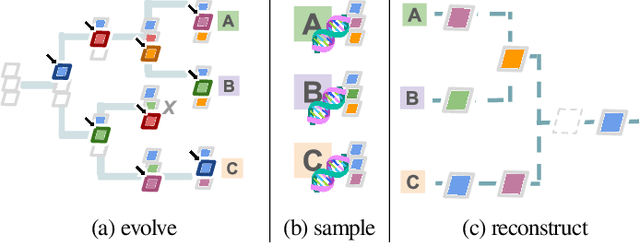
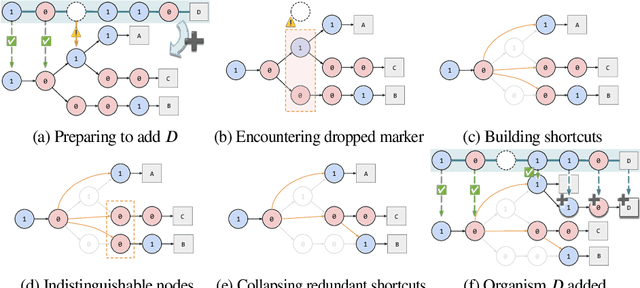
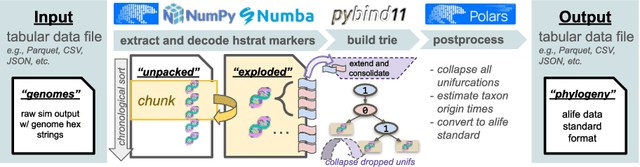
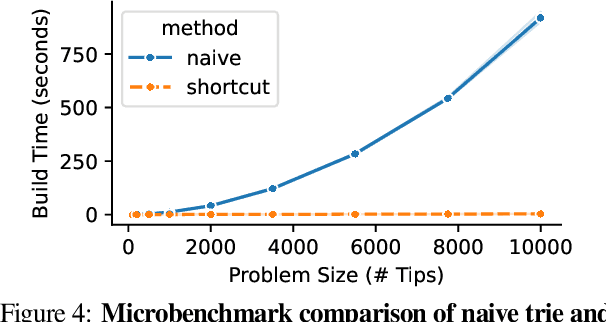
Agent-based simulation platforms play a key role in enabling fast-to-run evolution experiments that can be precisely controlled and observed in detail. Availability of high-resolution snapshots of lineage ancestries from digital experiments, in particular, is key to investigations of evolvability and open-ended evolution, as well as in providing a validation testbed for bioinformatics method development. Ongoing advances in AI/ML hardware accelerator devices, such as the 850,000-processor Cerebras Wafer-Scale Engine (WSE), are poised to broaden the scope of evolutionary questions that can be investigated in silico. However, constraints in memory capacity and locality characteristic of these systems introduce difficulties in exhaustively tracking phylogenies at runtime. To overcome these challenges, recent work on hereditary stratigraphy algorithms has developed space-efficient genetic markers to facilitate fully decentralized estimation of relatedness among digital organisms. However, in existing work, compute time to reconstruct phylogenies from these genetic markers has proven a limiting factor in achieving large-scale phyloanalyses. Here, we detail an improved trie-building algorithm designed to produce reconstructions equivalent to existing approaches. For modestly-sized 10,000-tip trees, the proposed approach achieves a 300-fold speedup versus existing state-of-the-art. Finally, using 1 billion genome datasets drawn from WSE simulations encompassing 954 trillion replication events, we report a pair of large-scale phylogeny reconstruction trials, achieving end-to-end reconstruction times of 2.6 and 2.9 hours. In substantially improving reconstruction scaling and throughput, presented work establishes a key foundation to enable powerful high-throughput phyloanalysis techniques in large-scale digital evolution experiments.