 Add to Chrome
 Add to Firefox
 Add to Edge
LLMs for Analog Circuit Design Continuum (ACDC)
Dec 09, 2025
Large Language Models (LLMs) and transformer architectures have shown impressive reasoning and generation capabilities across diverse natural language tasks. However, their reliability and robustness in real-world engineering domains remain largely unexplored, limiting their practical utility in human-centric workflows. In this work, we investigate the applicability and consistency of LLMs for analog circuit design -- a task requiring domain-specific reasoning, adherence to physical constraints, and structured representations -- focusing on AI-assisted design where humans remain in the loop. We study how different data representations influence model behavior and compare smaller models (e.g., T5, GPT-2) with larger foundation models (e.g., Mistral-7B, GPT-oss-20B) under varying training conditions. Our results highlight key reliability challenges, including sensitivity to data format, instability in generated designs, and limited generalization to unseen circuit configurations. These findings provide early evidence on the limits and potential of LLMs as tools to enhance human capabilities in complex engineering tasks, offering insights into designing reliable, deployable foundation models for structured, real-world applications.

Dictionary Learning with Accumulator Neurons
May 30, 2022
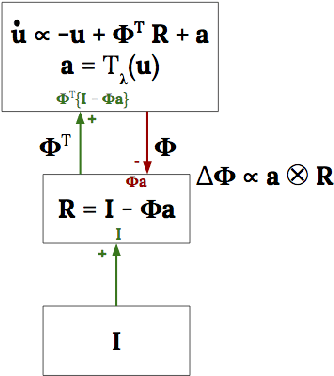
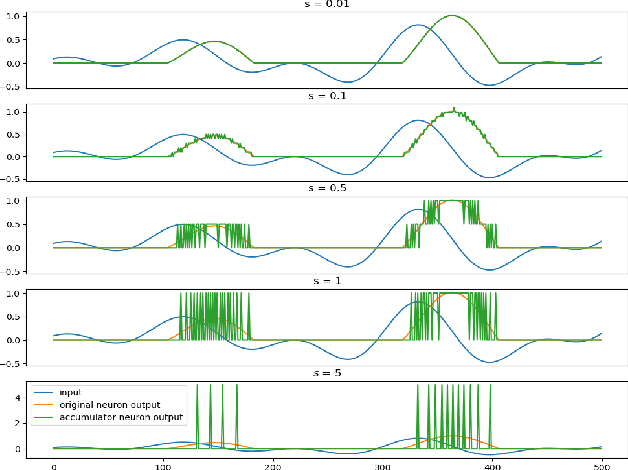
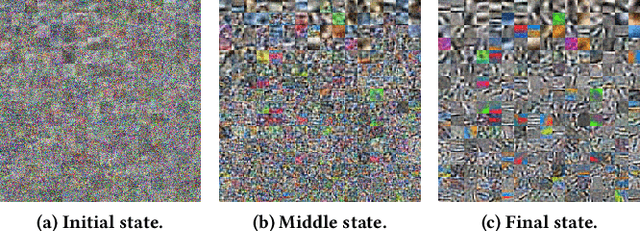
The Locally Competitive Algorithm (LCA) uses local competition between non-spiking leaky integrator neurons to infer sparse representations, allowing for potentially real-time execution on massively parallel neuromorphic architectures such as Intel's Loihi processor. Here, we focus on the problem of inferring sparse representations from streaming video using dictionaries of spatiotemporal features optimized in an unsupervised manner for sparse reconstruction. Non-spiking LCA has previously been used to achieve unsupervised learning of spatiotemporal dictionaries composed of convolutional kernels from raw, unlabeled video. We demonstrate how unsupervised dictionary learning with spiking LCA (\hbox{S-LCA}) can be efficiently implemented using accumulator neurons, which combine a conventional leaky-integrate-and-fire (\hbox{LIF}) spike generator with an additional state variable that is used to minimize the difference between the integrated input and the spiking output. We demonstrate dictionary learning across a wide range of dynamical regimes, from graded to intermittent spiking, for inferring sparse representations of both static images drawn from the CIFAR database as well as video frames captured from a DVS camera. On a classification task that requires identification of the suite from a deck of cards being rapidly flipped through as viewed by a DVS camera, we find essentially no degradation in performance as the LCA model used to infer sparse spatiotemporal representations migrates from graded to spiking. We conclude that accumulator neurons are likely to provide a powerful enabling component of future neuromorphic hardware for implementing online unsupervised learning of spatiotemporal dictionaries optimized for sparse reconstruction of streaming video from event based DVS cameras.
The Selectivity and Competition of the Mind's Eye in Visual Perception
Nov 23, 2020
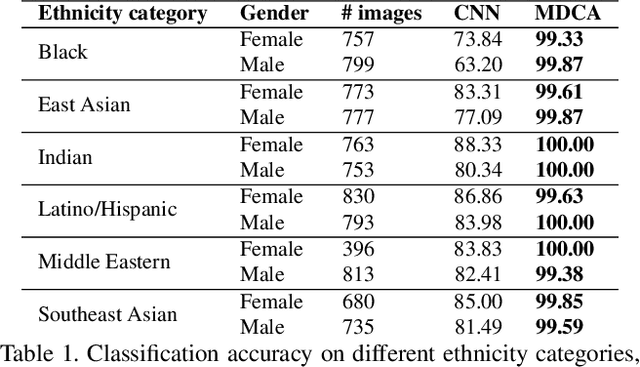
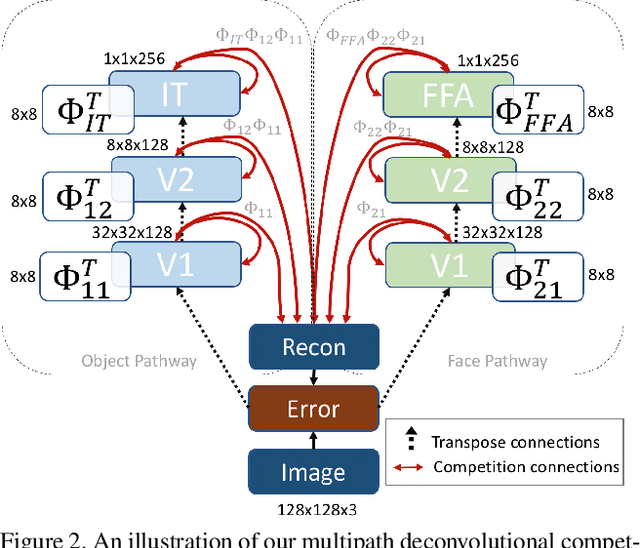
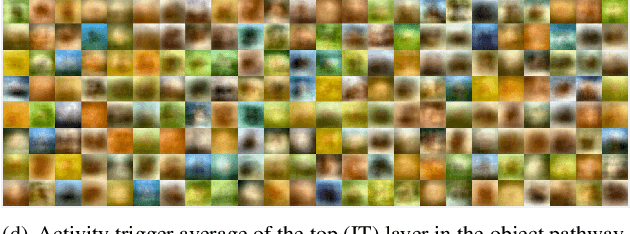
Research has shown that neurons within the brain are selective to certain stimuli. For example, the fusiform face area (FFA) region is known by neuroscientists to selectively activate when people see faces over non-face objects. However, the mechanisms by which the primary visual system directs information to the correct higher levels of the brain are currently unknown. In our work, we advance the understanding of the neural mechanisms of perception by creating a novel computational model that incorporates lateral and top down feedback in the form of hierarchical competition. We show that these elements can help explain the information flow and selectivity of high level areas within the brain. Additionally, we present both quantitative and qualitative results that demonstrate consistency with general themes and specific responses observed in the visual system. Finally, we show that our generative framework enables a wide range of applications in computer vision, including overcoming issues of bias that have been discovered in standard deep learning models.