 Add to Chrome
 Add to Firefox
 Add to Edge
AOSpec: Action and Observation Co-Speculation for Low-Latency Agent Serving
Aug 01, 2026
Large language model agents increasingly act through stateful tools, yet model generation and environment execution remain serialized at every step. As decoding accelerates, tool execution becomes a growing bottleneck. Existing action- or observation-only speculation leaves much of this latency exposed: value is concentrated in a few slow calls, some outcomes emerge only through execution, and longer lookahead typically requires an increasingly unlikely chain of action predictions. We present AOSpec, a lossless framework that co-speculates actions and observations across the full agent-environment loop. Expected Value Decoding (EVD) directs observation speculation toward outcomes with the greatest expected latency benefit, optimizing expected time hidden rather than hit rate. For outcomes only execution can reveal, AOSpec launches latency-critical target actions in isolated forks that contain their effects, while Joint Action-State Verification (JASV) verifies both the action and its origin state against committed execution before reuse. JASV recasts long-horizon action dependency from full-chain prediction into target action-state verification, breaking the lookahead--accuracy tradeoff and unlocking long-range overlap without sacrificing serial semantics. Across Terminal-Bench serving settings spanning four harnesses, five actor models, and five serving speeds, AOSpec outperforms every practical baseline, reducing mean end-to-end latency by 11.8-32.5% and p99 latency by up to 42.8%. Its gains increase as decoding accelerates, and its observation model transfers from Terminal-Bench to SWE-bench Verified without retraining.

ExclaveFL: Providing Transparency to Federated Learning using Exclaves
Dec 13, 2024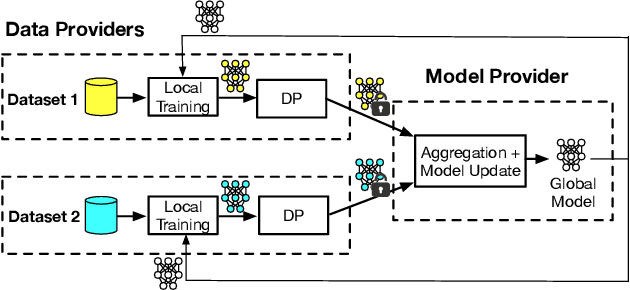

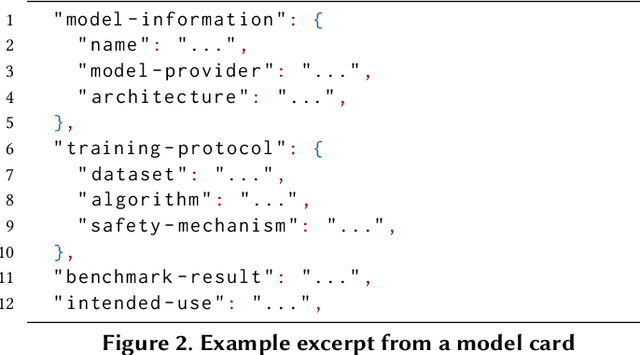
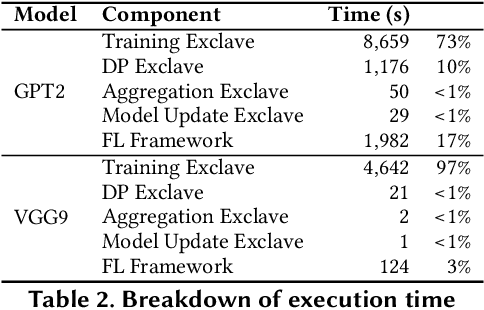
In federated learning (FL), data providers jointly train a model without disclosing their training data. Despite its privacy benefits, a malicious data provider can simply deviate from the correct training protocol without being detected, thus attacking the trained model. While current solutions have explored the use of trusted execution environment (TEEs) to combat such attacks, there is a mismatch with the security needs of FL: TEEs offer confidentiality guarantees, which are unnecessary for FL and make them vulnerable to side-channel attacks, and focus on coarse-grained attestation, which does not capture the execution of FL training. We describe ExclaveFL, an FL platform that achieves end-to-end transparency and integrity for detecting attacks. ExclaveFL achieves this by employing a new hardware security abstraction, exclaves, which focus on integrity-only guarantees. ExclaveFL uses exclaves to protect the execution of FL tasks, while generating signed statements containing fine-grained, hardware-based attestation reports of task execution at runtime. ExclaveFL then enables auditing using these statements to construct an attested dataflow graph and then check that the FL training jobs satisfies claims, such as the absence of attacks. Our experiments show that ExclaveFL introduces a less than 9% overhead while detecting a wide-range of attacks.