 Add to Chrome
 Add to Firefox
 Add to Edge
C2:Cross learning module enhanced decision transformer with Constraint-aware loss for auto-bidding
Jan 29, 2026
Decision Transformer (DT) shows promise for generative auto-bidding by capturing temporal dependencies, but suffers from two critical limitations: insufficient cross-correlation modeling among state, action, and return-to-go (RTG) sequences, and indiscriminate learning of optimal/suboptimal behaviors. To address these, we propose C2, a novel framework enhancing DT with two core innovations: (1) a Cross Learning Block (CLB) via cross-attention to strengthen inter-sequence correlation modeling; (2) a Constraint-aware Loss (CL) incorporating budget and Cost-Per-Acquisition (CPA) constraints for selective learning of optimal trajectories. Extensive offline evaluations on the AuctionNet dataset demonstrate consistent performance gains (up to 3.2% over state-of-the-art method) across diverse budget settings; ablation studies verify the complementary synergy of CLB and CL, confirming C2's superiority in auto-bidding. The code for reproducing our results is available at: https://github.com/Dingjinren/C2.

Attention in Reasoning: Dataset, Analysis, and Modeling
Apr 20, 2022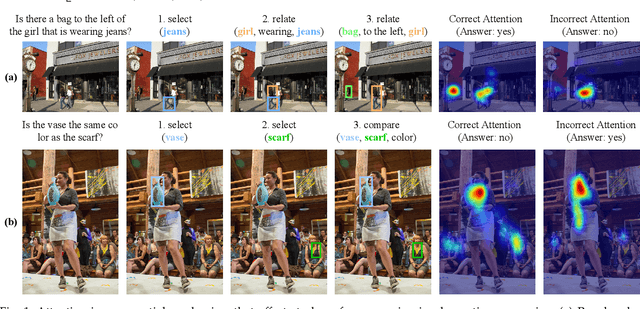
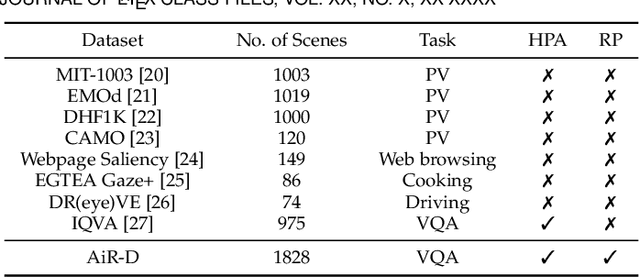
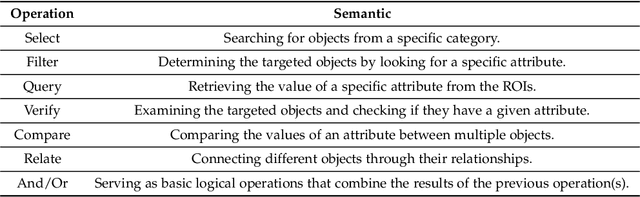
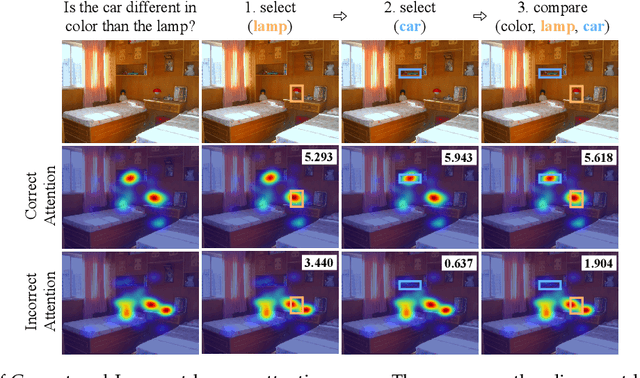
While attention has been an increasingly popular component in deep neural networks to both interpret and boost the performance of models, little work has examined how attention progresses to accomplish a task and whether it is reasonable. In this work, we propose an Attention with Reasoning capability (AiR) framework that uses attention to understand and improve the process leading to task outcomes. We first define an evaluation metric based on a sequence of atomic reasoning operations, enabling a quantitative measurement of attention that considers the reasoning process. We then collect human eye-tracking and answer correctness data, and analyze various machine and human attention mechanisms on their reasoning capability and how they impact task performance. To improve the attention and reasoning ability of visual question answering models, we propose to supervise the learning of attention progressively along the reasoning process and to differentiate the correct and incorrect attention patterns. We demonstrate the effectiveness of the proposed framework in analyzing and modeling attention with better reasoning capability and task performance. The code and data are available at https://github.com/szzexpoi/AiR
AiR: Attention with Reasoning Capability
Jul 28, 2020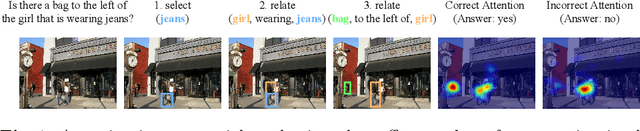
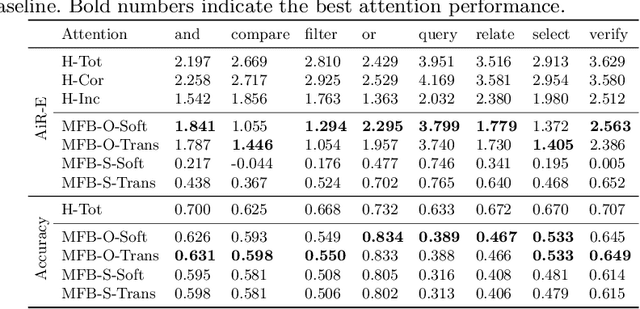
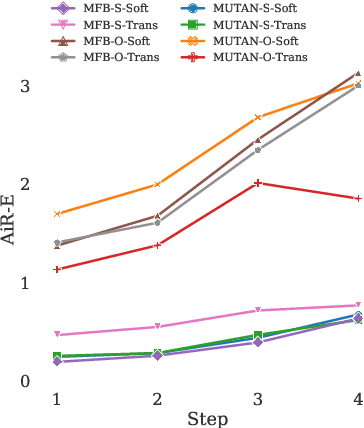
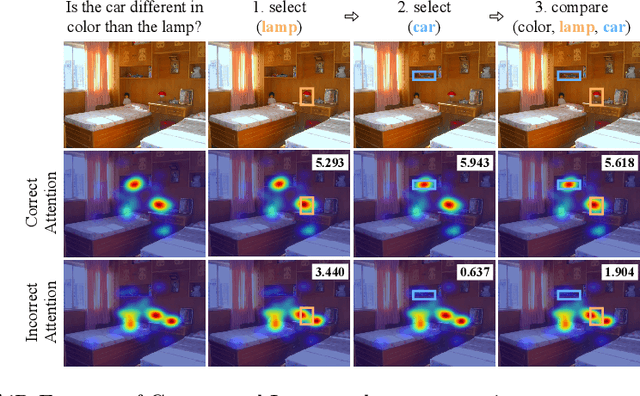
While attention has been an increasingly popular component in deep neural networks to both interpret and boost performance of models, little work has examined how attention progresses to accomplish a task and whether it is reasonable. In this work, we propose an Attention with Reasoning capability (AiR) framework that uses attention to understand and improve the process leading to task outcomes. We first define an evaluation metric based on a sequence of atomic reasoning operations, enabling quantitative measurement of attention that considers the reasoning process. We then collect human eye-tracking and answer correctness data, and analyze various machine and human attentions on their reasoning capability and how they impact task performance. Furthermore, we propose a supervision method to jointly and progressively optimize attention, reasoning, and task performance so that models learn to look at regions of interests by following a reasoning process. We demonstrate the effectiveness of the proposed framework in analyzing and modeling attention with better reasoning capability and task performance. The code and data are available at https://github.com/szzexpoi/AiR