 Add to Chrome
 Add to Firefox
 Add to Edge
LSR-Net: A Lightweight and Strong Robustness Network for Bearing Fault Diagnosis in Noise Environment
Jan 14, 2026
Rotating bearings play an important role in modern industries, but have a high probability of occurrence of defects because they operate at high speed, high load, and poor operating environments. Therefore, if a delay time occurs when a bearing is diagnosed with a defect, this may cause economic loss and loss of life. Moreover, since the vibration sensor from which the signal is collected is highly affected by the operating environment and surrounding noise, accurate defect diagnosis in a noisy environment is also important. In this paper, we propose a lightweight and strong robustness network (LSR-Net) that is accurate in a noisy environment and enables real-time fault diagnosis. To this end, first, a denoising and feature enhancement module (DFEM) was designed to create a 3-channel 2D matrix by giving several nonlinearity to the feature-map that passed through the denoising module (DM) block composed of convolution-based denoising (CD) blocks. Moreover, adaptive pruning was applied to DM to improve denoising ability when the power of noise is strong. Second, for lightweight model design, a convolution-based efficiency shuffle (CES) block was designed using group convolution (GConv), group pointwise convolution (GPConv) and channel split that can design the model while maintaining low parameters. In addition, the trade-off between the accuracy and model computational complexity that can occur due to the lightweight design of the model was supplemented using attention mechanisms and channel shuffle. In order to verify the defect diagnosis performance of the proposed model, performance verification was conducted in a noisy environment using a vibration signal. As a result, it was confirmed that the proposed model had the best anti-noise ability compared to the benchmark models, and the computational complexity of the model was also the lowest.

LAAT: Locally Aligned Ant Technique for detecting manifolds of varying density
Sep 17, 2020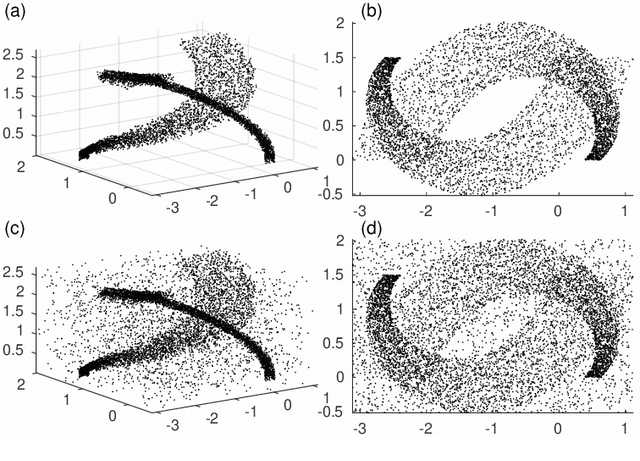
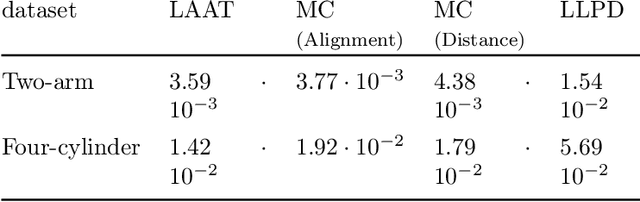
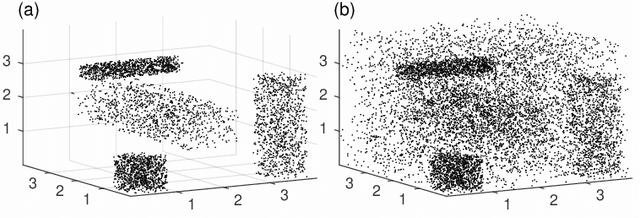
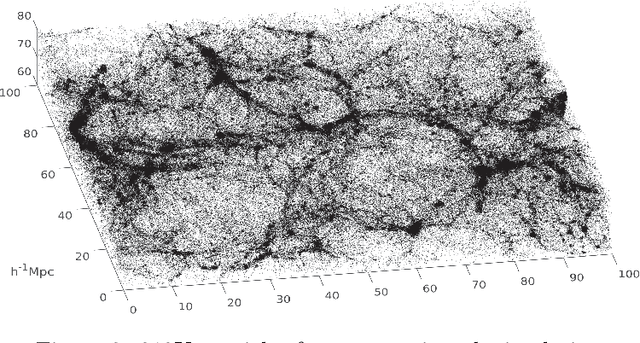
Dimensionality reduction and clustering are often used as preliminary steps for many complex machine learning tasks. The presence of noise and outliers can deteriorate the performance of such preprocessing and therefore impair the subsequent analysis tremendously. In manifold learning, several studies indicate solutions for removing background noise or noise close to the structure when the density is substantially higher than that exhibited by the noise. However, in many applications, including astronomical datasets, the density varies alongside manifolds that are buried in a noisy background. We propose a novel method to extract manifolds in the presence of noise based on the idea of Ant colony optimization. In contrast to the existing random walk solutions, our technique captures points which are locally aligned with major directions of the manifold. Moreover, we empirically show that the biologically inspired formulation of ant pheromone reinforces this behavior enabling it to recover multiple manifolds embedded in extremely noisy data clouds. The algorithm's performance is demonstrated in comparison to the state-of-the-art approaches, such as Markov Chain, LLPD, and Disperse, on several synthetic and real astronomical datasets stemming from an N-body simulation of a cosmological volume.