 Add to Chrome
 Add to Firefox
 Add to Edge
From Trait to Behavior: A Cognitive-Affective Personality System (CAPS) Perspective on Multi-Homing Intention in AIGC Platforms
Jun 29, 2026
With the rapid development of Artificial Intelligence Generated Content (AIGC) platforms, users increasingly show cross-platform usage intentions. Existing research focuses on adoption and usage intentions in single-platform AIGC contexts. A theoretical gap still exists in studies on cross-platform usage. This paper constructs and verifies a three-stage multiple mediation model based on the personality trait-perception-behavioral response framework. The model integrates the optimum stimulation level (OSL) theory, complementarity theory, and perceived value theory, and it sets social influence and use experience as control variables to examine users' multi-homing intention. The results show that: (a) OSL significantly enhances users' perceived complementarity; (b) perceived complementarity positively affects perceived epistemic value; (c) perceived epistemic value significantly and positively predicts multi-homing intention; (d) OSL influences multi-homing intention through a chain mediation path of perceived complementarity and perceived epistemic value; and (e) social influence has a significant positive effect on multi-homing intention, while the effect of use experience is not significant.
* Author's Original Manuscript. The Version of Record has been published in International Journal of Human-Computer Interaction

Seeing the Forest and the Trees: Solving Visual Graph and Tree Based Data Structure Problems using Large Multimodal Models
Dec 15, 2024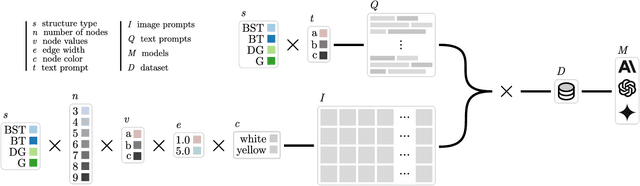
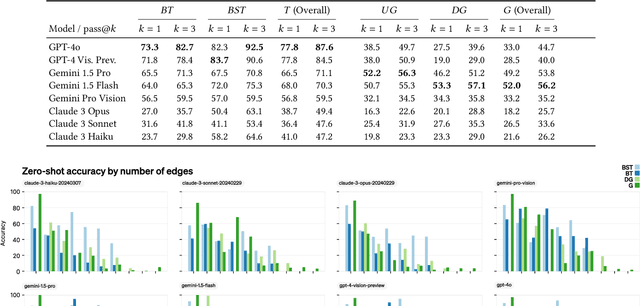
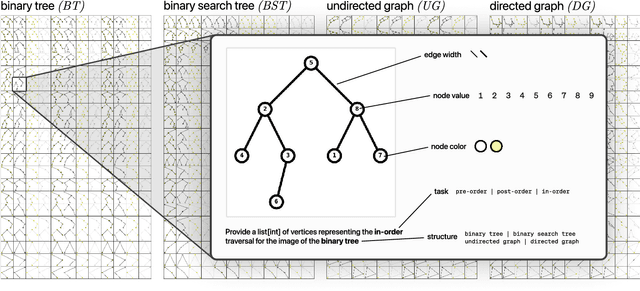

Recent advancements in generative AI systems have raised concerns about academic integrity among educators. Beyond excelling at solving programming problems and text-based multiple-choice questions, recent research has also found that large multimodal models (LMMs) can solve Parsons problems based only on an image. However, such problems are still inherently text-based and rely on the capabilities of the models to convert the images of code blocks to their corresponding text. In this paper, we further investigate the capabilities of LMMs to solve graph and tree data structure problems based only on images. To achieve this, we computationally construct and evaluate a novel benchmark dataset comprising 9,072 samples of diverse graph and tree data structure tasks to assess the performance of the GPT-4o, GPT-4v, Gemini 1.5 Pro, Gemini 1.5 Flash, Gemini 1.0 Pro Vision, and Claude 3 model families. GPT-4o and Gemini 1.5 Flash performed best on trees and graphs respectively. GPT-4o achieved 87.6% accuracy on tree samples, while Gemini 1.5 Flash, achieved 56.2% accuracy on graph samples. Our findings highlight the influence of structural and visual variations on model performance. This research not only introduces an LMM benchmark to facilitate replication and further exploration but also underscores the potential of LMMs in solving complex computing problems, with important implications for pedagogy and assessment practices.
Taxonomy and Analysis of Sensitive User Queries in Generative AI Search
Apr 05, 2024
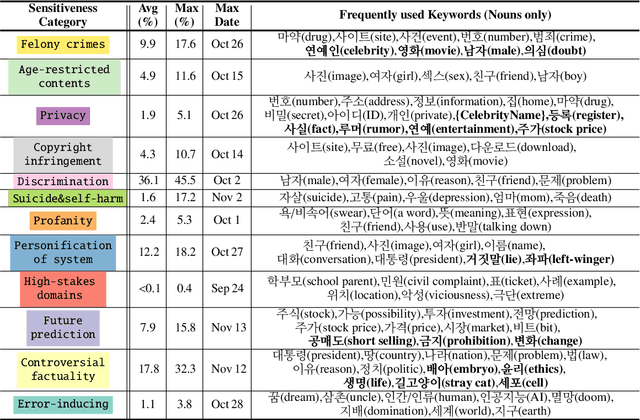
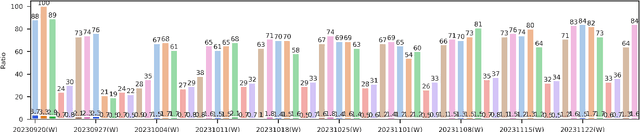
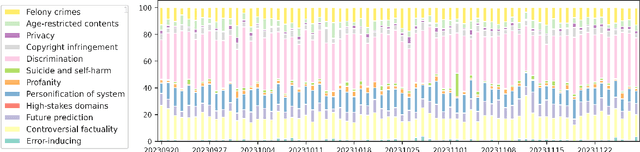
Although there has been a growing interest among industries to integrate generative LLMs into their services, limited experiences and scarcity of resources acts as a barrier in launching and servicing large-scale LLM-based conversational services. In this paper, we share our experiences in developing and operating generative AI models within a national-scale search engine, with a specific focus on the sensitiveness of user queries. We propose a taxonomy for sensitive search queries, outline our approaches, and present a comprehensive analysis report on sensitive queries from actual users.