 Add to Chrome
 Add to Firefox
 Add to Edge
Structured Local Differential Modeling for AI-Generated Image Detection
Aug 13, 2026
The rapid advancement of AI-generated content has made the reliable detection of generated images an increasingly critical challenge. Existing detection methods are often dominated during training by semantically salient components with high signal-to-noise ratios (SNRs), thereby suppressing subtler forensic cues associated with the underlying generation mechanisms and embedded in low-level statistical structures. From an information-theoretic perspective, we present a key insight: effective detection in the low-level statistical space requires mitigating the dominance of semantic components while emphasizing and amplifying responses to low-SNR forgery traces. Building on this insight, we propose RippleNet, an AI-generated image detection framework based on local differential signals. RippleNet adaptively identifies forgery-sensitive regions and constructs multi-directional, multi-scale differential representations within local neighborhoods, explicitly characterizing anomalous patterns in neighborhood statistics. More importantly, we refine the attention mechanism to operate within the local differential representation space, enabling the model to establish explicit dependencies at a finer statistical granularity. This design facilitates the capture of pixel-level forgery traces that are difficult to model using conventional convolutions or image-wide patch-level attention. Extensive experiments on multiple public benchmarks and under cross-generator evaluation settings demonstrate that RippleNet achieves consistently competitive performance.

SHAPE : Self-Improved Visual Preference Alignment by Iteratively Generating Holistic Winner
Mar 06, 2025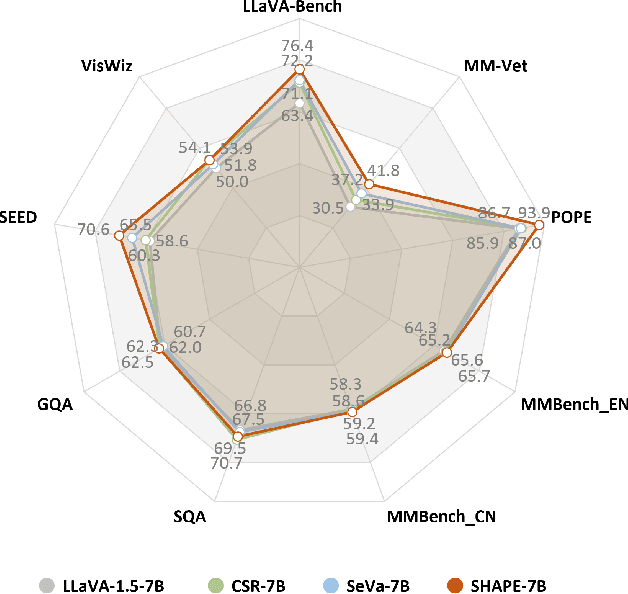
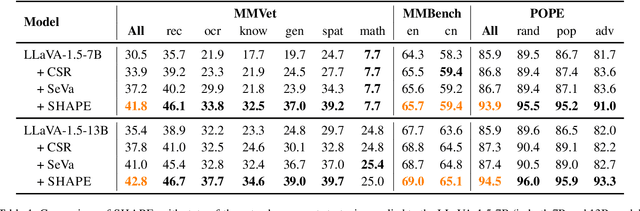
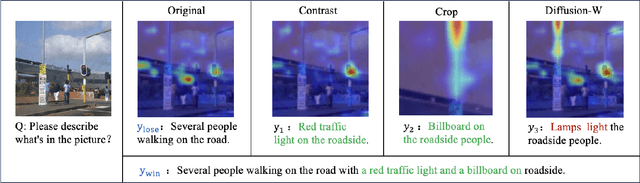
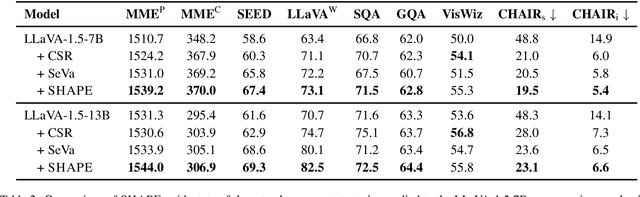
Large Visual Language Models (LVLMs) increasingly rely on preference alignment to ensure reliability, which steers the model behavior via preference fine-tuning on preference data structured as ``image - winner text - loser text'' triplets. However, existing approaches often suffer from limited diversity and high costs associated with human-annotated preference data, hindering LVLMs from fully achieving their intended alignment capabilities. We present \projectname, a self-supervised framework capable of transforming the already abundant supervised text-image pairs into holistic preference triplets for more effective and cheaper LVLM alignment, eliminating the need for human preference annotations. Our approach facilitates LVLMs in progressively enhancing alignment capabilities through iterative self-improvement. The key design rationale is to devise preference triplets where the winner text consistently improves in holisticness and outperforms the loser response in quality, thereby pushing the model to ``strive to the utmost'' of alignment performance through preference fine-tuning. For each given text-image pair, SHAPE introduces multiple visual augmentations and pairs them with a summarized text to serve as the winner response, while designating the original text as the loser response. Experiments across \textbf{12} benchmarks on various model architectures and sizes, including LLaVA and DeepSeek-VL, show that SHAPE achieves significant gains, for example, achieving +11.3\% on MMVet (comprehensive evaluation), +1.4\% on MMBench (general VQA), and +8.0\% on POPE (hallucination robustness) over baselines in 7B models. Notably, qualitative analyses confirm enhanced attention to visual details and better alignment with human preferences for holistic descriptions.
Improving Adversarial Robustness via Feature Pattern Consistency Constraint
Jun 13, 2024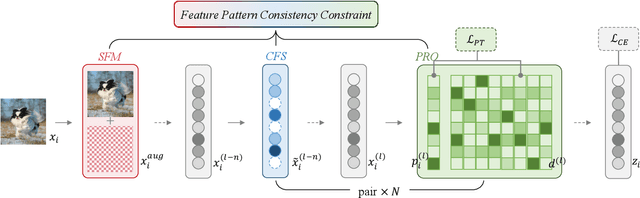

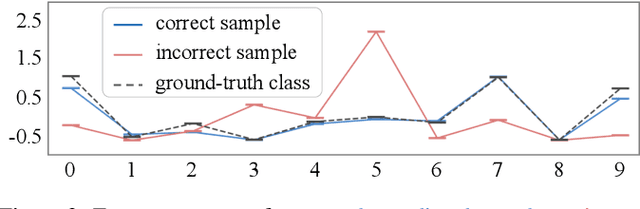

Convolutional Neural Networks (CNNs) are well-known for their vulnerability to adversarial attacks, posing significant security concerns. In response to these threats, various defense methods have emerged to bolster the model's robustness. However, most existing methods either focus on learning from adversarial perturbations, leading to overfitting to the adversarial examples, or aim to eliminate such perturbations during inference, inevitably increasing computational burdens. Conversely, clean training, which strengthens the model's robustness by relying solely on clean examples, can address the aforementioned issues. In this paper, we align with this methodological stream and enhance its generalizability to unknown adversarial examples. This enhancement is achieved by scrutinizing the behavior of latent features within the network. Recognizing that a correct prediction relies on the correctness of the latent feature's pattern, we introduce a novel and effective Feature Pattern Consistency Constraint (FPCC) method to reinforce the latent feature's capacity to maintain the correct feature pattern. Specifically, we propose Spatial-wise Feature Modification and Channel-wise Feature Selection to enhance latent features. Subsequently, we employ the Pattern Consistency Loss to constrain the similarity between the feature pattern of the latent features and the correct feature pattern. Our experiments demonstrate that the FPCC method empowers latent features to uphold correct feature patterns even in the face of adversarial examples, resulting in inherent adversarial robustness surpassing state-of-the-art models.