 Add to Chrome
 Add to Firefox
 Add to Edge
Empowering All-in-Loop Health Management of Spacecraft Power System in the Mega-Constellation Era via Human-AI Collaboration
Jan 19, 2026
It is foreseeable that the number of spacecraft will increase exponentially, ushering in an era dominated by satellite mega-constellations (SMC). This necessitates a focus on energy in space: spacecraft power systems (SPS), especially their health management (HM), given their role in power supply and high failure rates. Providing health management for dozens of SPS and for thousands of SPS represents two fundamentally different paradigms. Therefore, to adapt the health management in the SMC era, this work proposes a principle of aligning underlying capabilities (AUC principle) and develops SpaceHMchat, an open-source Human-AI collaboration (HAIC) framework for all-in-loop health management (AIL HM). SpaceHMchat serves across the entire loop of work condition recognition, anomaly detection, fault localization, and maintenance decision making, achieving goals such as conversational task completion, adaptive human-in-the-loop learning, personnel structure optimization, knowledge sharing, efficiency enhancement, as well as transparent reasoning and improved interpretability. Meanwhile, to validate this exploration, a hardware-realistic fault injection experimental platform is established, and its simulation model is built and open-sourced, both fully replicating the real SPS. The corresponding experimental results demonstrate that SpaceHMchat achieves excellent performance across 23 quantitative metrics, such as 100% conclusion accuracy in logical reasoning of work condition recognition, over 99% success rate in anomaly detection tool invocation, over 90% precision in fault localization, and knowledge base search time under 3 minutes in maintenance decision-making. Another contribution of this work is the release of the first-ever AIL HM dataset of SPS. This dataset contains four sub-datasets, involving 4 types of AIL HM sub-tasks, 17 types of faults, and over 700,000 timestamps.

NEMR: Network Embedding on Metric of Relation
Jan 20, 2021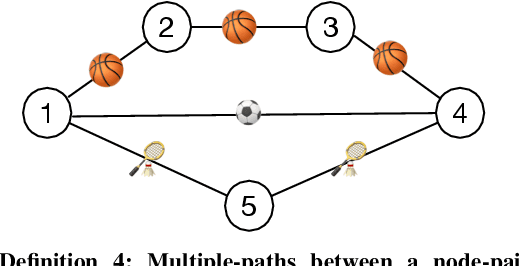
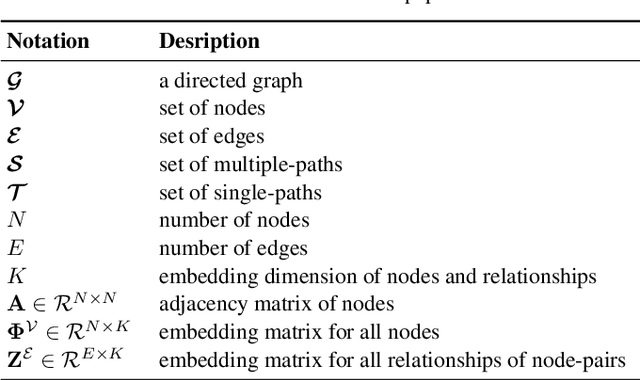
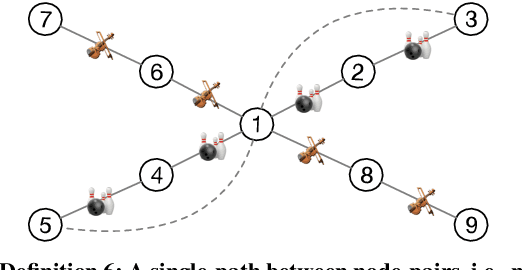
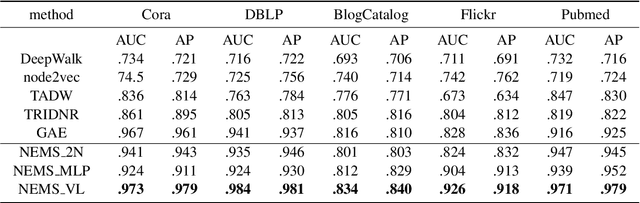
Network embedding maps the nodes of a given network into a low-dimensional space such that the semantic similarities among the nodes can be effectively inferred. Most existing approaches use inner-product of node embedding to measure the similarity between nodes leading to the fact that they lack the capacity to capture complex relationships among nodes. Besides, they take the path in the network just as structural auxiliary information when inferring node embeddings, while paths in the network are formed with rich user informations which are semantically relevant and cannot be ignored. In this paper, We propose a novel method called Network Embedding on the Metric of Relation, abbreviated as NEMR, which can learn the embeddings of nodes in a relational metric space efficiently. First, our NEMR models the relationships among nodes in a metric space with deep learning methods including variational inference that maps the relationship of nodes to a gaussian distribution so as to capture the uncertainties. Secondly, our NEMR considers not only the equivalence of multiple-paths but also the natural order of a single-path when inferring embeddings of nodes, which makes NEMR can capture the multiple relationships among nodes since multiple paths contain rich user information, e.g., age, hobby and profession. Experimental results on several public datasets show that the NEMR outperforms the state-of-the-art methods on relevant inference tasks including link prediction and node classification.