 Add to Chrome
 Add to Firefox
 Add to Edge
Hybrid Quantum-Classical AI for Industrial Defect Classification in Welding Images
Mar 30, 2026
Hybrid quantum-classical machine learning offers a promising direction for advancing automated quality control in industrial settings. In this study, we investigate two hybrid quantum-classical approaches for classifying defects in aluminium TIG welding images and benchmarking their performance against a conventional deep learning model. A convolutional neural network is used to extract compact and informative feature vectors from weld images, effectively reducing the higher-dimensional pixel space to a lower-dimensional feature space. Our first quantum approach encodes these features into quantum states using a parameterized quantum feature map composed of rotation and entangling gates. We compute a quantum kernel matrix from the inner products of these states, defining a linear system in a higher-dimensional Hilbert space corresponding to the support vector machine (SVM) optimization problem and solving it using a Variational Quantum Linear Solver (VQLS). We also examine the effect of the quantum kernel condition number on classification performance. In our second method, we apply angle encoding to the extracted features in a variational quantum circuit and use a classical optimizer for model training. Both quantum models are tested on binary and multiclass classification tasks and the performance is compared with the classical CNN model. Our results show that while the CNN model demonstrates robust performance, hybrid quantum-classical models perform competitively. This highlights the potential of hybrid quantum-classical approaches for near-term real-world applications in industrial defect detection and quality assurance.

Variational Quantum Linear Solver enhanced Quantum Support Vector Machine
Sep 14, 2023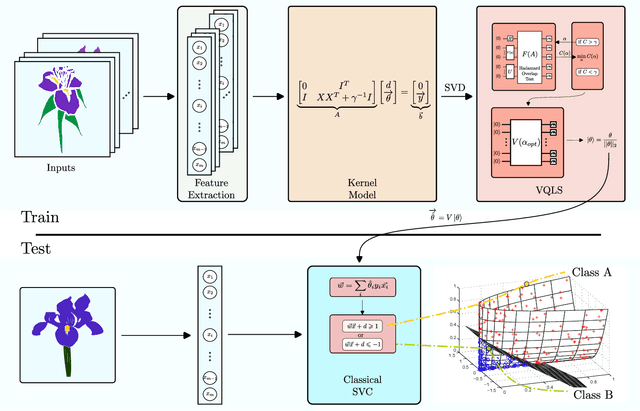
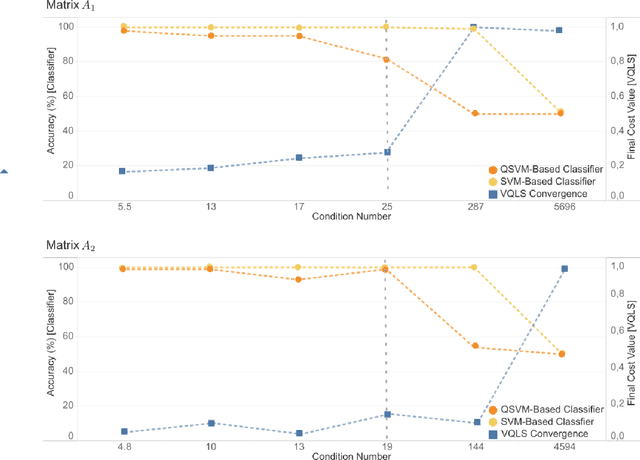
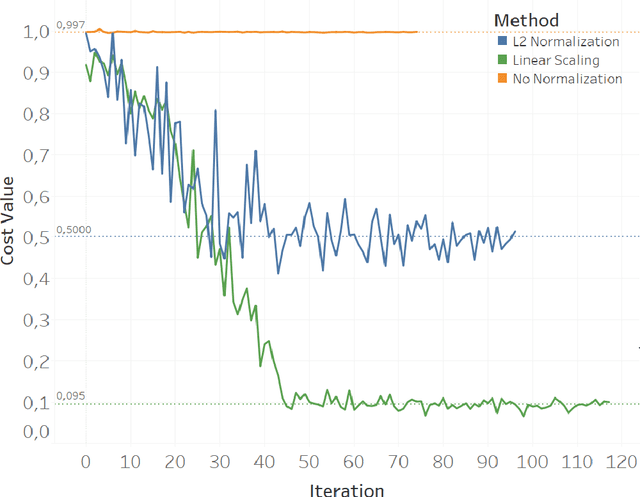
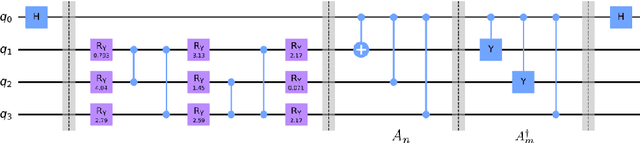
Quantum Support Vector Machines (QSVM) play a vital role in using quantum resources for supervised machine learning tasks, such as classification. However, current methods are strongly limited in terms of scalability on Noisy Intermediate Scale Quantum (NISQ) devices. In this work, we propose a novel approach called the Variational Quantum Linear Solver (VQLS) enhanced QSVM. This is built upon our idea of utilizing the variational quantum linear solver to solve system of linear equations of a least squares-SVM on a NISQ device. The implementation of our approach is evaluated by an extensive series of numerical experiments with the Iris dataset, which consists of three distinct iris plant species. Based on this, we explore the practicality and effectiveness of our algorithm by constructing a classifier capable of classification in a feature space ranging from one to seven dimensions. Furthermore, by strategically exploiting both classical and quantum computing for various subroutines of our algorithm, we effectively mitigate practical challenges associated with the implementation. These include significant improvement in the trainability of the variational ansatz and notable reductions in run-time for cost calculations. Based on the numerical experiments, our approach exhibits the capability of identifying a separating hyperplane in an 8-dimensional feature space. Moreover, it consistently demonstrated strong performance across various instances with the same dataset.