 Add to Chrome
 Add to Firefox
 Add to Edge
An Optimal Battery-Free Approach for Emission Reduction by Storing Solar Surplus in Building Thermal Mass
Mar 30, 2026
Decarbonization in buildings calls for advanced control strategies that coordinate on-site renewables, grid electricity, and thermal demand. Literature approaches typically rely on demand side management strategies or on active energy storage, like batteries. However, the first solution often neglects carbon-aware objectives, and could lead to grid overload issues, while batteries entail environmental, end-of-life, and cost concerns. To overcome these limitations, we propose an optimal, carbon-aware optimization strategy that exploits the building's thermal mass as a passive storage, avoiding dedicated batteries. Specifically, when a surplus of renewable energy is available, our strategy computes the optimal share of surplus to store by temporarily adjusting the indoor temperature setpoint within comfort bounds. Thus, by explicitly accounting for forecasts of building energy consumption, solar production, and time-varying grid carbon intensity, our strategy enables emissions-aware load shifting while maintaining comfort. We evaluate the approach by simulating three TRNSYS models of the same system with different thermal mass. In all cases, the results show consistent reductions in grid electricity consumption with respect to a baseline that does not leverage surplus renewable generation. These findings highlight the potential of thermal-mass-based control for building decarbonization.

Explainable Condition Monitoring via Probabilistic Anomaly Detection Applied to Helicopter Transmissions
Mar 09, 2026We present a novel Explainable methodology for Condition Monitoring, relying on healthy data only. Since faults are rare events, we propose to focus on learning the probability distribution of healthy observations only, and detect Anomalies at runtime. This objective is achieved via the definition of probabilistic measures of deviation from nominality, which allow to detect and anticipate faults. The Bayesian perspective underpinning our approach allows us to perform Uncertainty Quantification to inform decisions. At the same time, we provide descriptive tools to enhance the interpretability of the results, supporting the deployment of the proposed strategy also in safety-critical applications. The methodology is validated experimentally on two use cases: a publicly available benchmark for Predictive Maintenance, and a real-world Helicopter Transmission dataset collected over multiple years. In both applications, the method achieves competitive detection performance with respect to state-of-the-art anomaly detection methods.
Explainable data-driven modeling via mixture of experts: towards effective blending of grey and black-box models
Jan 30, 2024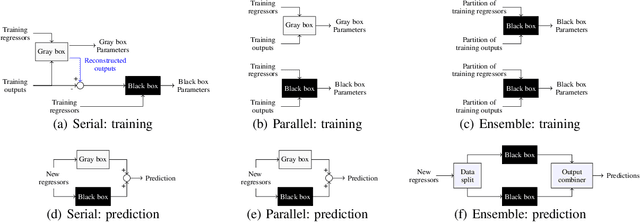
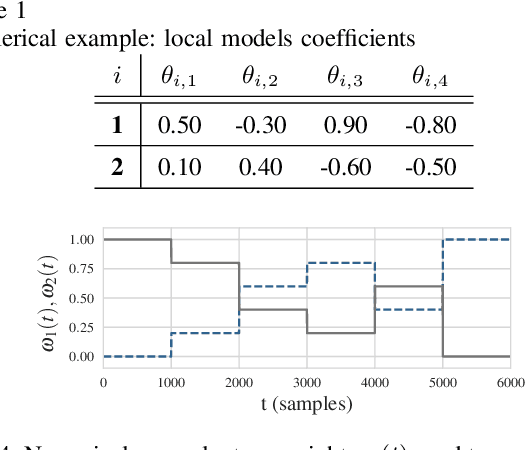
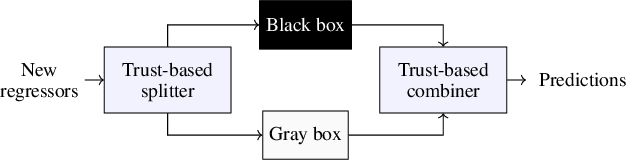

Traditional models grounded in first principles often struggle with accuracy as the system's complexity increases. Conversely, machine learning approaches, while powerful, face challenges in interpretability and in handling physical constraints. Efforts to combine these models often often stumble upon difficulties in finding a balance between accuracy and complexity. To address these issues, we propose a comprehensive framework based on a "mixture of experts" rationale. This approach enables the data-based fusion of diverse local models, leveraging the full potential of first-principle-based priors. Our solution allows independent training of experts, drawing on techniques from both machine learning and system identification, and it supports both collaborative and competitive learning paradigms. To enhance interpretability, we penalize abrupt variations in the expert's combination. Experimental results validate the effectiveness of our approach in producing an interpretable combination of models closely resembling the target phenomena.