 Add to Chrome
 Add to Firefox
 Add to Edge
Sentinel: A Hyper-Heuristic for the Generation of Mutant Reduction Strategies
Mar 12, 2021


Mutation testing is an effective approach to evaluate and strengthen software test suites, but its adoption is currently limited by the mutants' execution computational cost. Several strategies have been proposed to reduce this cost (a.k.a. mutation cost reduction strategies), however none of them has proven to be effective for all scenarios since they often need an ad-hoc manual selection and configuration depending on the software under test (SUT). In this paper, we propose a novel multi-objective evolutionary hyper-heuristic approach, dubbed Sentinel, to automate the generation of optimal cost reduction strategies for every new SUT. We evaluate Sentinel by carrying out a thorough empirical study involving 40 releases of 10 open-source real-world software systems and both baseline and state-of-the-art strategies as a benchmark. We execute a total of 4,800 experiments, and evaluate their results with both quality indicators and statistical significance tests, following the most recent best practice in the literature. The results show that strategies generated by Sentinel outperform the baseline strategies in 95% of the cases always with large effect sizes. They also obtain statistically significantly better results than state-of-the-art strategies in 88% of the cases, with large effect sizes for 95% of them. Also, our study reveals that the mutation strategies generated by Sentinel for a given software version can be used without any loss in quality for subsequently developed versions in 95% of the cases. These results show that Sentinel is able to automatically generate mutation strategies that reduce mutation testing cost without affecting its testing effectiveness (i.e. mutation score), thus taking off from the tester's shoulders the burden of manually selecting and configuring strategies for each SUT.

ReAssert: Deep Learning for Assert Generation
Nov 19, 2020
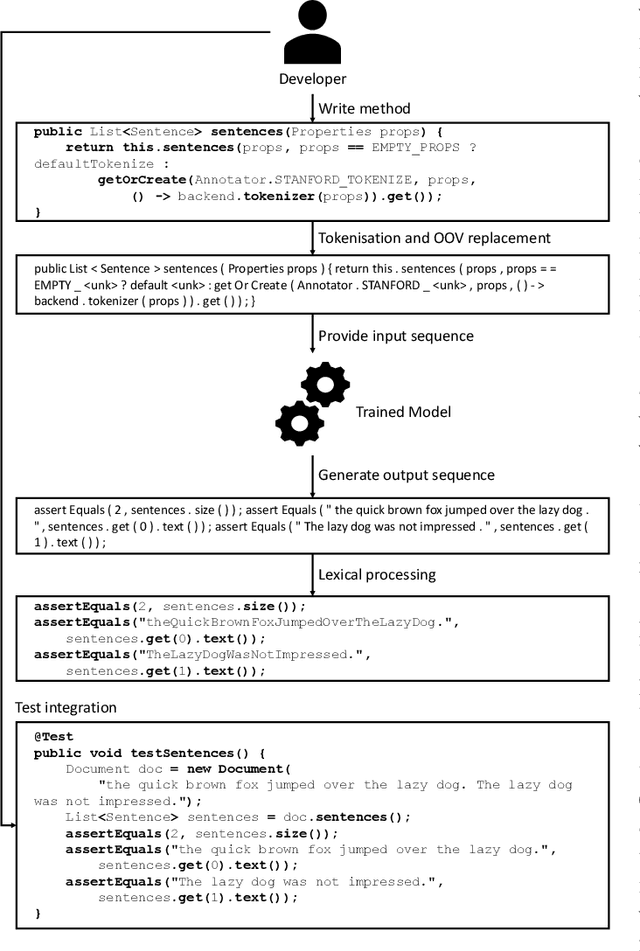
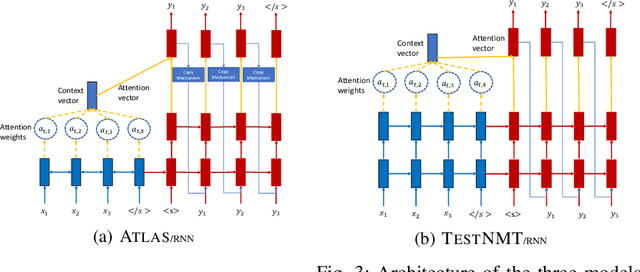
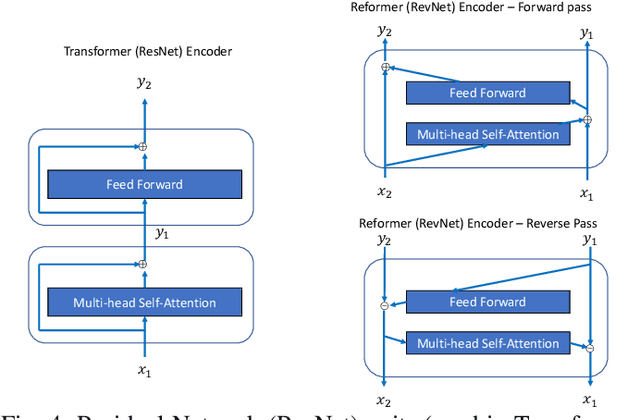
The automated generation of test code can reduce the time and effort required to build software while increasing its correctness and robustness. In this paper, we present RE-ASSERT, an approach for the automated generation of JUnit test asserts which produces more accurate asserts than previous work with fewer constraints. This is achieved by targeting projects individually, using precise code-to-test traceability for learning and by generating assert statements from the method-under-test directly without the need to write an assert-less test first. We also utilise Reformer, a state-of-the-art deep learning model, along with two models from previous work to evaluate ReAssert and an existing approach, known as ATLAS, using lexical accuracy,uniqueness, and dynamic analysis. Our evaluation of ReAssert shows up to 44% of generated asserts for a single project match exactly with the ground truth, increasing to 51% for generated asserts that compile. We also improve on the ATLAS results through our use of Reformer with 28% of generated asserts matching exactly with the ground truth. Reformer also produces the greatest proportion of unique asserts (71%), giving further evidence that Reformer produces the most useful asserts.