 Add to Chrome
 Add to Firefox
 Add to Edge
Beyond Local Inspection: Global, Guideline-Grounded Evaluation of Post-hoc XAI Methods for ECG Classification
Jul 27, 2026
Explainable AI (XAI) is used to assess whether artificial intelligence models rely on meaningful patterns, yet explanations that appear plausible for individual predictions may systematically misrepresent model behavior. This is particularly problematic in medicine, where models may rely on irrelevant signal characteristics rather than disease-specific patterns without being recognizable. We address this challenge using electrocardiogram (ECG) data, for which clinical guidelines provide explicit knowledge about diagnostically relevant signal regions. We introduce a global, guideline-grounded framework that aggregates explanations across heartbeats to evaluate them against clinically defined regions of interest. Using four binary classifiers trained on PTB-XL, we assess 13 gradient-based methods across two categories of patterns: low-amplitude segments and high-amplitude QRS morphology. Our results reveal a systematic failure of methods transferred from computer vision. Their explanations often follow signal amplitude rather than clinical relevance, with mean Spearman correlations up to 0.69, leading them to overlook diagnostically decisive low-amplitude regions. For ischemia, LRP-$ε$ assigns only 4.6% of relevance to the ST segment, compared with 63.8% for LRP-SIGN. Nine of 13 methods fall below chance for at least one condition, indicating inconsistent reliability across patterns. These findings show that global, domain-grounded evaluation can uncover systematic explanation failures not obvious from sample-level heatmaps.

A Conceptual Framework for Establishing Trust in Real World Intelligent Systems
Apr 12, 2021
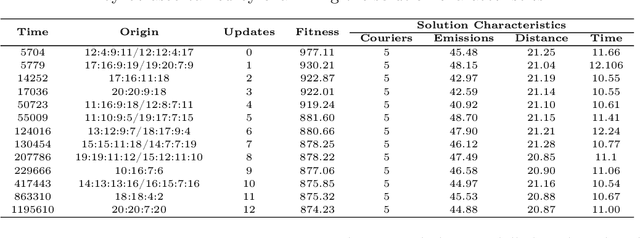
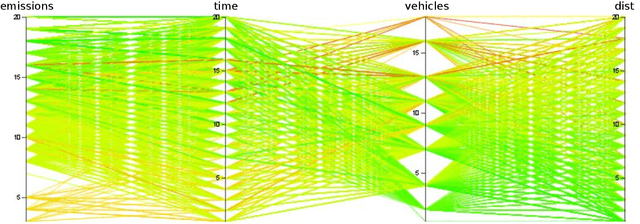
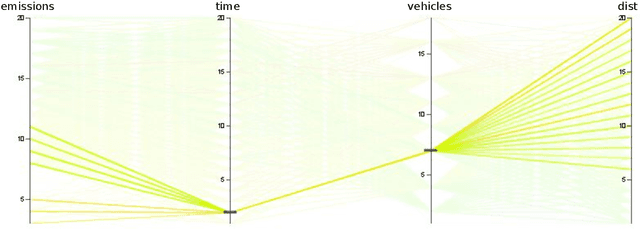
Intelligent information systems that contain emergent elements often encounter trust problems because results do not get sufficiently explained and the procedure itself can not be fully retraced. This is caused by a control flow depending either on stochastic elements or on the structure and relevance of the input data. Trust in such algorithms can be established by letting users interact with the system so that they can explore results and find patterns that can be compared with their expected solution. Reflecting features and patterns of human understanding of a domain against algorithmic results can create awareness of such patterns and may increase the trust that a user has in the solution. If expectations are not met, close inspection can be used to decide whether a solution conforms to the expectations or whether it goes beyond the expected. By either accepting or rejecting a solution, the user's set of expectations evolves and a learning process for the users is established. In this paper we present a conceptual framework that reflects and supports this process. The framework is the result of an analysis of two exemplary case studies from two different disciplines with information systems that assist experts in their complex tasks.