 Add to Chrome
 Add to Firefox
 Add to Edge
Lipschitz Optimization for Formal Verification of Homographies
May 22, 2026
The adoption of vision neural networks in regulated industries requires formal robustness guarantees, especially in safety-critical domains such as healthcare, autonomous vehicles, and aerospace. However, current approaches are confined to incomplete statistical verification or robustness to $\ell_p$-norm and affine transforms, which cover only a narrow subset of perturbations to the image formation process. In particular, robustness to camera motion remains an open problem despite being key to deploy many vision applications. We present a formal verification approach that targets robustness against 3D motion perturbations of the capturing camera. We first establish a closed-form mapping from camera pose to pixel values. By analyzing the continuity properties of the resulting homographies, we show that recent work on Lipschitz optimization and piecewise continuity can be extended to derive tight linear bounds on perturbed pixel values. Our approach applies to scenes with predominantly planar structure, such as ground planes in augmented reality, road markings and traffic signs in autonomous driving, or planar workspaces in robotic manipulation. This enables the first formal verification of projective geometry transforms, without complex simulation, surrogate networks, or explicit image-formation models. We validate our implementation and show up to 89% speedup and 7% tighter bounds over prior work. We then evaluate our method on the VNN-COMP benchmark and reveal systematic weaknesses to projective perturbations. Finally, we demonstrate a real-world case study on a safety-critical runway classifier, highlighting practical vulnerabilities to camera motion, and addressing a key challenge in the certification of learned models. Data and code are publicly available at https://github.com/jeangud/homography-verification .

Formal and Practical Elements for the Certification of Machine Learning Systems
Oct 05, 2023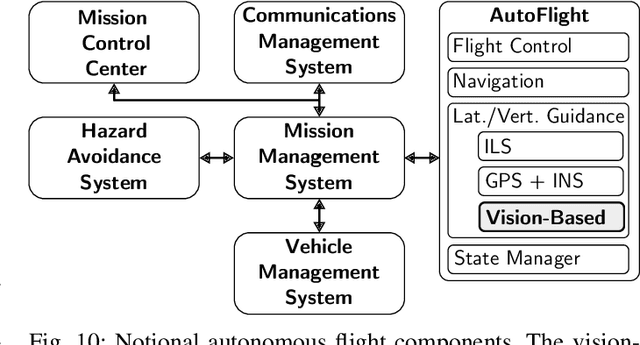
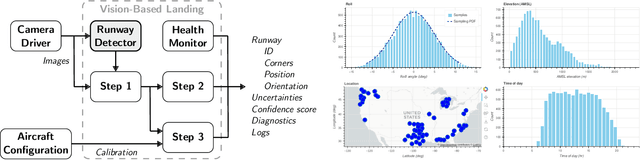
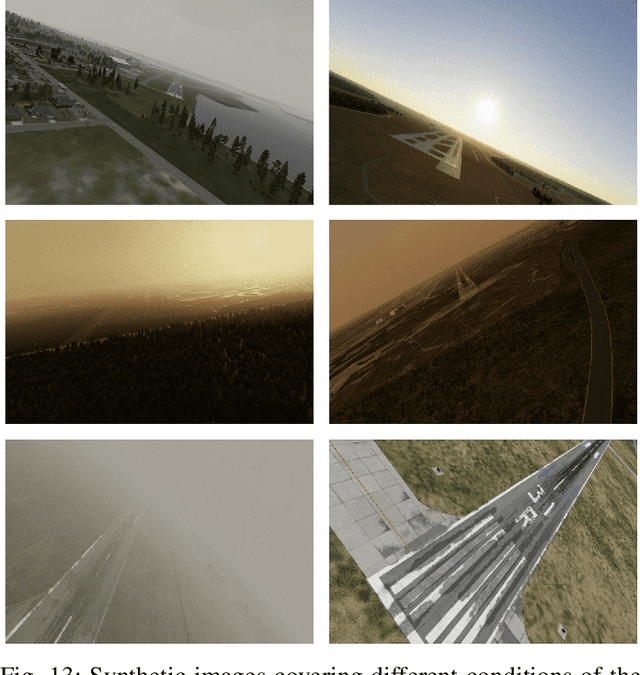
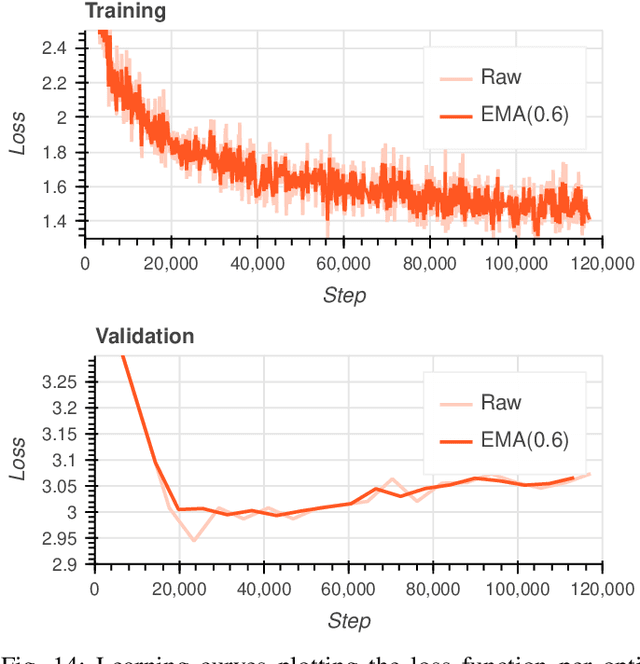
Over the past decade, machine learning has demonstrated impressive results, often surpassing human capabilities in sensing tasks relevant to autonomous flight. Unlike traditional aerospace software, the parameters of machine learning models are not hand-coded nor derived from physics but learned from data. They are automatically adjusted during a training phase, and their values do not usually correspond to physical requirements. As a result, requirements cannot be directly traced to lines of code, hindering the current bottom-up aerospace certification paradigm. This paper attempts to address this gap by 1) demystifying the inner workings and processes to build machine learning models, 2) formally establishing theoretical guarantees given by those processes, and 3) complementing these formal elements with practical considerations to develop a complete certification argument for safety-critical machine learning systems. Based on a scalable statistical verifier, our proposed framework is model-agnostic and tool-independent, making it adaptable to many use cases in the industry. We demonstrate results on a widespread application in autonomous flight: vision-based landing.