 Add to Chrome
 Add to Firefox
 Add to Edge
ODRA: Synthesizing Cognitive Behavioral Therapy Sessions with Structured Chain-Of-Thought and Dynamic Patient Resistance
Aug 05, 2026
Synthetic generation of Cognitive Behavioral Therapy (CBT) sessions is challenged by two competing demands: adhering to strict therapeutic structure while modeling the resistant, unpredictable behavior of real patients. Existing script-based methods fail to capture dynamic therapeutic interactions, while multi-agent approaches struggle to adhere to CBT's sequential structure; both suffer from sycophancy, producing overly compliant patients that misrepresent real clinical settings. In this work we introduce ODRA, a novel framework for synthesizing therapy dialogues through a Chain-of-Thought (CoT) strategy grounded in foundational CBT guidelines (Beck, 2020). ODRA further incorporates a resistance orchestrator to solve patient sycophancy, which employs steering techniques to elicit behaviors aligned with their resistance level. Automated and expert evaluations show that ODRA significantly outperforms existing methods across therapeutic skills, CBT alignment, and patient behavioral fidelity, with licensed psychologists preferring ODRA sessions across 12 of 13 clinical metrics. Furthermore, models fine-tuned on our dataset demonstrate superior therapeutic performance against both cooperative and resistant patients, validating that explicit resistance modeling in synthetic training data directly translates to downstream clinical robustness.

Visual WetlandBirds Dataset: Bird Species Identification and Behavior Recognition in Videos
Jan 15, 2025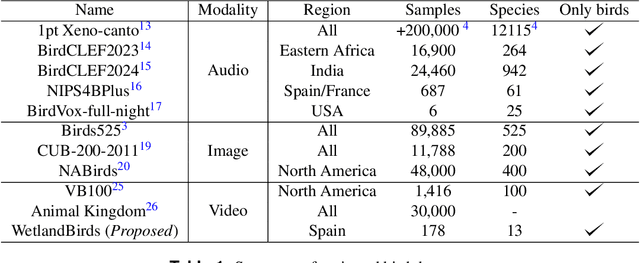
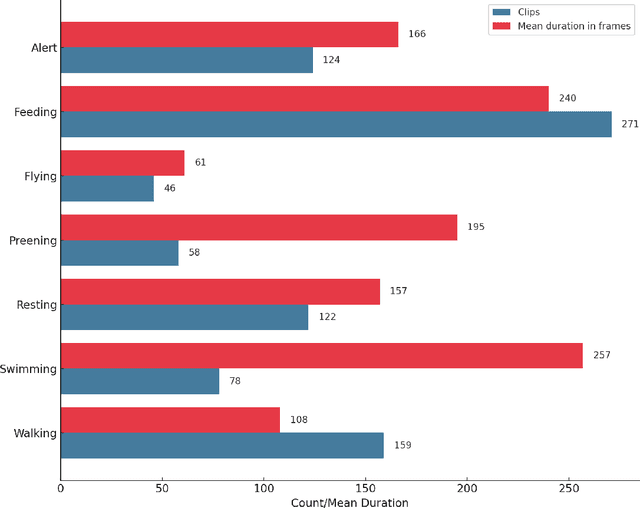
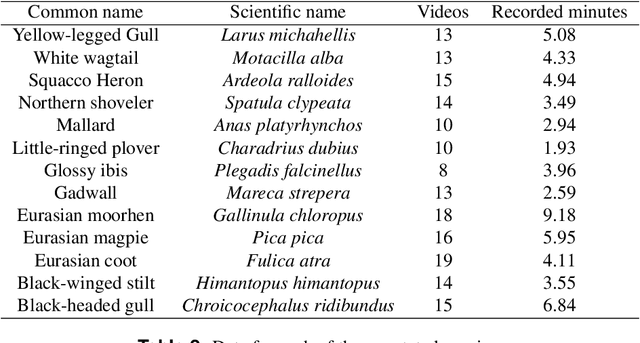
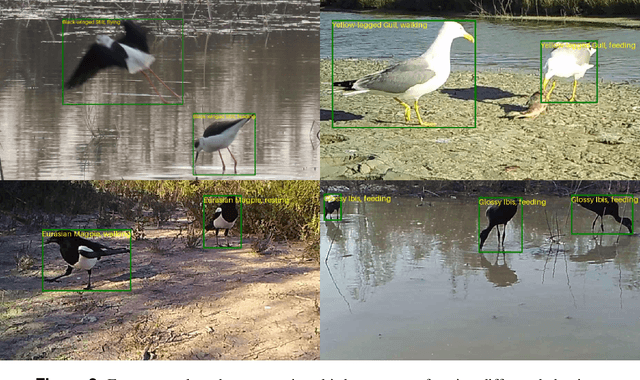
The current biodiversity loss crisis makes animal monitoring a relevant field of study. In light of this, data collected through monitoring can provide essential insights, and information for decision-making aimed at preserving global biodiversity. Despite the importance of such data, there is a notable scarcity of datasets featuring videos of birds, and none of the existing datasets offer detailed annotations of bird behaviors in video format. In response to this gap, our study introduces the first fine-grained video dataset specifically designed for bird behavior detection and species classification. This dataset addresses the need for comprehensive bird video datasets and provides detailed data on bird actions, facilitating the development of deep learning models to recognize these, similar to the advancements made in human action recognition. The proposed dataset comprises 178 videos recorded in Spanish wetlands, capturing 13 different bird species performing 7 distinct behavior classes. In addition, we also present baseline results using state of the art models on two tasks: bird behavior recognition and species classification.