 Add to Chrome
 Add to Firefox
 Add to Edge
Foundations for Agentic AI Investigations from the Forensic Analysis of OpenClaw
Apr 07, 2026
Agentic Al systems are increasingly deployed as personal assistants and are likely to become a common object of digital investigations. However, little is known about how their internal state and actions can be reconstructed during forensic analysis. Despite growing popularity, systematic forensic approaches for such systems remain largely unexplored. This paper presents an empirical study of OpenClaw a widely used single-agent assistant. We examine OpenClaw's technical design via static code analysis and apply differential forensic analysis to identify recoverable traces across stages of the agent interaction loop. We classify and correlate these traces to assess their investigative value in a systematic way. Based on these observations, we propose an agent artifact taxonomy that captures recurring investigative patterns. Finally, we highlight a foundational challenge for agentic Al forensics: agent-mediated execution introduces an additional layer of abstraction and substantial nondeterminism in trace generation. The large language model (LLM), the execution environment, and the evolving context can influence tool choice and state transitions in ways that are largely absent from rule-based software. Overall, our results provide an initial foundation for the systematic investigation of agentic Al and outline implications for digital forensic practice and future research.

ChatGPT for Digital Forensic Investigation: The Good, The Bad, and The Unknown
Jul 10, 2023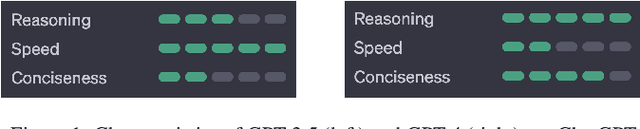
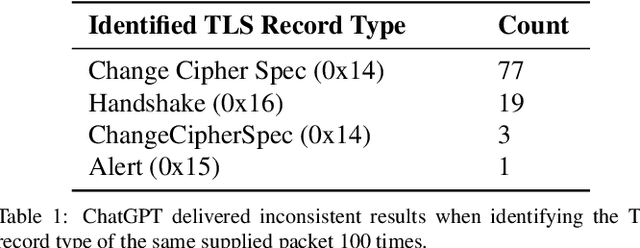
The disruptive application of ChatGPT (GPT-3.5, GPT-4) to a variety of domains has become a topic of much discussion in the scientific community and society at large. Large Language Models (LLMs), e.g., BERT, Bard, Generative Pre-trained Transformers (GPTs), LLaMA, etc., have the ability to take instructions, or prompts, from users and generate answers and solutions based on very large volumes of text-based training data. This paper assesses the impact and potential impact of ChatGPT on the field of digital forensics, specifically looking at its latest pre-trained LLM, GPT-4. A series of experiments are conducted to assess its capability across several digital forensic use cases including artefact understanding, evidence searching, code generation, anomaly detection, incident response, and education. Across these topics, its strengths and risks are outlined and a number of general conclusions are drawn. Overall this paper concludes that while there are some potential low-risk applications of ChatGPT within digital forensics, many are either unsuitable at present, since the evidence would need to be uploaded to the service, or they require sufficient knowledge of the topic being asked of the tool to identify incorrect assumptions, inaccuracies, and mistakes. However, to an appropriately knowledgeable user, it could act as a useful supporting tool in some circumstances.