 Add to Chrome
 Add to Firefox
 Add to Edge
Foundations for Agentic AI Investigations from the Forensic Analysis of OpenClaw
Apr 07, 2026
Agentic Al systems are increasingly deployed as personal assistants and are likely to become a common object of digital investigations. However, little is known about how their internal state and actions can be reconstructed during forensic analysis. Despite growing popularity, systematic forensic approaches for such systems remain largely unexplored. This paper presents an empirical study of OpenClaw a widely used single-agent assistant. We examine OpenClaw's technical design via static code analysis and apply differential forensic analysis to identify recoverable traces across stages of the agent interaction loop. We classify and correlate these traces to assess their investigative value in a systematic way. Based on these observations, we propose an agent artifact taxonomy that captures recurring investigative patterns. Finally, we highlight a foundational challenge for agentic Al forensics: agent-mediated execution introduces an additional layer of abstraction and substantial nondeterminism in trace generation. The large language model (LLM), the execution environment, and the evolving context can influence tool choice and state transitions in ways that are largely absent from rule-based software. Overall, our results provide an initial foundation for the systematic investigation of agentic Al and outline implications for digital forensic practice and future research.

Argumentation Schemes for Blockchain Deanonymization
May 26, 2023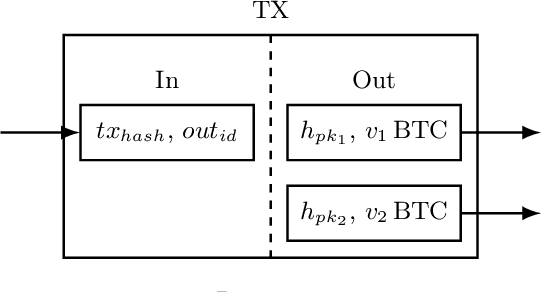
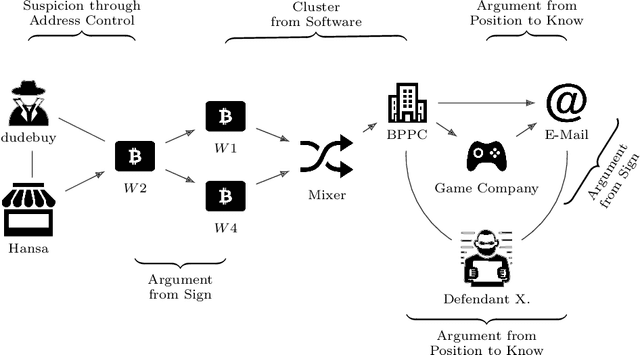
Cryptocurrency forensics became standard tools for law enforcement. Their basic idea is to deanonymise cryptocurrency transactions to identify the people behind them. Cryptocurrency deanonymisation techniques are often based on premises that largely remain implicit, especially in legal practice. On the one hand, this implicitness complicates investigations. On the other hand, it can have far-reaching consequences for the rights of those affected. Argumentation schemes could remedy this untenable situation by rendering underlying premises transparent. Additionally, they can aid in critically evaluating the probative value of any results obtained by cryptocurrency deanonymisation techniques. In the argumentation theory and AI community, argumentation schemes are influential as they state implicit premises for different types of arguments. Through their critical questions, they aid the argumentation participants in critically evaluating arguments. We specialise the notion of argumentation schemes to legal reasoning about cryptocurrency deanonymisation. Furthermore, we demonstrate the applicability of the resulting schemes through an exemplary real-world case. Ultimately, we envision that using our schemes in legal practice can solidify the evidential value of blockchain investigations as well as uncover and help address uncertainty in underlying premises - thus contributing to protect the rights of those affected by cryptocurrency forensics.