 Add to Chrome
 Add to Firefox
 Add to Edge
Foundation Models for Epileptogenic Zone Identification in Drug-Resistant Epilepsy
Jun 21, 2026
Accurate identification of the epileptogenic zone (EZ) is essential for seizure freedom after resective surgery in drug-resistant epilepsy, yet seizure freedom rates remain below 50%. We developed EpiiSLM, a dual foundation model system for EZ identification with stereo-electroencephalography (sEEG), by training a signal foundation model on 104,990 minutes of sEEG recordings from the Montreal Neurological Institute & Hospital, while leveraging all recordings regardless of surgical outcome and anchoring EZ biomarker extraction on non-epileptic signals. A language foundation model then integrates sEEG-derived outputs with multimodal clinical information to produce interpretable predictions. Under leave-one-patient-out evaluation, EpiiSLM achieved 0.978 contact-level positive predictive value (PPV), outperforming the seizure onset zone(SOZ)-as-EZ baseline by 15.1% (p < 0.05), and 100% region-level accuracy; on an external dataset, EpiiSLM achieved 0.857 contact-level PPV. EpiiSLM requires only one night of interictal sleep data, suggesting potential to reduce invasive sEEG monitoring duration and improve surgical outcomes.

Integrating Artificial Intelligence with Real-time Intracranial EEG Monitoring to Automate Interictal Identification of Seizure Onset Zones in Focal Epilepsy
Dec 15, 2018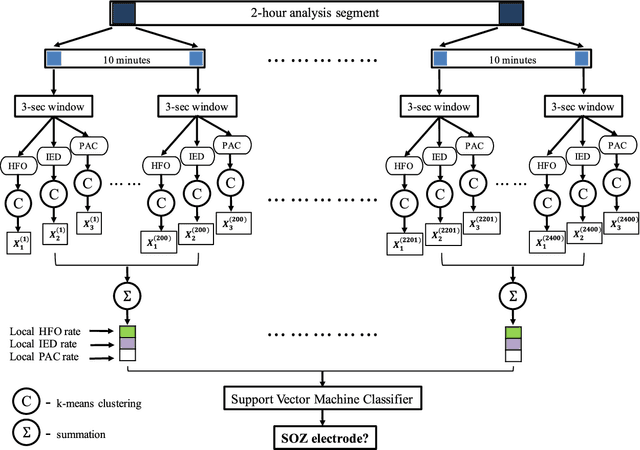
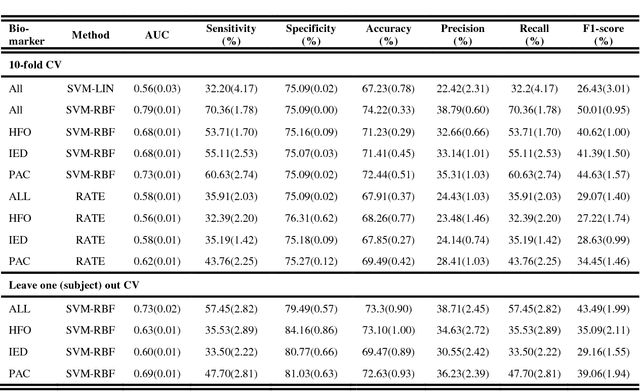
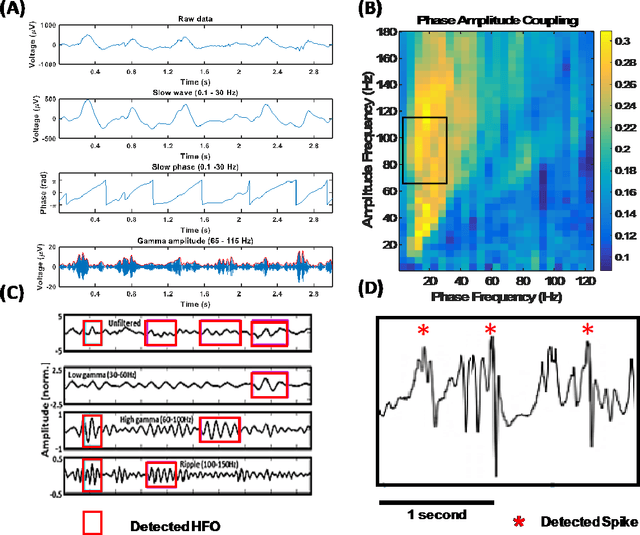
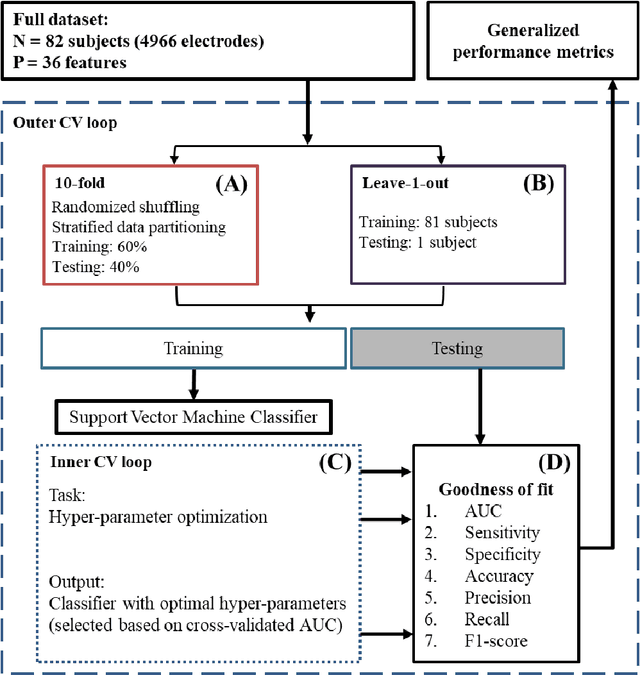
An ability to map seizure-generating brain tissue, i.e., the seizure onset zone (SOZ), without recording actual seizures could reduce the duration of invasive EEG monitoring for patients with drug-resistant epilepsy. A widely-adopted practice in the literature is to compare the incidence (events/time) of putative pathological electrophysiological biomarkers associated with epileptic brain tissue with the SOZ determined from spontaneous seizures recorded with intracranial EEG, primarily using a single biomarker. Clinical translation of the previous efforts suffers from their inability to generalize across multiple patients because of (a) the inter-patient variability and (b) the temporal variability in the epileptogenic activity. Here, we report an artificial intelligence-based approach for combining multiple interictal electrophysiological biomarkers and their temporal characteristics as a way of accounting for the above barriers and show that it can reliably identify seizure onset zones in a study cohort of 82 patients who underwent evaluation for drug-resistant epilepsy. Our investigation provides evidence that utilizing the complementary information provided by multiple electrophysiological biomarkers and their temporal characteristics can significantly improve the localization potential compared to previously published single-biomarker incidence-based approaches, resulting in an average area under ROC curve (AUC) value of 0.73 in a cohort of 82 patients. Our results also suggest that recording durations between ninety minutes and two hours are sufficient to localize SOZs with accuracies that may prove clinically relevant. The successful validation of our approach on a large cohort of 82 patients warrants future investigation on the feasibility of utilizing intra-operative EEG monitoring and artificial intelligence to localize epileptogenic brain tissue.