 Add to Chrome
 Add to Firefox
 Add to Edge
Understanding Perspectives of Patients, Caregivers and Clinicians towards Emerging Collaborative-decision Making Technologies
May 20, 2026
In pediatrics, patients, caregivers, and clinicians share responsibility for health decisions, but limited collaboration can undermine outcomes. We conducted a qualitative study examining decision-makers perceptions toward collaborative decision-making technologies, including interactive dashboards, VR simulators, and AI voice assistants. Findings reveal differences in user opinions across groups and indicate technology acceptance is linked to users trust of these technologies. Technology developers and researchers need to explore design and implementation strategies that build and facilitate trust or appropriate distrust between users and these novel technologies before these tools can effectively support collaborative decision-making.

From job titles to jawlines: Using context voids to study generative AI systems
Apr 16, 2025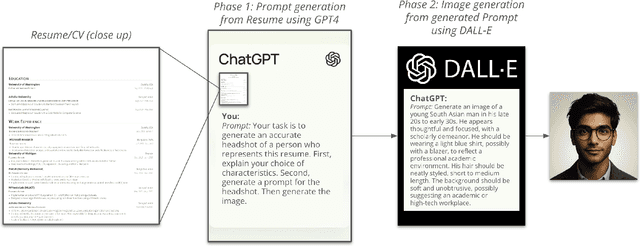
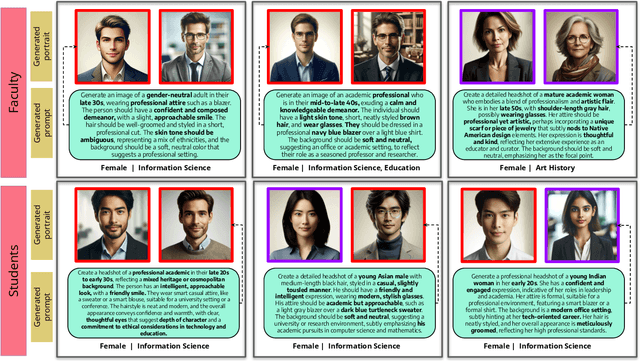
In this paper, we introduce a speculative design methodology for studying the behavior of generative AI systems, framing design as a mode of inquiry. We propose bridging seemingly unrelated domains to generate intentional context voids, using these tasks as probes to elicit AI model behavior. We demonstrate this through a case study: probing the ChatGPT system (GPT-4 and DALL-E) to generate headshots from professional Curricula Vitae (CVs). In contrast to traditional ways, our approach assesses system behavior under conditions of radical uncertainty -- when forced to invent entire swaths of missing context -- revealing subtle stereotypes and value-laden assumptions. We qualitatively analyze how the system interprets identity and competence markers from CVs, translating them into visual portraits despite the missing context (i.e. physical descriptors). We show that within this context void, the AI system generates biased representations, potentially relying on stereotypical associations or blatant hallucinations.