 Add to Chrome
 Add to Firefox
 Add to Edge
Quantifying Memorization and Privacy Risks in Genomic Language Models
Mar 09, 2026
Genomic language models (GLMs) have emerged as powerful tools for learning representations of DNA sequences, enabling advances in variant prediction, regulatory element identification, and cross-task transfer learning. However, as these models are increasingly trained or fine-tuned on sensitive genomic cohorts, they risk memorizing specific sequences from their training data, raising serious concerns around privacy, data leakage, and regulatory compliance. Despite growing awareness of memorization risks in general-purpose language models, little systematic evaluation exists for these risks in the genomic domain, where data exhibit unique properties such as a fixed nucleotide alphabet, strong biological structure, and individual identifiability. We present a comprehensive, multi-vector privacy evaluation framework designed to quantify memorization risks in GLMs. Our approach integrates three complementary risk assessment methodologies: perplexity-based detection, canary sequence extraction, and membership inference. These are combined into a unified evaluation pipeline that produces a worst-case memorization risk score. To enable controlled evaluation, we plant canary sequences at varying repetition rates into both synthetic and real genomic datasets, allowing precise quantification of how repetition and training dynamics influence memorization. We evaluate our framework across multiple GLM architectures, examining the relationship between sequence repetition, model capacity, and memorization risk. Our results establish that GLMs exhibit measurable memorization and that the degree of memorization varies across architectures and training regimes. These findings reveal that no single attack vector captures the full scope of memorization risk, underscoring the need for multi-vector privacy auditing as a standard practice for genomic AI systems.

Privacy-Preserving Model and Preprocessing Verification for Machine Learning
Jan 14, 2025
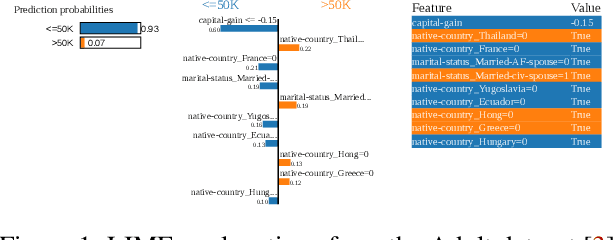
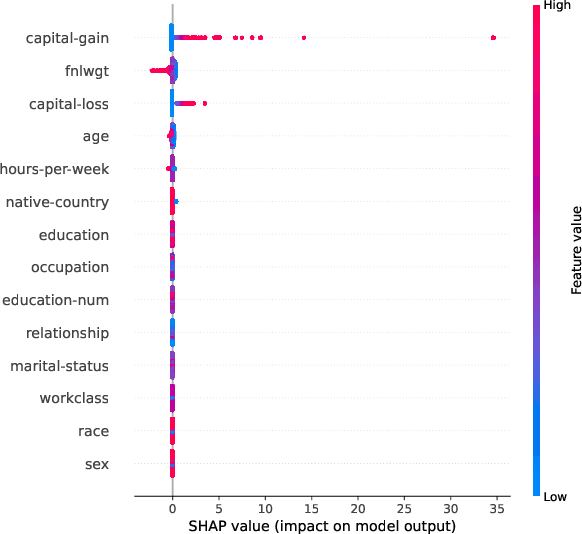
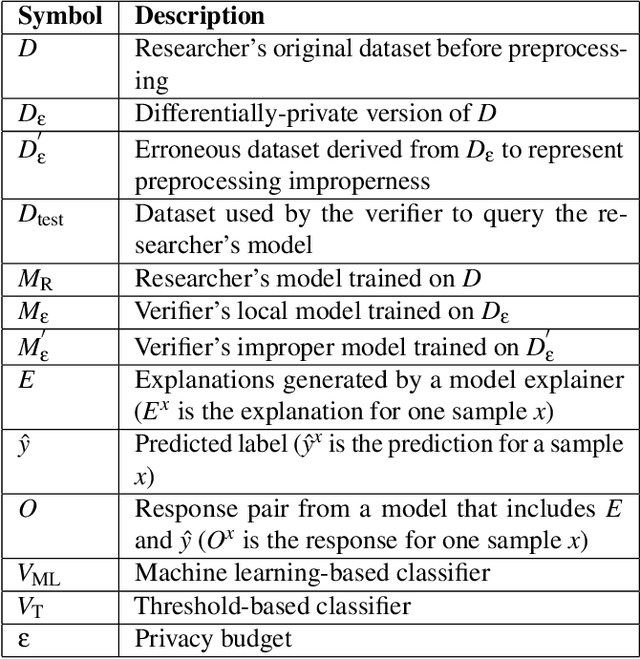
This paper presents a framework for privacy-preserving verification of machine learning models, focusing on models trained on sensitive data. Integrating Local Differential Privacy (LDP) with model explanations from LIME and SHAP, our framework enables robust verification without compromising individual privacy. It addresses two key tasks: binary classification, to verify if a target model was trained correctly by applying the appropriate preprocessing steps, and multi-class classification, to identify specific preprocessing errors. Evaluations on three real-world datasets-Diabetes, Adult, and Student Record-demonstrate that while the ML-based approach is particularly effective in binary tasks, the threshold-based method performs comparably in multi-class tasks. Results indicate that although verification accuracy varies across datasets and noise levels, the framework provides effective detection of preprocessing errors, strong privacy guarantees, and practical applicability for safeguarding sensitive data.