 Add to Chrome
 Add to Firefox
 Add to Edge
Mind the Cap: Output-Budget Regimes Change the Measured Multilingual Reasoning Gap
Aug 04, 2026
Multilingual evaluations report accuracy at a single output-token cap, but languages need different numbers of tokens to express the same content, so the cap is a hidden experimental variable. We test whether the native-vs-translate gap on MGSM (German, Thai, Swahili) is a token-budget artifact for Qwen3-8B and Llama-3.1-8B-Instruct under four prompting strategies. The measured gap swings by up to 57 points across budgets, length normalization moves it by up to 38.9 points where the cap binds, and at tight caps normalization can reverse which strategy scores higher. We prospectively froze the sweep's three Qwen peaks and its near-zero value at 1024 and evaluated them on 540,000 independently hard-capped decodes: a second frozen family of six Holm-corrected tests rejects every null. The frozen test at $B^*=1024$ still fails to reject because native accuracy has already saturated there; above saturation, the residual difference is a strategy-performance gap, not an identified reasoning deficit. The same truncation channel prices a cost-ordered adaptation ladder: a cross-fitted Thai vocabulary extension closes 0.0 points of the gap at the frozen budget and 4.9 points where 19% of traces still truncate. A third frozen family varies only the announced budget at a fixed enforced cap; announcing 128 rather than 2048 tokens moves Thai native accuracy by 5.1 points, so accuracy is not a function of the enforced cap alone. A correct-emission timing identity computed from one long-cap run matches the three pre-specified MGSM peaks to 0.65 points and, in an exploratory Qwen-only analysis of three further benchmarks, tracks held-out items to 0.92 points, locating the peak exactly in five of seven cells. Treat the output cap as an independent variable and report accuracy across the budget regime, not at a single budget.

From Agent Failures to Text Policies: What Works and What Breaks
Jul 22, 2026TextGrad improves language-model systems by revising text from feedback. Its core thesis is that natural-language feedback can act as a gradient for optimizing text components without changing model weights. Applying it to agents is harder because feedback arrives only after a sequence of actions, making it difficult to identify which decision caused failure. We study this problem by separating the ability to follow a useful policy from the ability to learn that policy from experience. Our main finding is a clear gap between these two abilities. Human-written policies improve two frozen 7B agents on TextWorldExpress by 5.0 success points, showing that useful policy text exists. However, policies generated from agent trajectories do not reliably outperform fixed prompting, even with richer traces, counterfactual evidence, or iterative GEPA search. The main challenge for agent-level TextGrad is therefore not executing textual policy updates, but reliably generating and selecting them from experience.
Structured Feedback Improves Repair in an LLM Agent Loop
Jul 15, 2026LLM agents often retry after external validation rejects a candidate, but the interface between validation and the next model call remains underspecified. We introduce VeriHarness, a code-controlled agent loop in which models generate candidates while external validators control acceptance, budgets, and traces. We use it to compare raw diagnostics with feedback that identifies the failure location, observed value, and admissible alternatives. Across 50 paired TextWorld games under a four-call cap, feedback containing all three fields raises terminal success from 14/50 to 36/50 for Qwen2.5-Coder-14B (+44 percentage points) and from 8/50 to 29/50 for Llama-3.1-8B (+42 points). Ablations locate most of the gain in the admissible alternatives: feedback containing only the location and observed value remains near the raw diagnostic baseline. Presenting the complete repair information in prose instead of a keyed JSON record yields nearly the same success, providing no evidence that JSON syntax itself improves repair. The ordering persists across the tested call budgets and one sampled-decoding setting.
Before the Model Learns the Bug:Fuzzing RLVR Verifiers
May 31, 2026Reinforcement learning with verifiable rewards (RLVR) replaces human preference labels with executable reward functions such as math answer checkers, JSON tool-call validators, and code unit-test harnesses. That makes the reward partly a software artifact: if the verifier is wrong, optimization can learn the bug. We study this failure mode with a lightweight verifier-fuzzing framework that generates adversarial completions, compares buggy and stricter reference verifiers, logs paired decisions, and reports false-positive, false-negative, disagreement, exploit, and uncertainty metrics.
Advancing calibration for stochastic agent-based models in epidemiology with Stein variational inference and Gaussian process surrogates
Feb 26, 2025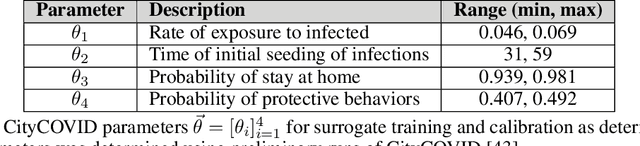
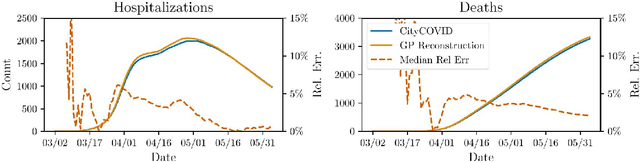
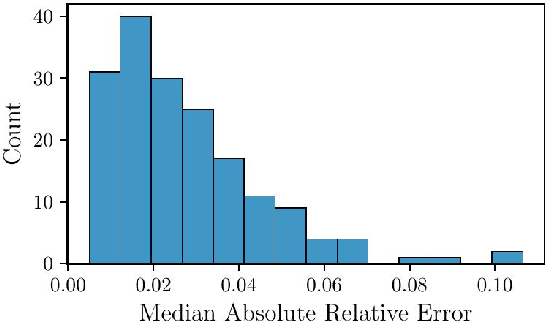

Accurate calibration of stochastic agent-based models (ABMs) in epidemiology is crucial to make them useful in public health policy decisions and interventions. Traditional calibration methods, e.g., Markov Chain Monte Carlo (MCMC), that yield a probability density function for the parameters being calibrated, are often computationally expensive. When applied to ABMs which are highly parametrized, the calibration process becomes computationally infeasible. This paper investigates the utility of Stein Variational Inference (SVI) as an alternative calibration technique for stochastic epidemiological ABMs approximated by Gaussian process (GP) surrogates. SVI leverages gradient information to iteratively update a set of particles in the space of parameters being calibrated, offering potential advantages in scalability and efficiency for high-dimensional ABMs. The ensemble of particles yields a joint probability density function for the parameters and serves as the calibration. We compare the performance of SVI and MCMC in calibrating CityCOVID, a stochastic epidemiological ABM, focusing on predictive accuracy and calibration effectiveness. Our results demonstrate that SVI maintains predictive accuracy and calibration effectiveness comparable to MCMC, making it a viable alternative for complex epidemiological models. We also present the practical challenges of using a gradient-based calibration such as SVI which include careful tuning of hyperparameters and monitoring of the particle dynamics.
Taming the Memory Beast: Strategies for Reliable ML Training on Kubernetes
Dec 19, 2024Kubernetes offers a powerful orchestration platform for machine learning training, but memory management can be challenging due to specialized needs and resource constraints. This paper outlines how Kubernetes handles memory requests, limits, Quality of Service classes, and eviction policies for ML workloads, with special focus on GPU memory and ephemeral storage. Common pitfalls such as overcommitment, memory leaks, and ephemeral volume exhaustion are examined. We then provide best practices for stable, scalable memory utilization to help ML practitioners prevent out-of-memory events and ensure high-performance ML training pipelines.
Bayesian calibration of stochastic agent based model via random forest
Jun 27, 2024Agent-based models (ABM) provide an excellent framework for modeling outbreaks and interventions in epidemiology by explicitly accounting for diverse individual interactions and environments. However, these models are usually stochastic and highly parametrized, requiring precise calibration for predictive performance. When considering realistic numbers of agents and properly accounting for stochasticity, this high dimensional calibration can be computationally prohibitive. This paper presents a random forest based surrogate modeling technique to accelerate the evaluation of ABMs and demonstrates its use to calibrate an epidemiological ABM named CityCOVID via Markov chain Monte Carlo (MCMC). The technique is first outlined in the context of CityCOVID's quantities of interest, namely hospitalizations and deaths, by exploring dimensionality reduction via temporal decomposition with principal component analysis (PCA) and via sensitivity analysis. The calibration problem is then presented and samples are generated to best match COVID-19 hospitalization and death numbers in Chicago from March to June in 2020. These results are compared with previous approximate Bayesian calibration (IMABC) results and their predictive performance is analyzed showing improved performance with a reduction in computation.