 Add to Chrome
 Add to Firefox
 Add to Edge
Design and Integration of Thermal and Vibrotactile Feedback for Lifelike Touch in Social Robots
Dec 19, 2025
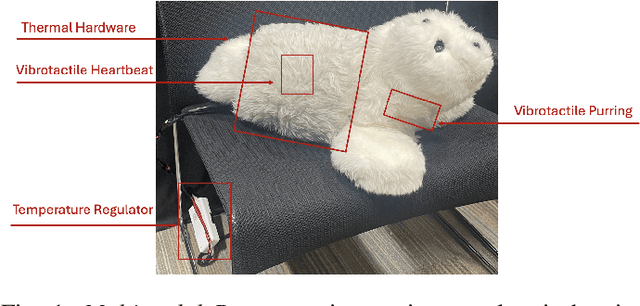
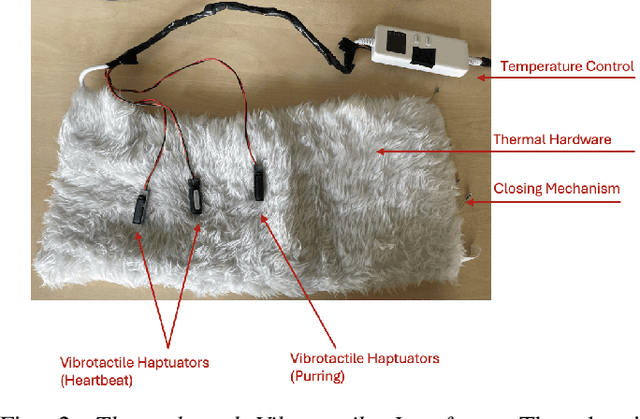
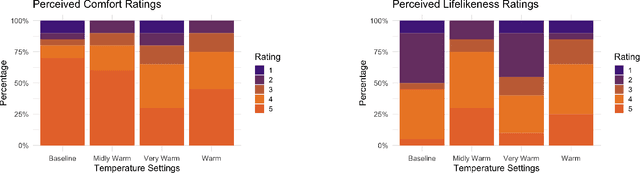
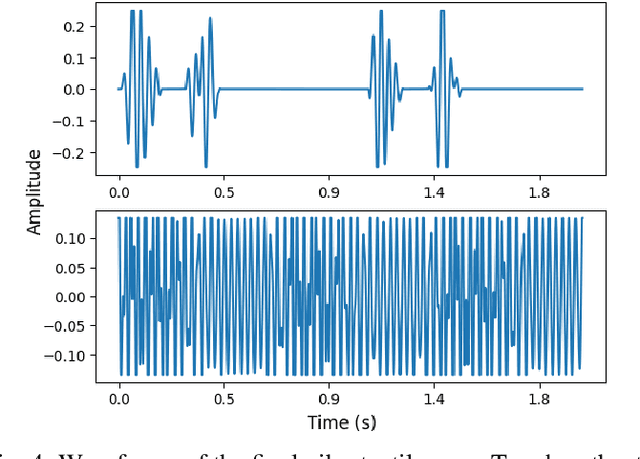
Zoomorphic Socially Assistive Robots (SARs) offer an alternative source of social touch for individuals who cannot access animal companionship. However, current SARs provide only limited, passive touch-based interactions and lack the rich haptic cues, such as warmth, heartbeat or purring, that are characteristic of human-animal touch. This limits their ability to evoke emotionally engaging, life-like physical interactions. We present a multimodal tactile prototype, which was used to augment the established PARO robot, integrating thermal and vibrotactile feedback to simulate feeling biophysiological signals. A flexible heating interface delivers body-like warmth, while embedded actuators generate heartbeat-like rhythms and continuous purring sensations. These cues were iteratively designed and calibrated with input from users and haptics experts. We outline the design process and offer reproducible guidelines to support the development of emotionally resonant and biologically plausible touch interactions with SARs.

Soothing Sensations: Enhancing Interactions with a Socially Assistive Robot through Vibrotactile Heartbeats
Oct 10, 2024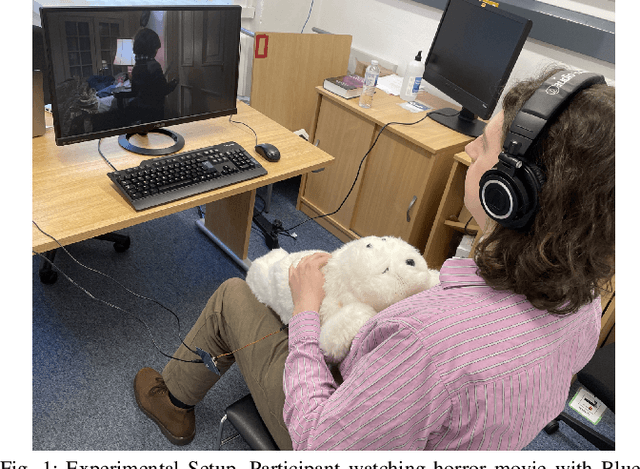
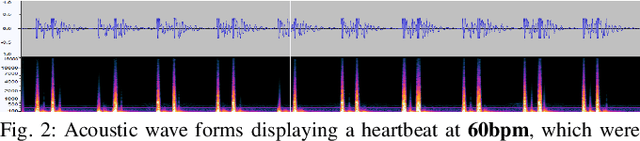
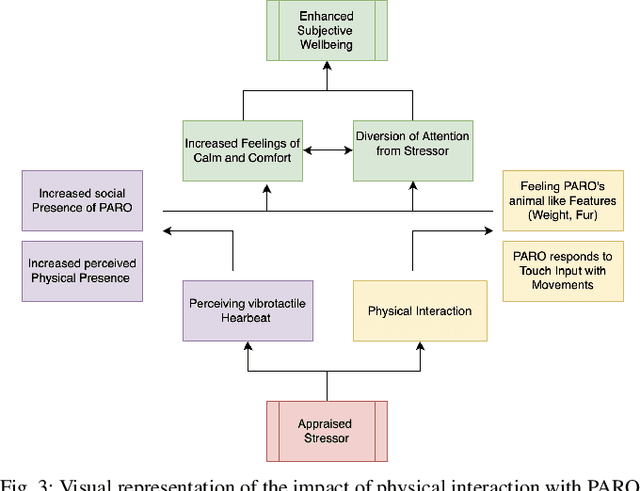
Physical interactions with socially assistive robots (SARs) positively affect user wellbeing. However, haptic experiences when touching a SAR are typically limited to perceiving the robot's movements or shell texture, while other modalities that could enhance the touch experience with the robot, such as vibrotactile stimulation, are under-explored. In this exploratory qualitative study, we investigate the potential of enhancing human interaction with the PARO robot through vibrotactile heartbeats, with the goal to regulate subjective wellbeing during stressful situations. We conducted in-depth one-on-one interviews with 30 participants, who watched three horror movie clips alone, with PARO, and with a PARO that displayed a vibrotactile heartbeat. Our findings show that PARO's presence and its interactive capabilities can help users regulate emotions through attentional redeployment from a stressor toward the robot. The vibrotactile heartbeat further reinforced PARO's physical and social presence, enhancing the socio-emotional support provided by the robot and its perceived life-likeness. We discuss the impact of individual differences in user experience and implications for the future design of life-like vibrotactile stimulation for SARs.