 Add to Chrome
 Add to Firefox
 Add to Edge
DeepFreqMark: End-To-End Learnable Frequency-Domain Watermarking with Spherical Attack Simulation for Latent Diffusion Models
Aug 10, 2026
The proliferation of AI-generated images produced by Latent Diffusion Models (LDMs) has raised critical concerns regarding copyright infringement and misinformation. Although existing frequency-domain watermarking methods embed handcrafted geometric patterns into the initial latent noise prior to generation, they suffer from limited capacity and rigid pattern designs. We propose DeepFreqMark, an end-to-end learnable frequency-domain watermarking framework that replaces manual pattern engineering with a neural message encoder and decoder. To circumvent the computational bottleneck caused by Denoising Diffusion Implicit Model (DDIM) inversion during training, we introduce a Spherical Linear Interpolation (Slerp)-based attack simulation. This approach operates directly on the noise latent while strictly preserving the Gaussian variance. Extensive experiments demonstrate that DeepFreqMark achieves significantly lower Bit Error Rates (BER) than baseline methods under real-world attacks and scales to 256 bits message capacity. Our source code is available at https://github.com/chenhsiu48/DeepFreqMark.

Variable-Rate Deep Image Compression based on Low-Rank Adaptation by Progressive Learning
Jun 15, 2026In the digital age, image compression is crucial for numerous applications, including web media, streaming services, high-resolution medical imaging, and connected vehicle networks, enabling efficient data storage and transmission. With the increasing demand for high-quality image communication, the need for advanced compression techniques becomes increasingly critical. Numerous Deep Image Compression (DIC) techniques have recently been introduced, showing impressive performance compared to traditional standards. However, variable-rate image compression remains an unresolved issue. Specific DIC methods deploy multiple networks to attain different compression rates, whereas others use a single model, which often results in higher computational complexity and reduced performance. This work proposes a progressive learning approach for variable-rate image compression based on the parameter-efficient fine-tuning method, the Low-Rank Adaptation (LoRA). We introduce an additional LoRA Rate-Adaptive Module (LoRAM) in DIC methods. Due to the re-parameterized merging of LoRA, our proposed method does not introduce additional computational complexity during inference. Compared to methods utilizing multiple models, comprehensive experiments demonstrate that our approach achieves competitive performance, saving 99\% in parameter storage, 90% in datasets, and 97% in training steps.
Harnessing Large Language and Vision-Language Models for Robust Out-of-Distribution Detection
Jan 09, 2025Out-of-distribution (OOD) detection has seen significant advancements with zero-shot approaches by leveraging the powerful Vision-Language Models (VLMs) such as CLIP. However, prior research works have predominantly focused on enhancing Far-OOD performance, while potentially compromising Near-OOD efficacy, as observed from our pilot study. To address this issue, we propose a novel strategy to enhance zero-shot OOD detection performances for both Far-OOD and Near-OOD scenarios by innovatively harnessing Large Language Models (LLMs) and VLMs. Our approach first exploit an LLM to generate superclasses of the ID labels and their corresponding background descriptions followed by feature extraction using CLIP. We then isolate the core semantic features for ID data by subtracting background features from the superclass features. The refined representation facilitates the selection of more appropriate negative labels for OOD data from a comprehensive candidate label set of WordNet, thereby enhancing the performance of zero-shot OOD detection in both scenarios. Furthermore, we introduce novel few-shot prompt tuning and visual prompt tuning to adapt the proposed framework to better align with the target distribution. Experimental results demonstrate that the proposed approach consistently outperforms current state-of-the-art methods across multiple benchmarks, with an improvement of up to 2.9% in AUROC and a reduction of up to 12.6% in FPR95. Additionally, our method exhibits superior robustness against covariate shift across different domains, further highlighting its effectiveness in real-world scenarios.
A Study of Secure Algorithms for Vertical Federated Learning: Take Secure Logistic Regression as an Example
Oct 30, 2024After entering the era of big data, more and more companies build services with machine learning techniques. However, it is costly for companies to collect data and extract helpful handcraft features on their own. Although it is a way to combine with other companies' data for boosting the model's performance, this approach may be prohibited by laws. In other words, finding the balance between sharing data with others and keeping data from privacy leakage is a crucial topic worthy of close attention. This paper focuses on distributed data and conducts secure model training tasks on a vertical federated learning scheme. Here, secure implies that the whole process is executed in the encrypted domain. Therefore, the privacy concern is released.
A Machine Learning-Based Secure Face Verification Scheme and Its Applications to Digital Surveillance
Oct 29, 2024


Face verification is a well-known image analysis application and is widely used to recognize individuals in contemporary society. However, most real-world recognition systems ignore the importance of protecting the identity-sensitive facial images that are used for verification. To address this problem, we investigate how to implement a secure face verification system that protects the facial images from being imitated. In our work, we use the DeepID2 convolutional neural network to extract the features of a facial image and an EM algorithm to solve the facial verification problem. To maintain the privacy of facial images, we apply homomorphic encryption schemes to encrypt the facial data and compute the EM algorithm in the ciphertext domain. We develop three face verification systems for surveillance (or entrance) control of a local community based on three levels of privacy concerns. The associated timing performances are presented to demonstrate their feasibility for practical implementation.
SLIC: Secure Learned Image Codec through Compressed Domain Watermarking to Defend Image Manipulation
Oct 19, 2024

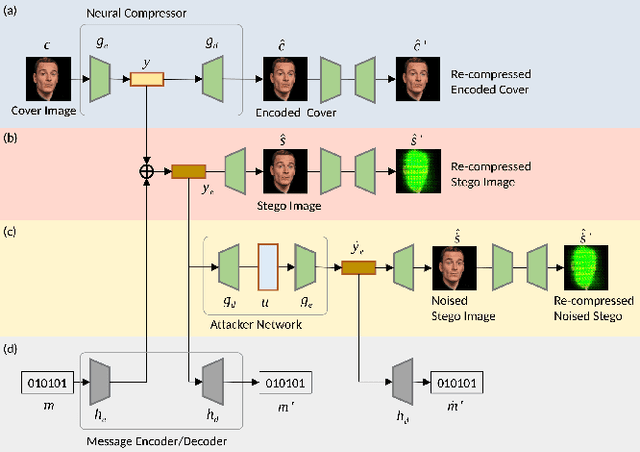

The digital image manipulation and advancements in Generative AI, such as Deepfake, has raised significant concerns regarding the authenticity of images shared on social media. Traditional image forensic techniques, while helpful, are often passive and insufficient against sophisticated tampering methods. This paper introduces the Secure Learned Image Codec (SLIC), a novel active approach to ensuring image authenticity through watermark embedding in the compressed domain. SLIC leverages neural network-based compression to embed watermarks as adversarial perturbations in the latent space, creating images that degrade in quality upon re-compression if tampered with. This degradation acts as a defense mechanism against unauthorized modifications. Our method involves fine-tuning a neural encoder/decoder to balance watermark invisibility with robustness, ensuring minimal quality loss for non-watermarked images. Experimental results demonstrate SLIC's effectiveness in generating visible artifacts in tampered images, thereby preventing their redistribution. This work represents a significant step toward developing secure image codecs that can be widely adopted to safeguard digital image integrity.
Exploring Compressed Image Representation as a Perceptual Proxy: A Study
Jan 14, 2024We propose an end-to-end learned image compression codec wherein the analysis transform is jointly trained with an object classification task. This study affirms that the compressed latent representation can predict human perceptual distance judgments with an accuracy comparable to a custom-tailored DNN-based quality metric. We further investigate various neural encoders and demonstrate the effectiveness of employing the analysis transform as a perceptual loss network for image tasks beyond quality judgments. Our experiments show that the off-the-shelf neural encoder proves proficient in perceptual modeling without needing an additional VGG network. We expect this research to serve as a valuable reference developing of a semantic-aware and coding-efficient neural encoder.
CPIPS: Learning to Preserve Perceptual Distances in End-to-End Image Compression
Oct 01, 2023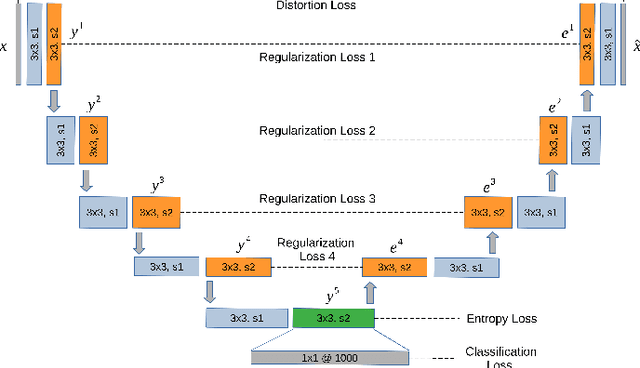
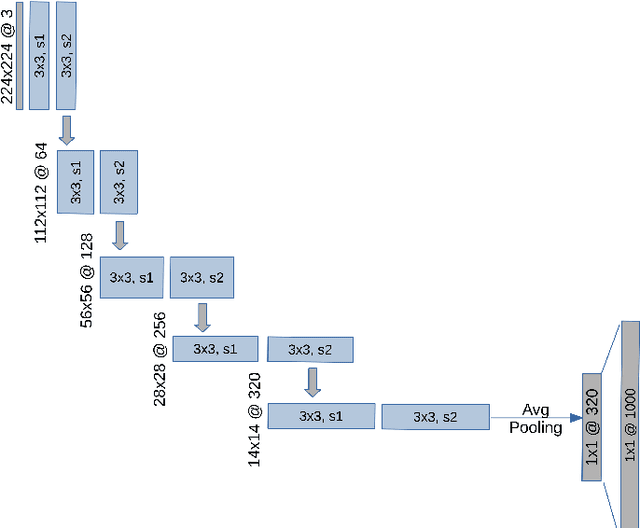
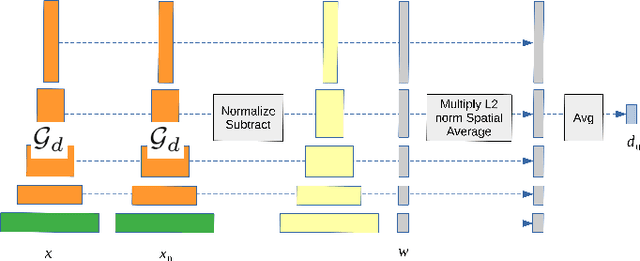
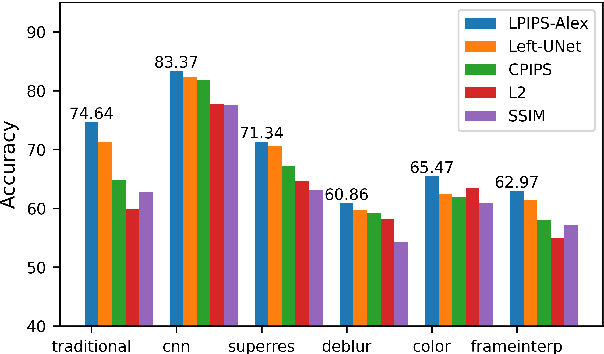
Lossy image coding standards such as JPEG and MPEG have successfully achieved high compression rates for human consumption of multimedia data. However, with the increasing prevalence of IoT devices, drones, and self-driving cars, machines rather than humans are processing a greater portion of captured visual content. Consequently, it is crucial to pursue an efficient compressed representation that caters not only to human vision but also to image processing and machine vision tasks. Drawing inspiration from the efficient coding hypothesis in biological systems and the modeling of the sensory cortex in neural science, we repurpose the compressed latent representation to prioritize semantic relevance while preserving perceptual distance. Our proposed method, Compressed Perceptual Image Patch Similarity (CPIPS), can be derived at a minimal cost from a learned neural codec and computed significantly faster than DNN-based perceptual metrics such as LPIPS and DISTS.
Image Data Hiding in Neural Compressed Latent Representations
Oct 01, 2023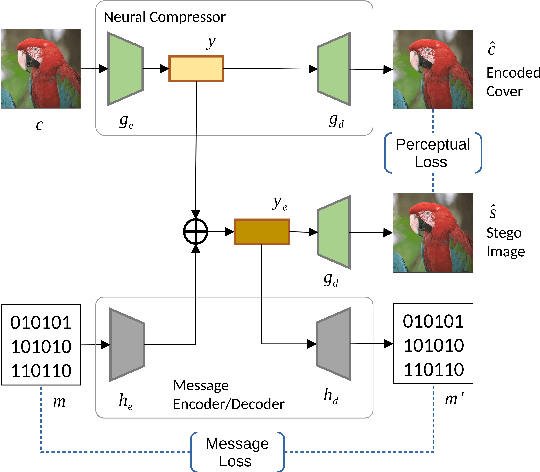
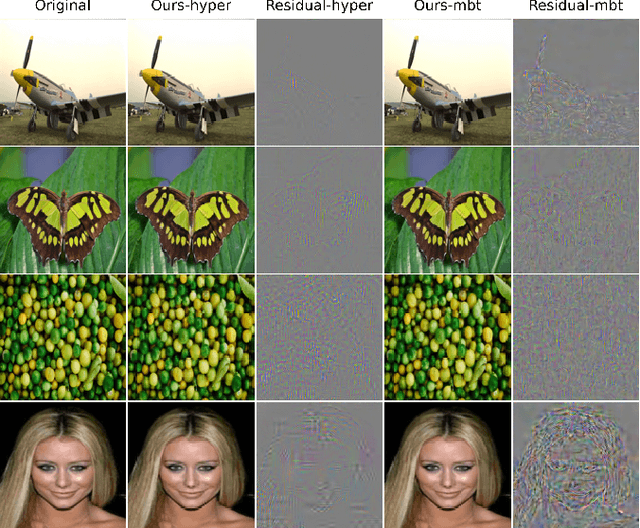
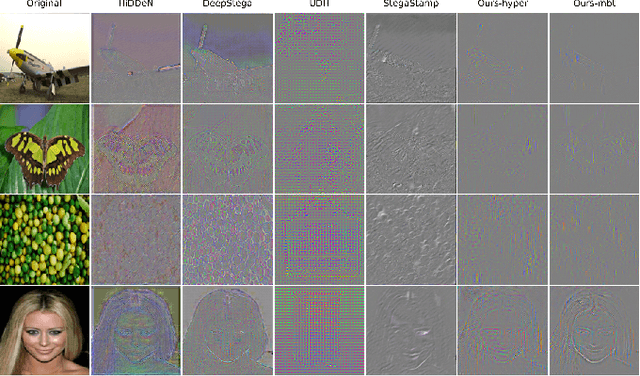
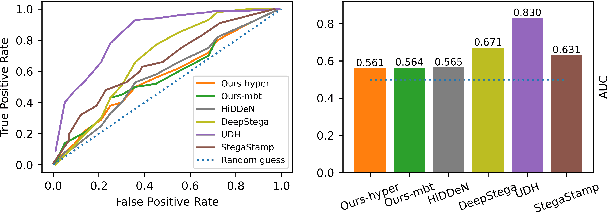
We propose an end-to-end learned image data hiding framework that embeds and extracts secrets in the latent representations of a generic neural compressor. By leveraging a perceptual loss function in conjunction with our proposed message encoder and decoder, our approach simultaneously achieves high image quality and high bit accuracy. Compared to existing techniques, our framework offers superior image secrecy and competitive watermarking robustness in the compressed domain while accelerating the embedding speed by over 50 times. These results demonstrate the potential of combining data hiding techniques and neural compression and offer new insights into developing neural compression techniques and their applications.
Multi-task deep CNN model for no-reference image quality assessment on smartphone camera photos
Aug 27, 2020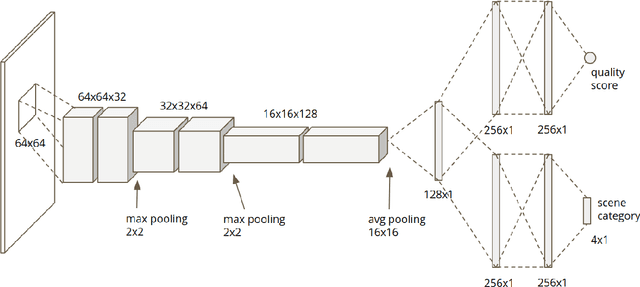
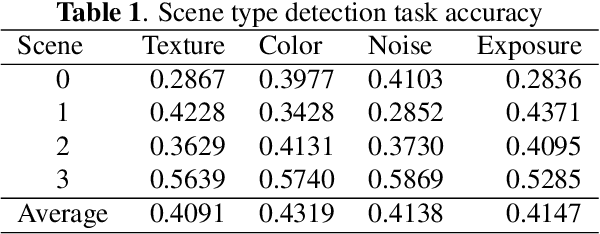
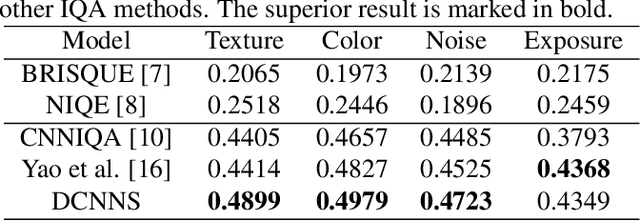
Smartphone is the most successful consumer electronic product in today's mobile social network era. The smartphone camera quality and its image post-processing capability is the dominant factor that impacts consumer's buying decision. However, the quality evaluation of photos taken from smartphones remains a labor-intensive work and relies on professional photographers and experts. As an extension of the prior CNN-based NR-IQA approach, we propose a multi-task deep CNN model with scene type detection as an auxiliary task. With the shared model parameters in the convolution layer, the learned feature maps could become more scene-relevant and enhance the performance. The evaluation result shows improved SROCC performance compared to traditional NR-IQA methods and single task CNN-based models.