 Add to Chrome
 Add to Firefox
 Add to Edge
Not-in-Perspective: Towards Shielding Google's Perspective API Against Adversarial Negation Attacks
Feb 10, 2026
The rise of cyberbullying in social media platforms involving toxic comments has escalated the need for effective ways to monitor and moderate online interactions. Existing solutions of automated toxicity detection systems, are based on a machine or deep learning algorithms. However, statistics-based solutions are generally prone to adversarial attacks that contain logic based modifications such as negation in phrases and sentences. In that regard, we present a set of formal reasoning-based methodologies that wrap around existing machine learning toxicity detection systems. Acting as both pre-processing and post-processing steps, our formal reasoning wrapper helps alleviating the negation attack problems and significantly improves the accuracy and efficacy of toxicity scoring. We evaluate different variations of our wrapper on multiple machine learning models against a negation adversarial dataset. Experimental results highlight the improvement of hybrid (formal reasoning and machine-learning) methods against various purely statistical solutions.

A Method for Fast Autonomy Transfer in Reinforcement Learning
Jul 29, 2024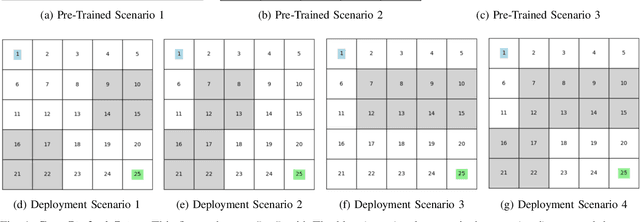
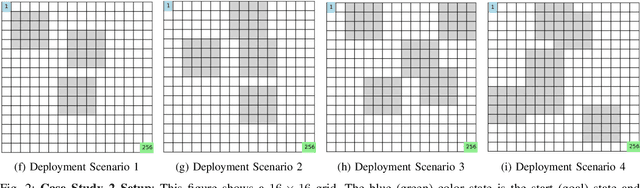
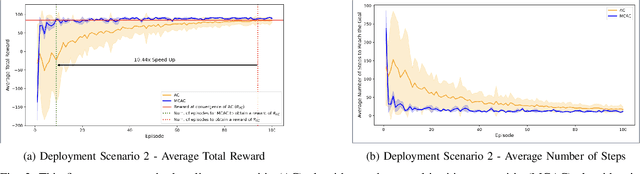
This paper introduces a novel reinforcement learning (RL) strategy designed to facilitate rapid autonomy transfer by utilizing pre-trained critic value functions from multiple environments. Unlike traditional methods that require extensive retraining or fine-tuning, our approach integrates existing knowledge, enabling an RL agent to adapt swiftly to new settings without requiring extensive computational resources. Our contributions include development of the Multi-Critic Actor-Critic (MCAC) algorithm, establishing its convergence, and empirical evidence demonstrating its efficacy. Our experimental results show that MCAC significantly outperforms the baseline actor-critic algorithm, achieving up to 22.76x faster autonomy transfer and higher reward accumulation. This advancement underscores the potential of leveraging accumulated knowledge for efficient adaptation in RL applications.