 Add to Chrome
 Add to Firefox
 Add to Edge
Uncovering Memorization in Timeseries Imputation models: LBRM Membership Inference and its link to attribute Leakage
Mar 25, 2026
Deep learning models for time series imputation are now essential in fields such as healthcare, the Internet of Things (IoT), and finance. However, their deployment raises critical privacy concerns. Beyond the well-known issue of unintended memorization, which has been extensively studied in generative models, we demonstrate that time series models are vulnerable to inference attacks in a black-box setting. In this work, we introduce a two-stage attack framework comprising: (1) a novel membership inference attack based on a reference model that improves detection accuracy, even for models robust to overfitting-based attacks, and (2) the first attribute inference attack that predicts sensitive characteristics of the training data for timeseries imputation model. We evaluate these attacks on attention-based and autoencoder architectures in two scenarios: models that are trained from scratch, and fine-tuned models where the adversary has access to the initial weights. Our experimental results demonstrate that the proposed membership attack retrieves a significant portion of the training data with a tpr@top25% score significantly higher than a naive attack baseline. We show that our membership attack also provides a good insight of whether attribute inference will work (with a precision of 90% instead of 78% in the genral case).

A new membership inference attack that spots memorization in generative and predictive models: Loss-Based with Reference Model algorithm (LBRM)
May 06, 2025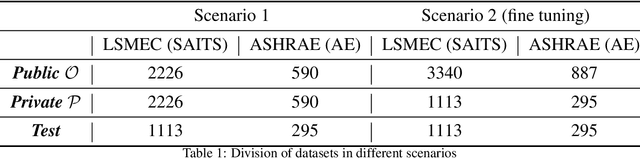
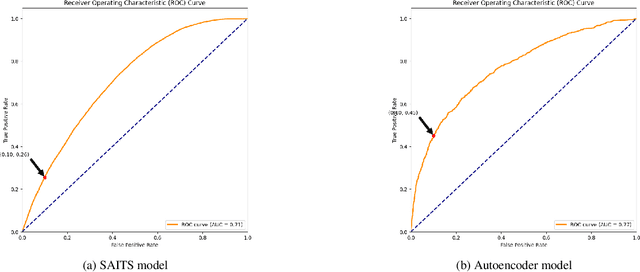
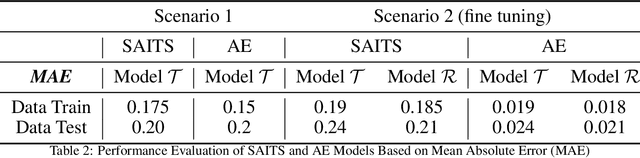
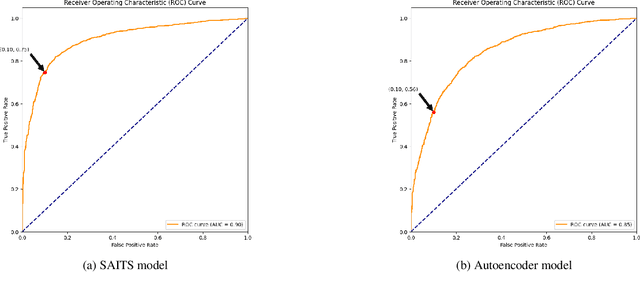
Generative models can unintentionally memorize training data, posing significant privacy risks. This paper addresses the memorization phenomenon in time series imputation models, introducing the Loss-Based with Reference Model (LBRM) algorithm. The LBRM method leverages a reference model to enhance the accuracy of membership inference attacks, distinguishing between training and test data. Our contributions are twofold: first, we propose an innovative method to effectively extract and identify memorized training data, significantly improving detection accuracy. On average, without fine-tuning, the AUROC improved by approximately 40\%. With fine-tuning, the AUROC increased by approximately 60\%. Second, we validate our approach through membership inference attacks on two types of architectures designed for time series imputation, demonstrating the robustness and versatility of the LBRM approach in different contexts. These results highlight the significant enhancement in detection accuracy provided by the LBRM approach, addressing privacy risks in time series imputation models.