 Add to Chrome
 Add to Firefox
 Add to Edge
BAT-RM: A Boundary-Aware Transformer with Region-Aware Multi-Directional Mamba for Clinically Deployed Cervical Cancer Radiotherapy Auto-Contouring
Jul 11, 2026
We present a clinically deployed end-to-end auto-contouring system for cervical cancer radiotherapy planning, anchored by the Boundary-Aware Transformer with Region-Aware Mamba (BAT-RM), a hybrid architecture that integrates Sobel-gated boundary attention, a linear-time, multi-directional Mamba module for long-range context, and a boundary-skeleton-guided fusion gate. This design achieves linear-time complexity for long-range context modeling, avoiding the quadratic cost of full spatial self-attention. The full pipeline spans multi-institutional data collection, rigorous inter-rater quality assurance, external validation in an independent cohort, and a web-based clinical interface natively compatible with Varian, RayStation, and Monaco. Against four baselines, BAT-RM achieves superior performance across seven anatomical classes, with statistically significant improvements in target volumes, including GTV and CTV, and in organs at risk such as the rectum and bladder. A prospective multi-center reader study involving 13 radiation oncologists demonstrated that AI assistance elevates junior oncologists' IoU from 0.899 to 0.965, approaching senior-level accuracy, while reducing contouring time by more than 80%. The system also reduced expert consultation rates and improved inter-reader consistency, reflecting gains in both efficiency and quality assurance. Following clinical deployment at a partner hospital, the system reduced patient wait times from days to hours without additional staffing, enabling same-day or next-day initiation of treatment for routine cases. BAT-RM demonstrates that a rigorous research pipeline, from data curation to clinical deployment, can translate directly into measurable patient benefit in resource-constrained settings where the demand for radiotherapy far exceeds specialist capacity.

ConvMambaNet: A Hybrid CNN-Mamba State Space Architecture for Accurate and Real-Time EEG Seizure Detection
Jan 19, 2026Epilepsy is a chronic neurological disorder marked by recurrent seizures that can severely impact quality of life. Electroencephalography (EEG) remains the primary tool for monitoring neural activity and detecting seizures, yet automated analysis remains challenging due to the temporal complexity of EEG signals. This study introduces ConvMambaNet, a hybrid deep learning model that integrates Convolutional Neural Networks (CNNs) with the Mamba Structured State Space Model (SSM) to enhance temporal feature extraction. By embedding the Mamba-SSM block within a CNN framework, the model effectively captures both spatial and long-range temporal dynamics. Evaluated on the CHB-MIT Scalp EEG dataset, ConvMambaNet achieved a 99% accuracy and demonstrated robust performance under severe class imbalance. These results underscore the model's potential for precise and efficient seizure detection, offering a viable path toward real-time, automated epilepsy monitoring in clinical environments.
PILAR: Personalizing Augmented Reality Interactions with LLM-based Human-Centric and Trustworthy Explanations for Daily Use Cases
Dec 19, 2025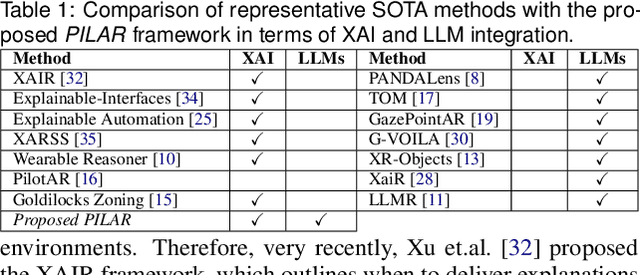
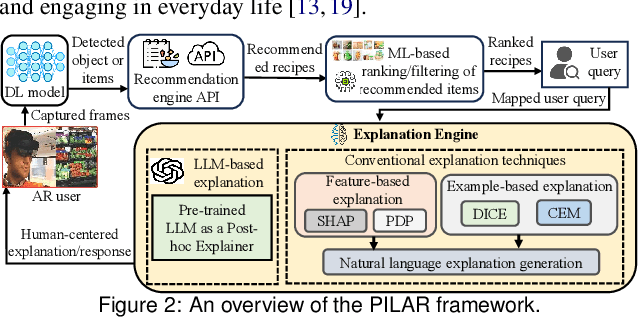
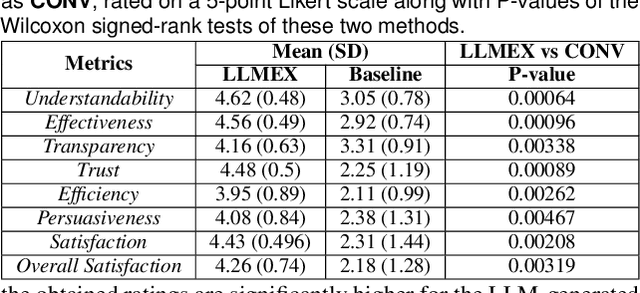
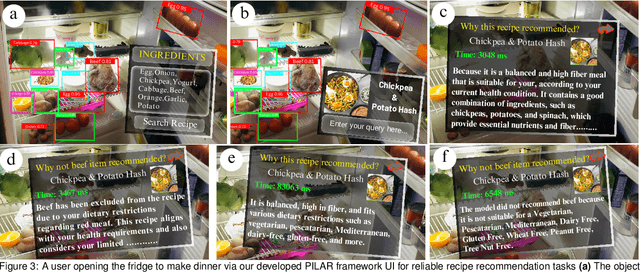
Artificial intelligence (AI)-driven augmented reality (AR) systems are becoming increasingly integrated into daily life, and with this growth comes a greater need for explainability in real-time user interactions. Traditional explainable AI (XAI) methods, which often rely on feature-based or example-based explanations, struggle to deliver dynamic, context-specific, personalized, and human-centric insights for everyday AR users. These methods typically address separate explainability dimensions (e.g., when, what, how) with different explanation techniques, resulting in unrealistic and fragmented experiences for seamless AR interactions. To address this challenge, we propose PILAR, a novel framework that leverages a pre-trained large language model (LLM) to generate context-aware, personalized explanations, offering a more intuitive and trustworthy experience in real-time AI-powered AR systems. Unlike traditional methods, which rely on multiple techniques for different aspects of explanation, PILAR employs a unified LLM-based approach that dynamically adapts explanations to the user's needs, fostering greater trust and engagement. We implement the PILAR concept in a real-world AR application (e.g., personalized recipe recommendations), an open-source prototype that integrates real-time object detection, recipe recommendation, and LLM-based personalized explanations of the recommended recipes based on users' dietary preferences. We evaluate the effectiveness of PILAR through a user study with 16 participants performing AR-based recipe recommendation tasks, comparing an LLM-based explanation interface to a traditional template-based one. Results show that the LLM-based interface significantly enhances user performance and experience, with participants completing tasks 40% faster and reporting greater satisfaction, ease of use, and perceived transparency.
PrivateXR: Defending Privacy Attacks in Extended Reality Through Explainable AI-Guided Differential Privacy
Dec 18, 2025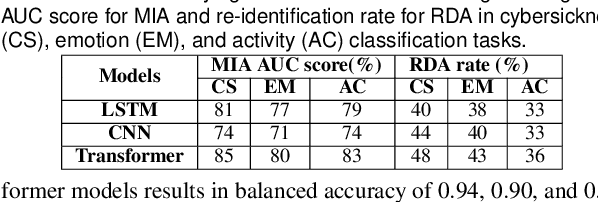
The convergence of artificial AI and XR technologies (AI XR) promises innovative applications across many domains. However, the sensitive nature of data (e.g., eye-tracking) used in these systems raises significant privacy concerns, as adversaries can exploit these data and models to infer and leak personal information through membership inference attacks (MIA) and re-identification (RDA) with a high success rate. Researchers have proposed various techniques to mitigate such privacy attacks, including differential privacy (DP). However, AI XR datasets often contain numerous features, and applying DP uniformly can introduce unnecessary noise to less relevant features, degrade model accuracy, and increase inference time, limiting real-time XR deployment. Motivated by this, we propose a novel framework combining explainable AI (XAI) and DP-enabled privacy-preserving mechanisms to defend against privacy attacks. Specifically, we leverage post-hoc explanations to identify the most influential features in AI XR models and selectively apply DP to those features during inference. We evaluate our XAI-guided DP approach on three state-of-the-art AI XR models and three datasets: cybersickness, emotion, and activity classification. Our results show that the proposed method reduces MIA and RDA success rates by up to 43% and 39%, respectively, for cybersickness tasks while preserving model utility with up to 97% accuracy using Transformer models. Furthermore, it improves inference time by up to ~2x compared to traditional DP approaches. To demonstrate practicality, we deploy the XAI-guided DP AI XR models on an HTC VIVE Pro headset and develop a user interface (UI), namely PrivateXR, allowing users to adjust privacy levels (e.g., low, medium, high) while receiving real-time task predictions, protecting user privacy during XR gameplay.
Adversarial VR: An Open-Source Testbed for Evaluating Adversarial Robustness of VR Cybersickness Detection and Mitigation
Dec 18, 2025Deep learning (DL)-based automated cybersickness detection methods, along with adaptive mitigation techniques, can enhance user comfort and interaction. However, recent studies show that these DL-based systems are susceptible to adversarial attacks; small perturbations to sensor inputs can degrade model performance, trigger incorrect mitigation, and disrupt the user's immersive experience (UIX). Additionally, there is a lack of dedicated open-source testbeds that evaluate the robustness of these systems under adversarial conditions, limiting the ability to assess their real-world effectiveness. To address this gap, this paper introduces Adversarial-VR, a novel real-time VR testbed for evaluating DL-based cybersickness detection and mitigation strategies under adversarial conditions. Developed in Unity, the testbed integrates two state-of-the-art (SOTA) DL models: DeepTCN and Transformer, which are trained on the open-source MazeSick dataset, for real-time cybersickness severity detection and applies a dynamic visual tunneling mechanism that adjusts the field-of-view based on model outputs. To assess robustness, we incorporate three SOTA adversarial attacks: MI-FGSM, PGD, and C&W, which successfully prevent cybersickness mitigation by fooling DL-based cybersickness models' outcomes. We implement these attacks using a testbed with a custom-built VR Maze simulation and an HTC Vive Pro Eye headset, and we open-source our implementation for widespread adoption by VR developers and researchers. Results show that these adversarial attacks are capable of successfully fooling the system. For instance, the C&W attack results in a $5.94x decrease in accuracy for the Transformer-based cybersickness model compared to the accuracy without the attack.
Pioneering Precision in Lumbar Spine MRI Segmentation with Advanced Deep Learning and Data Enhancement
Sep 09, 2024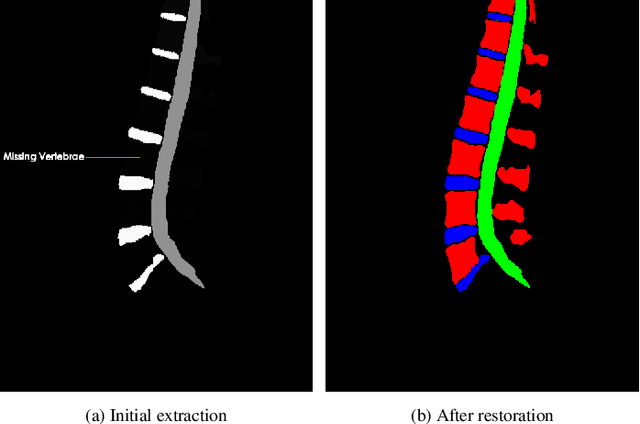
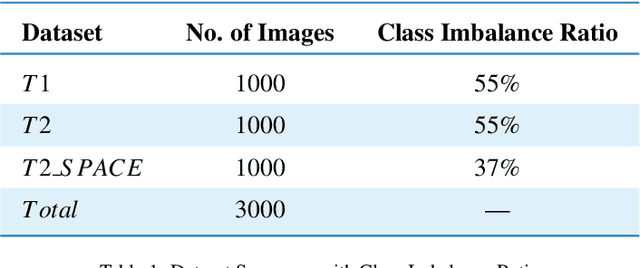
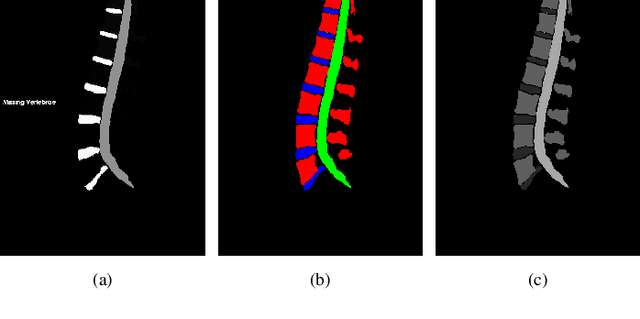
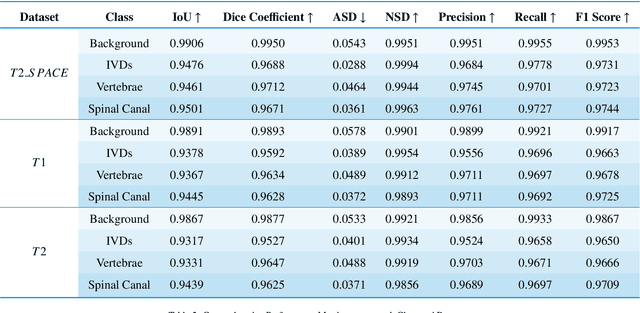
This study presents an advanced approach to lumbar spine segmentation using deep learning techniques, focusing on addressing key challenges such as class imbalance and data preprocessing. Magnetic resonance imaging (MRI) scans of patients with low back pain are meticulously preprocessed to accurately represent three critical classes: vertebrae, spinal canal, and intervertebral discs (IVDs). By rectifying class inconsistencies in the data preprocessing stage, the fidelity of the training data is ensured. The modified U-Net model incorporates innovative architectural enhancements, including an upsample block with leaky Rectified Linear Units (ReLU) and Glorot uniform initializer, to mitigate common issues such as the dying ReLU problem and improve stability during training. Introducing a custom combined loss function effectively tackles class imbalance, significantly improving segmentation accuracy. Evaluation using a comprehensive suite of metrics showcases the superior performance of this approach, outperforming existing methods and advancing the current techniques in lumbar spine segmentation. These findings hold significant advancements for enhanced lumbar spine MRI and segmentation diagnostic accuracy.