 Add to Chrome
 Add to Firefox
 Add to Edge
RIS-Assisted Joint Resource Allocation for 6G FR3 IoT Networks
Apr 02, 2026
In sixth-generation (6G) networks, the deployment of large numbers of Internet of Things (IoT) users (IU) necessitates efficient resource utilization and reliable connectivity, making resource allocation a critical factor. Specifically, the upper mid-band (FR3) spectrum has emerged as a promising candidate for 6G systems due to its favorable balance between bandwidth availability and coverage. However, translating these spectral advantages into performance gains in dense IoT environments requires intelligent management of interference and propagation impairments. In this paper, we propose a reconfigurable intelligent surface (RIS)-assisted IoT network operating in the FR3 band to enhance coverage and improve signal quality. Furthermore, we formulate a joint power allocation and IU-RIS association problem to maximize the achievable sum rate under practical channel conditions and power constraints. The resulting problem is nonconvex and combinatorial due to interference coupling and binary association variables. To address this challenge, we develop a multiphase resource allocation framework that integrates a successive convex approximation (SCA)-based power allocation scheme combined with a matching-theory-based user association algorithm. Simulation results demonstrate that the proposed scheme significantly outperforms conventional greedy and random search schemes in terms of sum-rate enhancement.

Tensor-based Space Debris Detection for Satellite Mega-constellations
Nov 20, 2023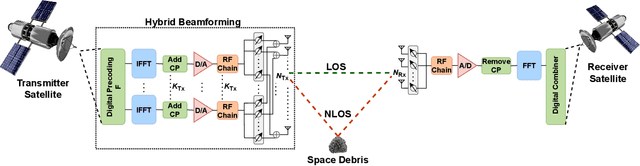
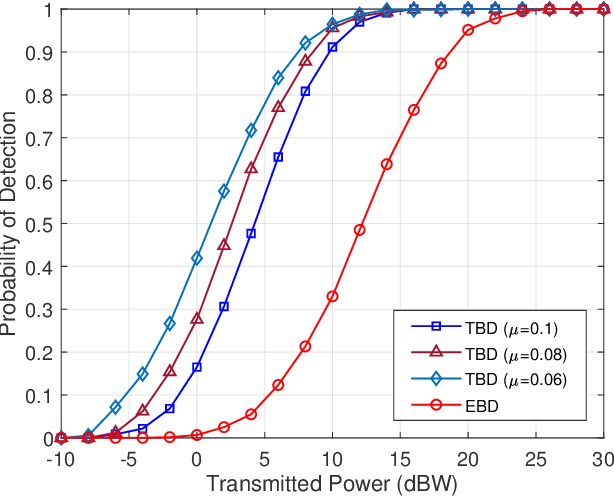
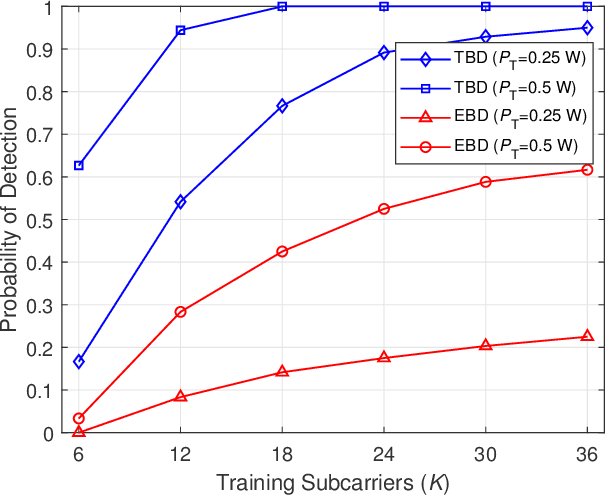
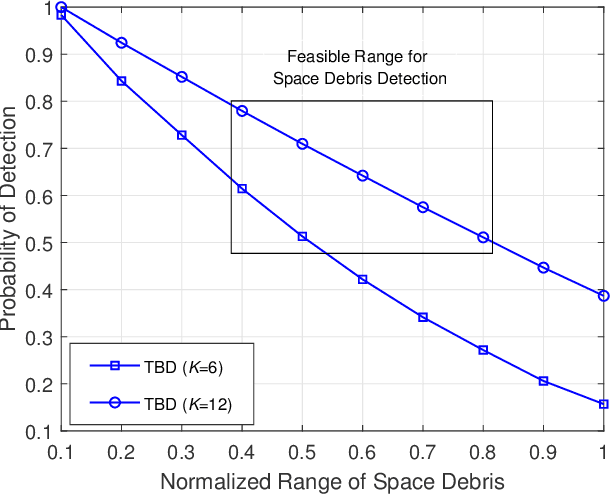
Thousands of satellites, asteroids, and rocket bodies break, collide, or degrade, resulting in large amounts of space debris in low Earth orbit. The presence of space debris poses a serious threat to satellite mega-constellations and to future space missions. Debris can be avoided if detected within the safety range of a satellite. In this paper, an integrated sensing and communication technique is proposed to detect space debris for satellite mega-constellations. The canonical polyadic (CP) tensor decomposition method is used to estimate the rank of the tensor that denotes the number of paths including line-of-sight and non-line-of-sight by exploiting the sparsity of THz channel with limited scattering. The analysis reveals that the reflected signals of the THz can be utilized for the detection of space debris. The CP decomposition is cast as an optimization problem and solved using the alternating least square (ALS) algorithm. Simulation results show that the probability of detection of the proposed tensor-based scheme is higher than the conventional energy-based detection scheme for the space debris detection.
Mitigation of Misalignment Error Over Inter-Satellite FSO Energy Harvesting
Jun 12, 2023In this paper, the impact of the acquisition, tracking, and pointing (ATP) module utilization on inter-satellite energy harvesting in low-earth orbit (LEO) is investigated for various beam divergence angles. Random elevation and azimuth misalignment error angles at both the transmitter and the receiver are modeled with Gaussian distribution hence the radial pointing error angle can be modeled with Rayleigh distribution statistically. Then, the misalignment loss factors at the transmitter and receiver are obtained independently. The harvested power as a function of the transmit power and inter-satellite distance is analyzed along with the maximum achievable range that satisfies the 1U (i.e., 0.1$\times$0.1$\times$0.1 m) small satellite power requirement on space tasks. Our simulation results show that in a free space optics (FSO) link without the ATP module, a laser with a wider beam divergence angle $\theta$ puts an effort to compensate for the loss of misalignment and hence provides higher harvested power than narrow ones. However, when the ATP module is in use, the laser with narrower $\theta$ outperforms the laser with wider $\theta$ in harvested power. Furthermore, the utilization of the ATP module leads to a significant improvement in the maximum achievable range.