 Add to Chrome
 Add to Firefox
 Add to Edge
"bot lane noob" Towards Deployment of NLP-based Toxicity Detectors in Video Games
Apr 11, 2026
Toxicity and harassment are widespread in the video-gaming context. Especially in competitive online multiplayer scenarios, gamers oftentimes send harmful messages to other players (teammates or opponents) whose consequences span from mild annoyance to withdrawal and depression. Abundant prior work tackled these problems, e.g., pointing out the negative effects of toxic interactions. However, few works proposed countermeasures specifically developed and tested on textual messages sent during a match -- i.e., when the "harassment" actually occurs. We posit that such a scarcity stems from the lack of high-quality datasets that can be used to devise "automated" detectors based on natural-language processing (NLP) and machine learning (ML), and which can -- ideally -- mitigate the harm of toxic comments during a gaming session. This work provides a foundation for addressing the problem of toxicity and harassment in video games. First, through a systematic literature review (n=1,039), we provide evidence that only few works proposed ML/NLP-based detectors of toxicity/harassment during live matches. Then, we partner-up with 8 expert League of Legend (LoL) players and create a fine-grained labelled dataset, L2DTnH, containing 1.4k toxic and 13.8k non-toxic messages exchanged during LoL matches. We use L2DTnH to develop a detector that we then empirically show outperforms general-purpose and state-of-the-art toxicity detectors reliant on NLP. To further demonstrate the practicality of our resources, we test our detector on game-related data beyond that included in L2DTnH; and we develop a Web-browser extension that flags toxic content in Webpages -- without querying third-party servers owned by AI companies. We publicly release all of our resources. Our contributions pave the way for more applied research devoted to fighting the spread of toxicity and harassment in video games.

Streamlining Attack Tree Generation: A Fragment-Based Approach
Oct 01, 2023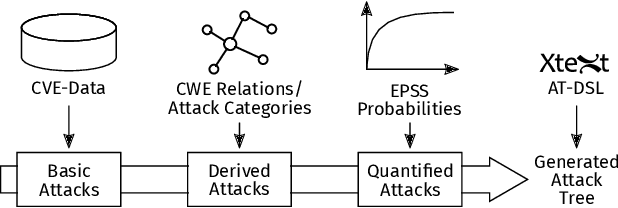
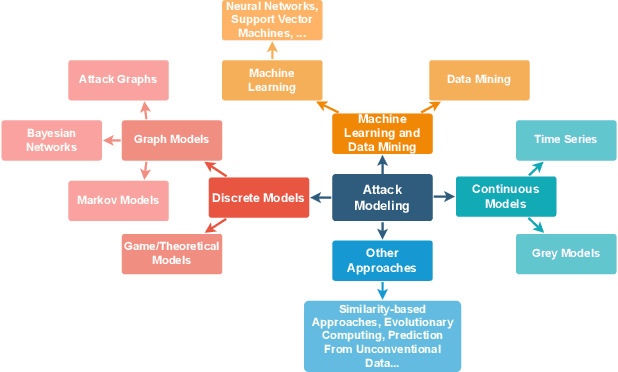
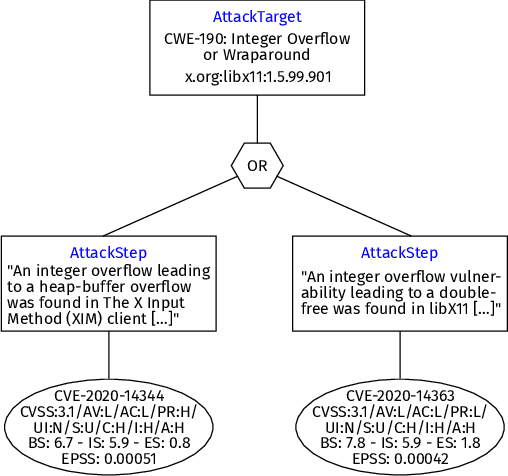
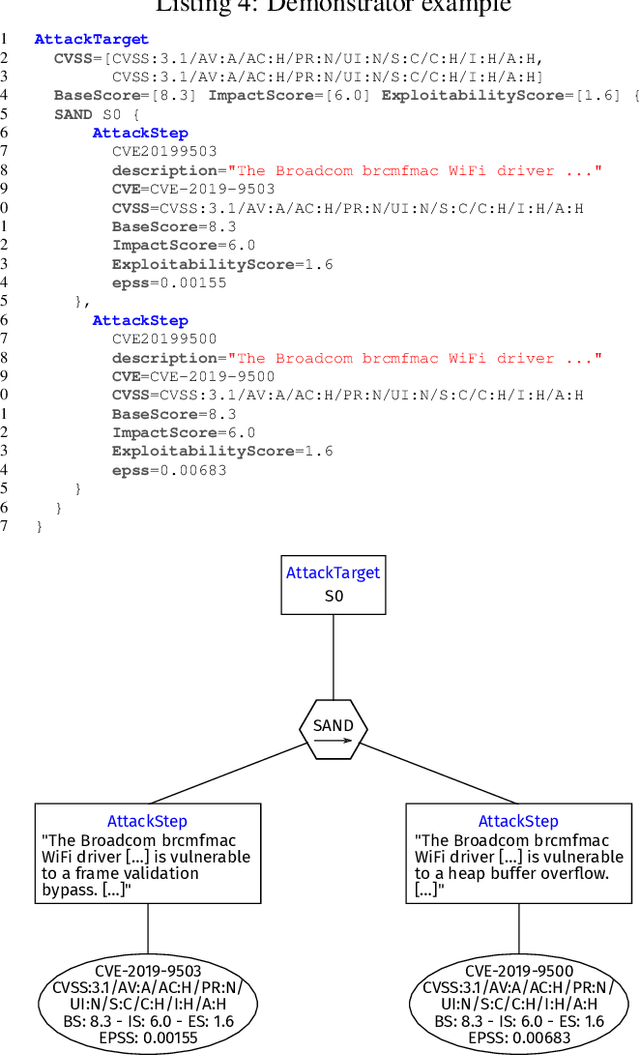
Attack graphs are a tool for analyzing security vulnerabilities that capture different and prospective attacks on a system. As a threat modeling tool, it shows possible paths that an attacker can exploit to achieve a particular goal. However, due to the large number of vulnerabilities that are published on a daily basis, they have the potential to rapidly expand in size. Consequently, this necessitates a significant amount of resources to generate attack graphs. In addition, generating composited attack models for complex systems such as self-adaptive or AI is very difficult due to their nature to continuously change. In this paper, we present a novel fragment-based attack graph generation approach that utilizes information from publicly available information security databases. Furthermore, we also propose a domain-specific language for attack modeling, which we employ in the proposed attack graph generation approach. Finally, we present a demonstrator example showcasing the attack generator's capability to replicate a verified attack chain, as previously confirmed by security experts.
VULNERLIZER: Cross-analysis Between Vulnerabilities and Software Libraries
Sep 18, 2023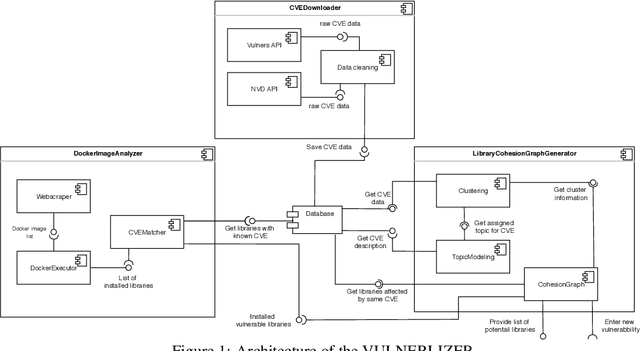
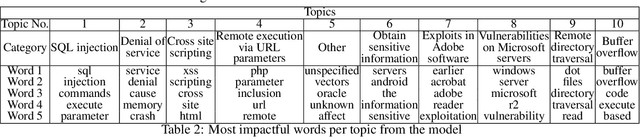
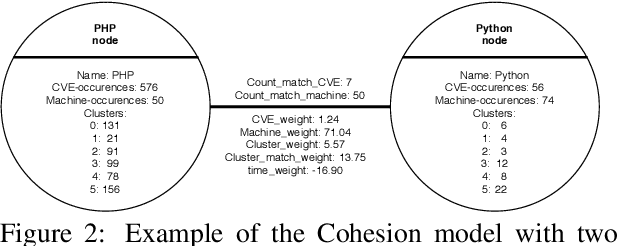
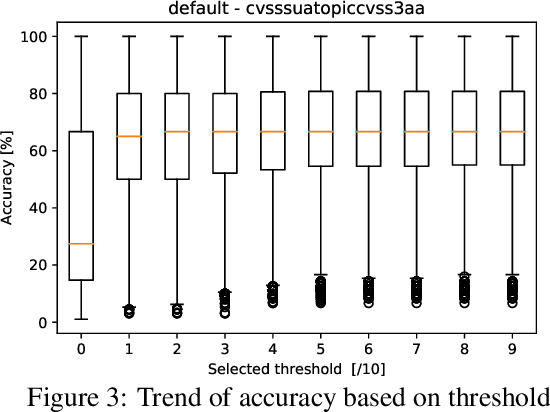
The identification of vulnerabilities is a continuous challenge in software projects. This is due to the evolution of methods that attackers employ as well as the constant updates to the software, which reveal additional issues. As a result, new and innovative approaches for the identification of vulnerable software are needed. In this paper, we present VULNERLIZER, which is a novel framework for cross-analysis between vulnerabilities and software libraries. It uses CVE and software library data together with clustering algorithms to generate links between vulnerabilities and libraries. In addition, the training of the model is conducted in order to reevaluate the generated associations. This is achieved by updating the assigned weights. Finally, the approach is then evaluated by making the predictions using the CVE data from the test set. The results show that the VULNERLIZER has a great potential in being able to predict future vulnerable libraries based on an initial input CVE entry or a software library. The trained model reaches a prediction accuracy of 75% or higher.
Simulation of Sensor Spoofing Attacks on Unmanned Aerial Vehicles Using the Gazebo Simulator
Sep 18, 2023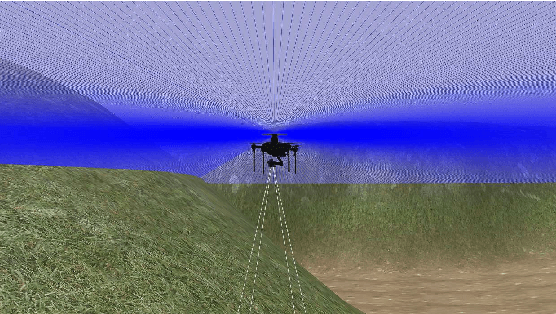
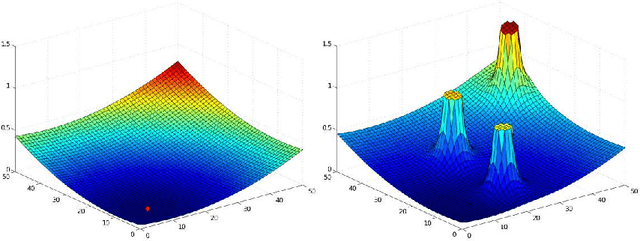
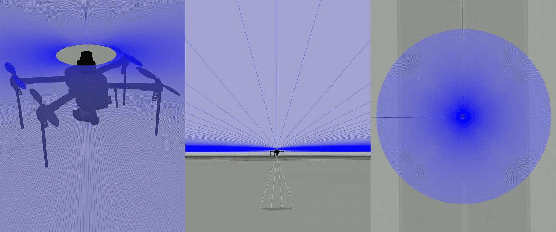
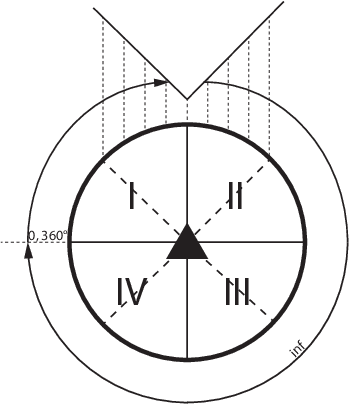
Conducting safety simulations in various simulators, such as the Gazebo simulator, became a very popular means of testing vehicles against potential safety risks (i.e. crashes). However, this was not the case with security testing. Performing security testing in a simulator is very difficult because security attacks are performed on a different abstraction level. In addition, the attacks themselves are becoming more sophisticated, which directly contributes to the difficulty of executing them in a simulator. In this paper, we attempt to tackle the aforementioned gap by investigating possible attacks that can be simulated, and then performing their simulations. The presented approach shows that attacks targeting the LiDAR and GPS components of unmanned aerial vehicles can be simulated. This is achieved by exploiting vulnerabilities of the ROS and MAVLink protocol and injecting malicious processes into an application. As a result, messages with arbitrary values can be spoofed to the corresponding topics, which allows attackers to update relevant parameters and cause a potential crash of a vehicle. This was tested in multiple scenarios, thereby proving that it is indeed possible to simulate certain attack types, such as spoofing and jamming.
Towards Model Co-evolution Across Self-Adaptation Steps for Combined Safety and Security Analysis
Sep 18, 2023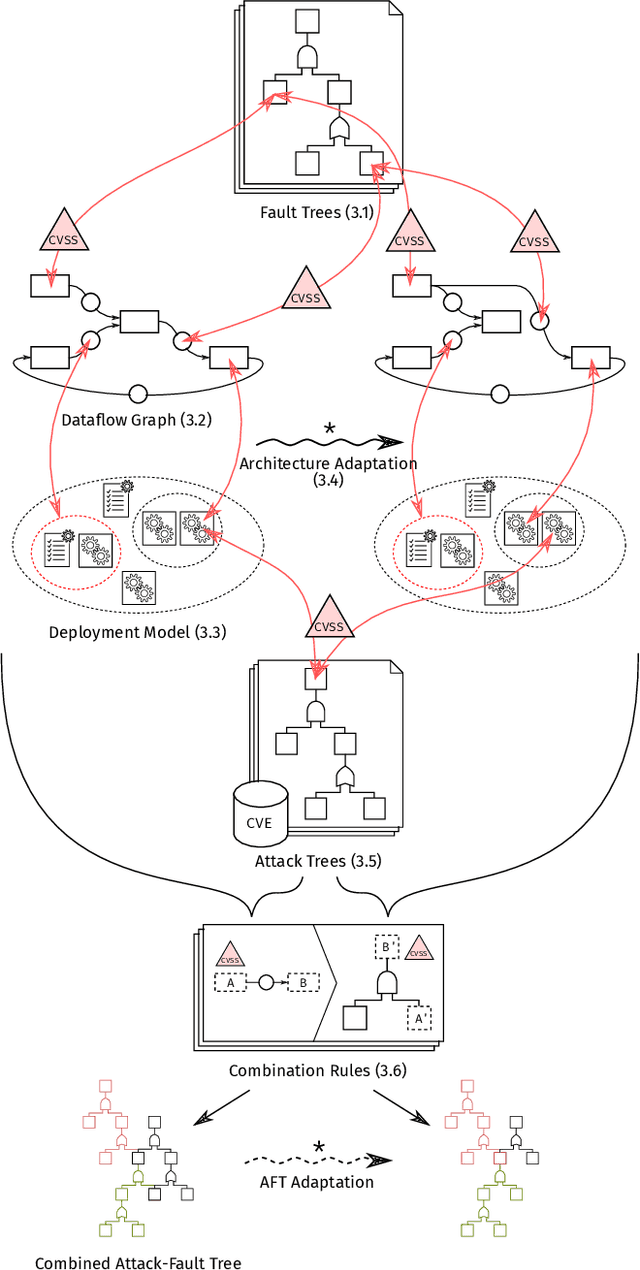
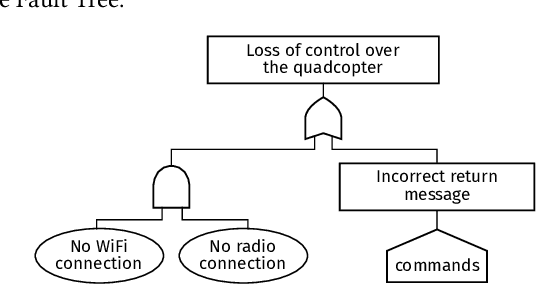
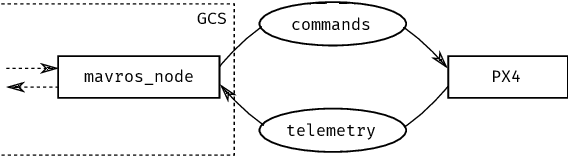
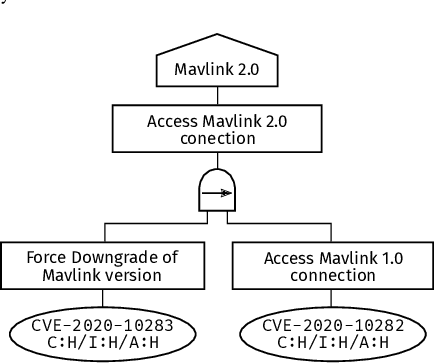
Self-adaptive systems offer several attack surfaces due to the communication via different channels and the different sensors required to observe the environment. Often, attacks cause safety to be compromised as well, making it necessary to consider these two aspects together. Furthermore, the approaches currently used for safety and security analysis do not sufficiently take into account the intermediate steps of an adaptation. Current work in this area ignores the fact that a self-adaptive system also reveals possible vulnerabilities (even if only temporarily) during the adaptation. To address this issue, we propose a modeling approach that takes into account the different relevant aspects of a system, its adaptation process, as well as safety hazards and security attacks. We present several models that describe different aspects of a self-adaptive system and we outline our idea of how these models can then be combined into an Attack-Fault Tree. This allows modeling aspects of the system on different levels of abstraction and co-evolve the models using transformations according to the adaptation of the system. Finally, analyses can then be performed as usual on the resulting Attack-Fault Tree.