 Add to Chrome
 Add to Firefox
 Add to Edge
Sustainable Face Recognition on Low-Power Devices with VQ-VAE Embeddings
Jun 13, 2026
Face recognition has become a cornerstone of modern AI applications, yet conventional approaches often rely on computationally intensive models deployed in cloud environments, leading to increased network traffic, high energy consumption, and a heavy carbon footprint. This work introduces a sustainable, edge-deployable face recognition framework based on Vector-Quantized Variational Autoencoders (VQ-VAE), which generates compact and semantically rich latent representations of facial images. By leveraging the compression capacity and reconstruction quality of VQ-VAE embeddings on the edge and combining them with the power of pre-trained face embeddings in a knowledge distillation setup, our system achieves comparable accuracy to state-of-the-art face embedding models while significantly reducing memory and computation requirements on the edge, making it suitable for low-power edge devices. The integration of VQ-VAE compression minimizes network overhead while keeping the matching accuracy high by retaining only the most informative facial features in the latent space. As a result, the reconstructed images preserve the key identity characteristics, improving the robustness and overall performance of the face embeddings.

Facial Affect Analysis for Service-Oriented Systems: Advances, Challenges, and Future Visions
Jun 13, 2026Facial Affect Analysis (FAA) is evolving from a stand-alone recognition task into a reusable perception capability for Service-Oriented Software Ecosystems (SoSE). This paper preserves the FAA methodological core while reframing recent advances through systems-engineering requirements for composable and dependable services. We review representative progress in static and dynamic expression analysis, action-unit and micro-expression modeling, and modern CNN, Transformer, graph, and hybrid architectures, then interpret these advances by their operational fit in edge, cloud, and hybrid service pipelines. The synthesis emphasizes SoSE concerns that determine deployability: service contracts for uncertainty-aware outputs, latency and availability envelopes, lifecycle monitoring and recalibration, governance-aware integration, and interoperability across independently evolving components. Our analysis shows that benchmark gains alone are insufficient for SoSE readiness; robustness under shift, intervention stability, fairness, privacy posture, and runtime guarantees are equally critical. We conclude with a roadmap for treating FAA as an operational service component with explicit interfaces, measurable quality attributes, and accountable lifecycle management.
Facial Expression Recognition in the Deep Learning Era: A Systematic Multi-Criteria Review of Methods, Models, Datasets, Performance, Challenges, and Future Research Directions
Jun 07, 2026Facial Expression Recognition (FER) has advanced rapidly over the last decade, driven by the shift from handcrafted descriptors and shallow classifiers to deep convolutional, attention-based, vision-language, and foundation-model architectures, and by the parallel growth of large-scale in-the-wild benchmarks spanning categorical, dimensional, compound, micro-expression, Action Unit (AU), and intensity-estimation tasks. Yet the deep learning-based FER landscape has so far been reviewed only along narrow task-, architecture-, or application-specific axes, leaving a holistic, systematically organized account of its recent advances missing. This survey addresses that gap with a comprehensive review of recent deep learning-based FER, explicitly linked to the wider Facial Affect Recognition (FAR) domain. Its main contributions are: a) A description of FER's evolution into five distinct phases, from handcrafted features and classical machine learning to attention-based, vision-language, and foundation-model approaches, with the key milestone works of each, b) A multi-criteria taxonomy analyzing the literature along seven complementary axes: recognition task, input modality, face pre-processing pipeline, network architecture, learning strategy, acquisition setting, and application domain, c) A per-criterion comparative analysis, with critical insights into the strengths and limitations of each category under in-the-wild conditions, d) A task-organized review of public FER datasets, with their annotation schemes, modalities, and evaluation protocols, e) A compilation of performance metrics and a per-task quantitative comparison of representative state-of-the-art methods on widely adopted benchmarks, and f) A discussion of current challenges and promising future directions.
Illicit object detection in X-ray imaging using deep learning techniques: A comparative evaluation
Jul 23, 2025Automated X-ray inspection is crucial for efficient and unobtrusive security screening in various public settings. However, challenges such as object occlusion, variations in the physical properties of items, diversity in X-ray scanning devices, and limited training data hinder accurate and reliable detection of illicit items. Despite the large body of research in the field, reported experimental evaluations are often incomplete, with frequently conflicting outcomes. To shed light on the research landscape and facilitate further research, a systematic, detailed, and thorough comparative evaluation of recent Deep Learning (DL)-based methods for X-ray object detection is conducted. For this, a comprehensive evaluation framework is developed, composed of: a) Six recent, large-scale, and widely used public datasets for X-ray illicit item detection (OPIXray, CLCXray, SIXray, EDS, HiXray, and PIDray), b) Ten different state-of-the-art object detection schemes covering all main categories in the literature, including generic Convolutional Neural Network (CNN), custom CNN, generic transformer, and hybrid CNN-transformer architectures, and c) Various detection (mAP50 and mAP50:95) and time/computational-complexity (inference time (ms), parameter size (M), and computational load (GFLOPS)) metrics. A thorough analysis of the results leads to critical observations and insights, emphasizing key aspects such as: a) Overall behavior of the object detection schemes, b) Object-level detection performance, c) Dataset-specific observations, and d) Time efficiency and computational complexity analysis. To support reproducibility of the reported experimental results, the evaluation code and model weights are made publicly available at https://github.com/jgenc/xray-comparative-evaluation.
X-ray illicit object detection using hybrid CNN-transformer neural network architectures
May 01, 2025In the field of X-ray security applications, even the smallest details can significantly impact outcomes. Objects that are heavily occluded or intentionally concealed pose a great challenge for detection, whether by human observation or through advanced technological applications. While certain Deep Learning (DL) architectures demonstrate strong performance in processing local information, such as Convolutional Neural Networks (CNNs), others excel in handling distant information, e.g., transformers. In X-ray security imaging the literature has been dominated by the use of CNN-based methods, while the integration of the two aforementioned leading architectures has not been sufficiently explored. In this paper, various hybrid CNN-transformer architectures are evaluated against a common CNN object detection baseline, namely YOLOv8. In particular, a CNN (HGNetV2) and a hybrid CNN-transformer (Next-ViT-S) backbone are combined with different CNN/transformer detection heads (YOLOv8 and RT-DETR). The resulting architectures are comparatively evaluated on three challenging public X-ray inspection datasets, namely EDS, HiXray, and PIDray. Interestingly, while the YOLOv8 detector with its default backbone (CSP-DarkNet53) is generally shown to be advantageous on the HiXray and PIDray datasets, when a domain distribution shift is incorporated in the X-ray images (as happens in the EDS datasets), hybrid CNN-transformer architectures exhibit increased robustness. Detailed comparative evaluation results, including object-level detection performance and object-size error analysis, demonstrate the strengths and weaknesses of each architectural combination and suggest guidelines for future research. The source code and network weights of the models employed in this study are available at https://github.com/jgenc/xray-comparative-evaluation.
Public space security management using digital twin technologies
Mar 10, 2025As the security of public spaces remains a critical issue in today's world, Digital Twin technologies have emerged in recent years as a promising solution for detecting and predicting potential future threats. The applied methodology leverages a Digital Twin of a metro station in Athens, Greece, using the FlexSim simulation software. The model encompasses points of interest and passenger flows, and sets their corresponding parameters. These elements influence and allow the model to provide reasonable predictions on the security management of the station under various scenarios. Experimental tests are conducted with different configurations of surveillance cameras and optimizations of camera angles to evaluate the effectiveness of the space surveillance setup. The results show that the strategic positioning of surveillance cameras and the adjustment of their angles significantly improves the detection of suspicious behaviors and with the use of the DT it is possible to evaluate different scenarios and find the optimal camera setup for each case. In summary, this study highlights the value of Digital Twins in real-time simulation and data-driven security management. The proposed approach contributes to the ongoing development of smart security solutions for public spaces and provides an innovative framework for threat detection and prevention.
State of play and future directions in industrial computer vision AI standards
Mar 04, 2025The recent tremendous advancements in the areas of Artificial Intelligence (AI) and Deep Learning (DL) have also resulted into corresponding remarkable progress in the field of Computer Vision (CV), showcasing robust technological solutions in a wide range of application sectors of high industrial interest (e.g., healthcare, autonomous driving, automation, etc.). Despite the outstanding performance of CV systems in specific domains, their development and exploitation at industrial-scale necessitates, among other, the addressing of requirements related to the reliability, transparency, trustworthiness, security, safety, and robustness of the developed AI models. The latter raises the imperative need for the development of efficient, comprehensive and widely-adopted industrial standards. In this context, this study investigates the current state of play regarding the development of industrial computer vision AI standards, emphasizing on critical aspects, like model interpretability, data quality, and regulatory compliance. In particular, a systematic analysis of launched and currently developing CV standards, proposed by the main international standardization bodies (e.g. ISO/IEC, IEEE, DIN, etc.) is performed. The latter is complemented by a comprehensive discussion on the current challenges and future directions observed in this regularization endeavor.
Survey on Hand Gesture Recognition from Visual Input
Jan 21, 2025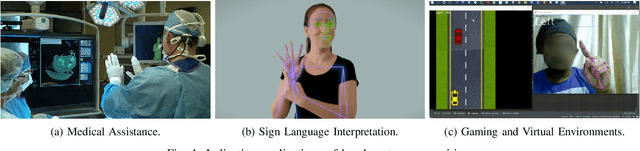
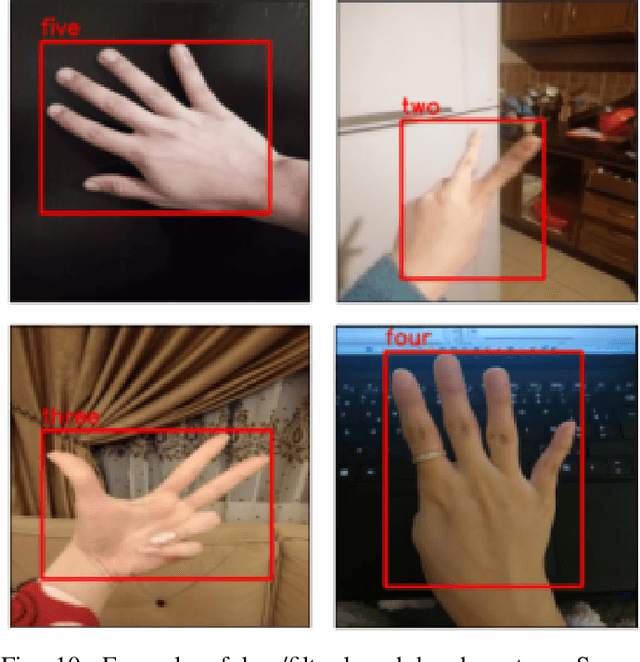
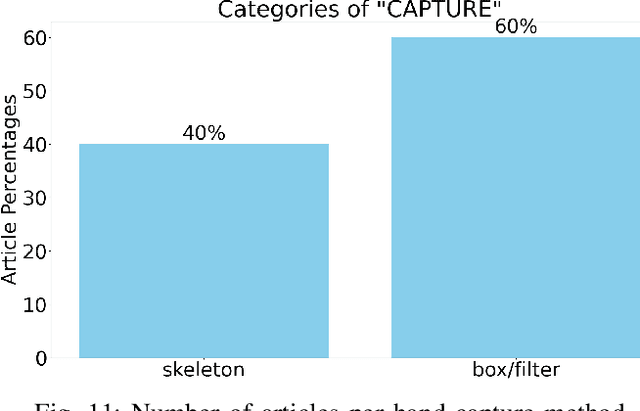
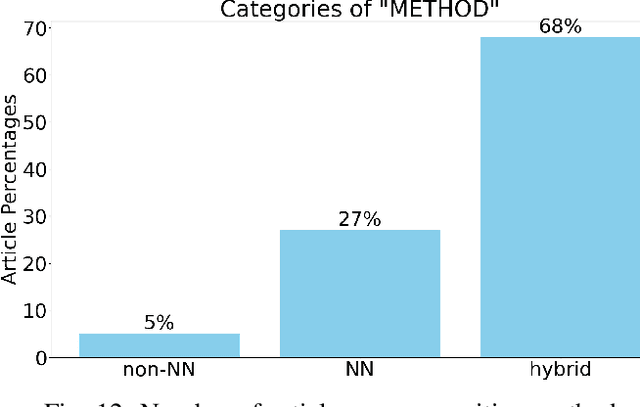
Hand gesture recognition has become an important research area, driven by the growing demand for human-computer interaction in fields such as sign language recognition, virtual and augmented reality, and robotics. Despite the rapid growth of the field, there are few surveys that comprehensively cover recent research developments, available solutions, and benchmark datasets. This survey addresses this gap by examining the latest advancements in hand gesture and 3D hand pose recognition from various types of camera input data including RGB images, depth images, and videos from monocular or multiview cameras, examining the differing methodological requirements of each approach. Furthermore, an overview of widely used datasets is provided, detailing their main characteristics and application domains. Finally, open challenges such as achieving robust recognition in real-world environments, handling occlusions, ensuring generalization across diverse users, and addressing computational efficiency for real-time applications are highlighted to guide future research directions. By synthesizing the objectives, methodologies, and applications of recent studies, this survey offers valuable insights into current trends, challenges, and opportunities for future research in human hand gesture recognition.
Applications of Knowledge Distillation in Remote Sensing: A Survey
Sep 18, 2024
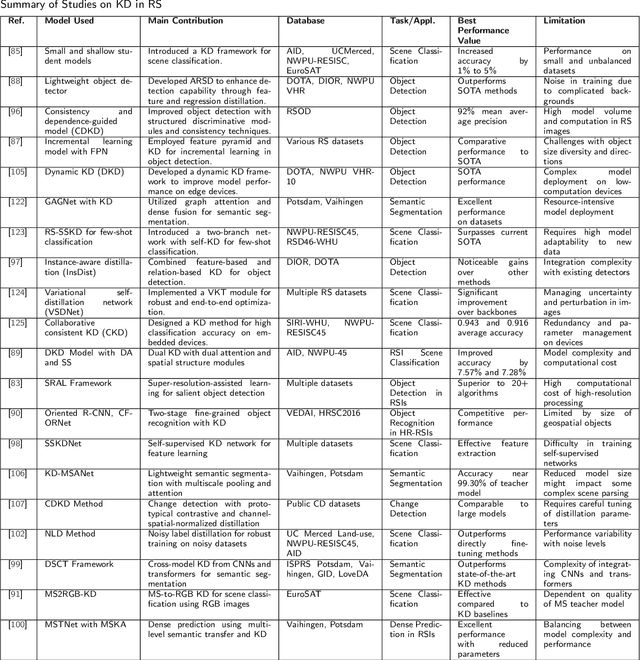


With the ever-growing complexity of models in the field of remote sensing (RS), there is an increasing demand for solutions that balance model accuracy with computational efficiency. Knowledge distillation (KD) has emerged as a powerful tool to meet this need, enabling the transfer of knowledge from large, complex models to smaller, more efficient ones without significant loss in performance. This review article provides an extensive examination of KD and its innovative applications in RS. KD, a technique developed to transfer knowledge from a complex, often cumbersome model (teacher) to a more compact and efficient model (student), has seen significant evolution and application across various domains. Initially, we introduce the fundamental concepts and historical progression of KD methods. The advantages of employing KD are highlighted, particularly in terms of model compression, enhanced computational efficiency, and improved performance, which are pivotal for practical deployments in RS scenarios. The article provides a comprehensive taxonomy of KD techniques, where each category is critically analyzed to demonstrate the breadth and depth of the alternative options, and illustrates specific case studies that showcase the practical implementation of KD methods in RS tasks, such as instance segmentation and object detection. Further, the review discusses the challenges and limitations of KD in RS, including practical constraints and prospective future directions, providing a comprehensive overview for researchers and practitioners in the field of RS. Through this organization, the paper not only elucidates the current state of research in KD but also sets the stage for future research opportunities, thereby contributing significantly to both academic research and real-world applications.
Leveraging Digital Twin Technologies for Public Space Protection and Vulnerability Assessment
Aug 30, 2024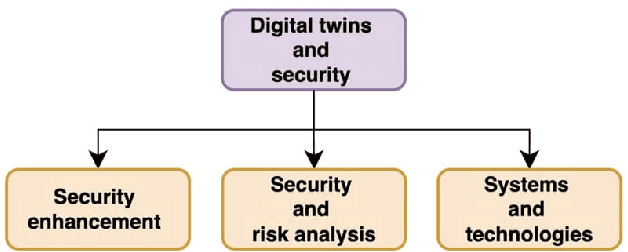
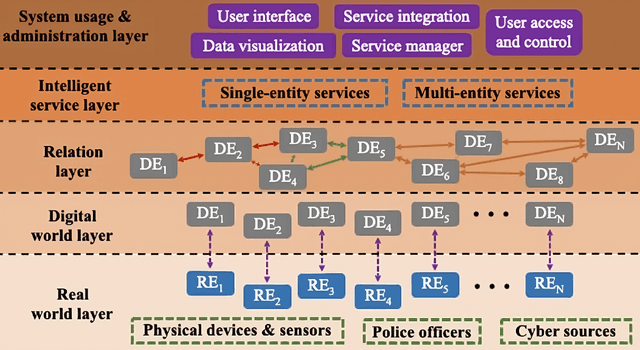
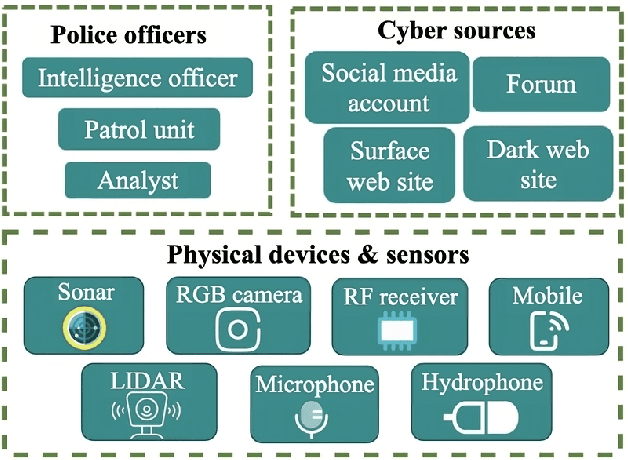

Over the recent years, the protection of the so-called `soft-targets', i.e. locations easily accessible by the general public with relatively low, though, security measures, has emerged as a rather challenging and increasingly important issue. The complexity and seriousness of this security threat growths nowadays exponentially, due to the emergence of new advanced technologies (e.g. Artificial Intelligence (AI), Autonomous Vehicles (AVs), 3D printing, etc.); especially when it comes to large-scale, popular and diverse public spaces. In this paper, a novel Digital Twin-as-a-Security-Service (DTaaSS) architecture is introduced for holistically and significantly enhancing the protection of public spaces (e.g. metro stations, leisure sites, urban squares, etc.). The proposed framework combines a Digital Twin (DT) conceptualization with additional cutting-edge technologies, including Internet of Things (IoT), cloud computing, Big Data analytics and AI. In particular, DTaaSS comprises a holistic, real-time, large-scale, comprehensive and data-driven security solution for the efficient/robust protection of public spaces, supporting: a) data collection and analytics, b) area monitoring/control and proactive threat detection, c) incident/attack prediction, and d) quantitative and data-driven vulnerability assessment. Overall, the designed architecture exhibits increased potential in handling complex, hybrid and combined threats over large, critical and popular soft-targets. The applicability and robustness of DTaaSS is discussed in detail against representative and diverse real-world application scenarios, including complex attacks to: a) a metro station, b) a leisure site, and c) a cathedral square.