 Add to Chrome
 Add to Firefox
 Add to Edge
Research on a hybrid LSTM-CNN-Attention model for text-based web content classification
Dec 20, 2025
This study presents a hybrid deep learning architecture that integrates LSTM, CNN, and an Attention mechanism to enhance the classification of web content based on text. Pretrained GloVe embeddings are used to represent words as dense vectors that preserve semantic similarity. The CNN layer extracts local n-gram patterns and lexical features, while the LSTM layer models long-range dependencies and sequential structure. The integrated Attention mechanism enables the model to focus selectively on the most informative parts of the input sequence. A 5-fold cross-validation setup was used to assess the robustness and generalizability of the proposed solution. Experimental results show that the hybrid LSTM-CNN-Attention model achieved outstanding performance, with an accuracy of 0.98, precision of 0.94, recall of 0.92, and F1-score of 0.93. These results surpass the performance of baseline models based solely on CNNs, LSTMs, or transformer-based classifiers such as BERT. The combination of neural network components enabled the model to effectively capture both fine-grained text structures and broader semantic context. Furthermore, the use of GloVe embeddings provided an efficient and effective representation of textual data, making the model suitable for integration into systems with real-time or near-real-time requirements. The proposed hybrid architecture demonstrates high effectiveness in text-based web content classification, particularly in tasks requiring both syntactic feature extraction and semantic interpretation. By combining presented mechanisms, the model addresses the limitations of individual architectures and achieves improved generalization. These findings support the broader use of hybrid deep learning approaches in NLP applications, especially where complex, unstructured textual data must be processed and classified with high reliability.

Software demodulation of weak radio signals using convolutional neural network
Feb 26, 2025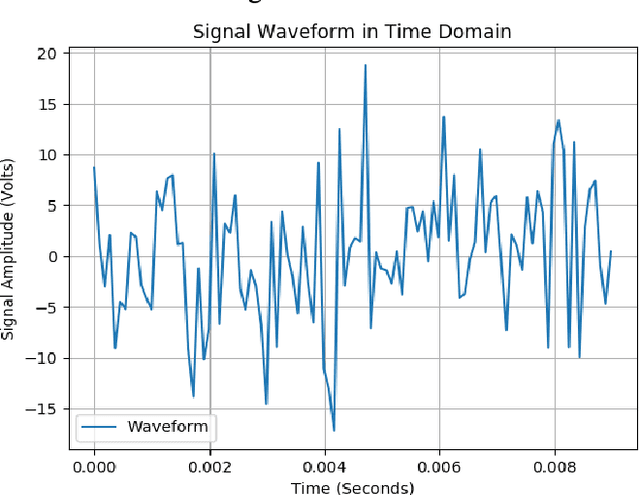
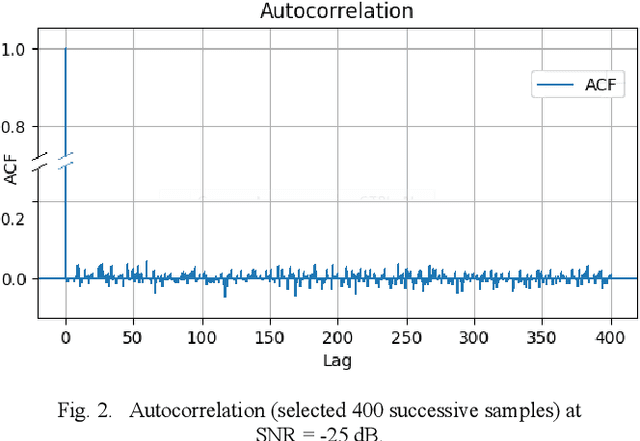
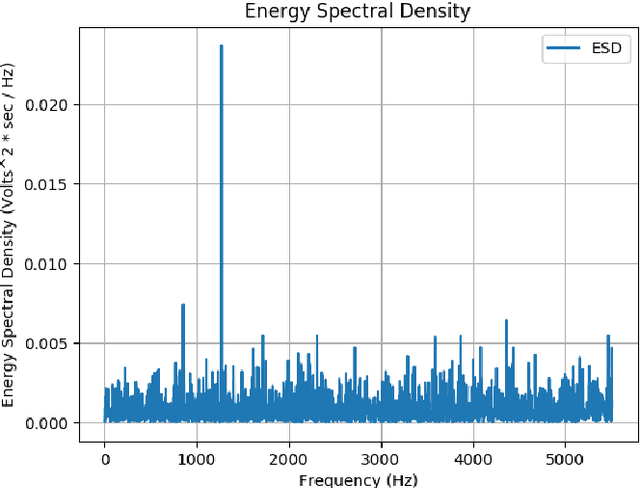
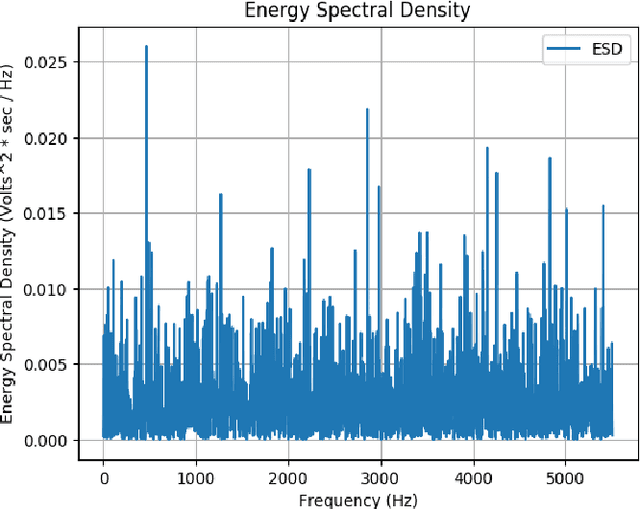
In this paper we proposed the use of JT65A radio communication protocol for data exchange in wide-area monitoring systems in electric power systems. We investigated the software demodulation of the multiple frequency shift keying weak signals transmitted with JT65A communication protocol using deep convolutional neural network. We presented the demodulation performance in form of symbol and bit error rates. We focused on the interference immunity of the protocol over an additive white Gaussian noise with average signal-to-noise ratios in the range from -30 dB to 0 dB, which was obtained for the first time. We proved that the interference immunity is about 1.5 dB less than the theoretical limit of non-coherent demodulation of orthogonal MFSK signals.
* 4 pages, 8 figures. This is the preprint version of the paper published in 2020 IEEE 7th International Conference on Energy Smart Systems (ESS). The final version is available at IEEE Xplore: https://ieeexplore.ieee.org/document/9160035. arXiv admin note: text overlap with arXiv:2502.16371