 Add to Chrome
 Add to Firefox
 Add to Edge
Conformal Prediction for Molecular Properties under Label Shift
Aug 18, 2026
Drug discovery and development underpins healthcare but remains costly and failure-prone. A critical bottleneck lies in predicting molecular properties such as solubility, potency, and toxicity, which directly determine whether a candidate can advance from preclinical to clinical trials. Artificial Intelligence (AI) has accelerated this process, yet its reliability is often undermined by distribution shift, as experimental conditions frequently diverge from training data. In addition, conventional point predictions provide only single-value estimates, offering limited guidance for high-stakes experimental design. We address these challenges with a conformal prediction framework tailored to label shift. By weighting conformal scores using marginal label probability ratios, our method produces statistically rigorous prediction intervals without retraining. This enables robust uncertainty quantification even when property distributions drift, directly tackling one of the most pervasive obstacles to applying AI in real-world drug development. By moving beyond accuracy alone to provide actionable confidence measures, our approach enhances the trustworthiness of AI-driven predictions. This further aligns predictive modeling with regulatory demands for transparency and uncertainty reporting and ultimately supports more reliable decision-making in billion-dollar development pipelines.

MANGO: A Global Single-Date Paired Dataset for Mangrove Segmentation
Jan 20, 2026Mangroves are critical for climate-change mitigation, requiring reliable monitoring for effective conservation. While deep learning has emerged as a powerful tool for mangrove detection, its progress is hindered by the limitations of existing datasets. In particular, many resources provide only annual map products without curated single-date image-mask pairs, limited to specific regions rather than global coverage, or remain inaccessible to the public. To address these challenges, we introduce MANGO, a large-scale global dataset comprising 42,703 labeled image-mask pairs across 124 countries. To construct this dataset, we retrieve all available Sentinel-2 imagery within the year 2020 for mangrove regions and select the best single-date observations that align with the mangrove annual mask. This selection is performed using a target detection-driven approach that leverages pixel-wise coordinate references to ensure adaptive and representative image-mask pairings. We also provide a benchmark across diverse semantic segmentation architectures under a country-disjoint split, establishing a foundation for scalable and reliable global mangrove monitoring.
Antibody Foundational Model : Ab-RoBERTa
Jun 16, 2025
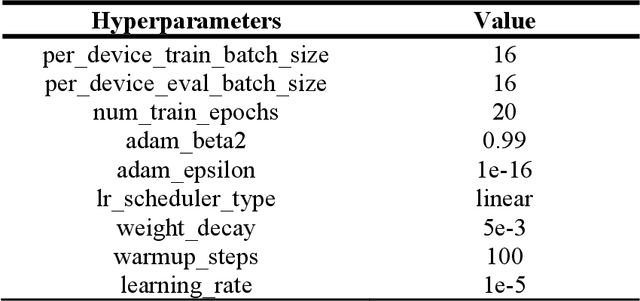
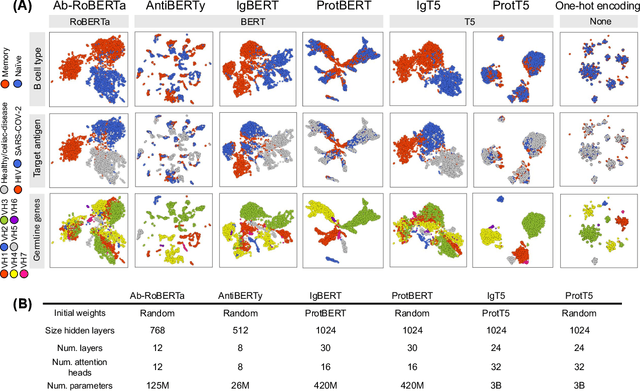

With the growing prominence of antibody-based therapeutics, antibody engineering has gained increasing attention as a critical area of research and development. Recent progress in transformer-based protein large language models (LLMs) has demonstrated promising applications in protein sequence design and structural prediction. Moreover, the availability of large-scale antibody datasets such as the Observed Antibody Space (OAS) database has opened new avenues for the development of LLMs specialized for processing antibody sequences. Among these, RoBERTa has demonstrated improved performance relative to BERT, while maintaining a smaller parameter count (125M) compared to the BERT-based protein model, ProtBERT (420M). This reduced model size enables more efficient deployment in antibody-related applications. However, despite the numerous advantages of the RoBERTa architecture, antibody-specific foundational models built upon it have remained inaccessible to the research community. In this study, we introduce Ab-RoBERTa, a RoBERTa-based antibody-specific LLM, which is publicly available at https://huggingface.co/mogam-ai/Ab-RoBERTa. This resource is intended to support a wide range of antibody-related research applications including paratope prediction or humanness assessment.