 Add to Chrome
 Add to Firefox
 Add to Edge
Interpretable Multimodal Gesture Recognition for Drone and Mobile Robot Teleoperation via Log-Likelihood Ratio Fusion
Mar 05, 2026
Human operators are still frequently exposed to hazardous environments such as disaster zones and industrial facilities, where intuitive and reliable teleoperation of mobile robots and Unmanned Aerial Vehicles (UAVs) is essential. In this context, hands-free teleoperation enhances operator mobility and situational awareness, thereby improving safety in hazardous environments. While vision-based gesture recognition has been explored as one method for hands-free teleoperation, its performance often deteriorates under occlusions, lighting variations, and cluttered backgrounds, limiting its applicability in real-world operations. To overcome these limitations, we propose a multimodal gesture recognition framework that integrates inertial data (accelerometer, gyroscope, and orientation) from Apple Watches on both wrists with capacitive sensing signals from custom gloves. We design a late fusion strategy based on the log-likelihood ratio (LLR), which not only enhances recognition performance but also provides interpretability by quantifying modality-specific contributions. To support this research, we introduce a new dataset of 20 distinct gestures inspired by aircraft marshalling signals, comprising synchronized RGB video, IMU, and capacitive sensor data. Experimental results demonstrate that our framework achieves performance comparable to a state-of-the-art vision-based baseline while significantly reducing computational cost, model size, and training time, making it well suited for real-time robot control. We therefore underscore the potential of sensor-based multimodal fusion as a robust and interpretable solution for gesture-driven mobile robot and drone teleoperation.

OpenMarcie: Dataset for Multimodal Action Recognition in Industrial Environments
Mar 02, 2026Smart factories use advanced technologies to optimize production and increase efficiency. To this end, the recognition of worker activity allows for accurate quantification of performance metrics, improving efficiency holistically while contributing to worker safety. OpenMarcie is, to the best of our knowledge, the biggest multimodal dataset designed for human action monitoring in manufacturing environments. It includes data from wearables sensing modalities and cameras distributed in the surroundings. The dataset is structured around two experimental settings, involving a total of 36 participants. In the first setting, twelve participants perform a bicycle assembly and disassembly task under semi-realistic conditions without a fixed protocol, promoting divergent and goal-oriented problem-solving. The second experiment involves twenty-five volunteers (24 valid data) engaged in a 3D printer assembly task, with the 3D printer manufacturer's instructions provided to guide the volunteers in acquiring procedural knowledge. This setting also includes sequential collaborative assembly, where participants assess and correct each other's progress, reflecting real-world manufacturing dynamics. OpenMarcie includes over 37 hours of egocentric and exocentric, multimodal, and multipositional data, featuring eight distinct data types and more than 200 independent information channels. The dataset is benchmarked across three human activity recognition tasks: activity classification, open vocabulary captioning, and cross-modal alignment.
Towards certifiable AI in aviation: landscape, challenges, and opportunities
Sep 13, 2024Artificial Intelligence (AI) methods are powerful tools for various domains, including critical fields such as avionics, where certification is required to achieve and maintain an acceptable level of safety. General solutions for safety-critical systems must address three main questions: Is it suitable? What drives the system's decisions? Is it robust to errors/attacks? This is more complex in AI than in traditional methods. In this context, this paper presents a comprehensive mind map of formal AI certification in avionics. It highlights the challenges of certifying AI development with an example to emphasize the need for qualification beyond performance metrics.
TSAK: Two-Stage Semantic-Aware Knowledge Distillation for Efficient Wearable Modality and Model Optimization in Manufacturing Lines
Aug 26, 2024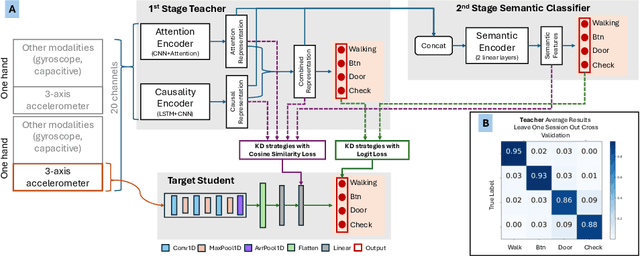
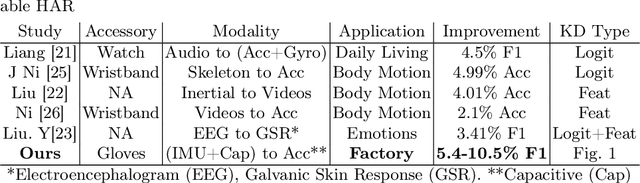
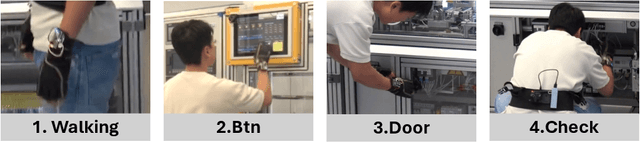
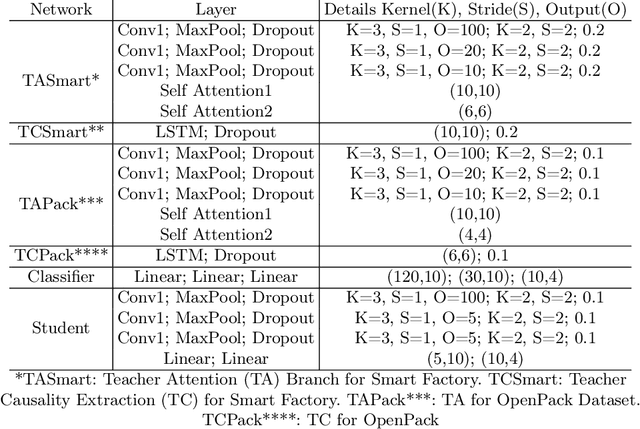
Smaller machine learning models, with less complex architectures and sensor inputs, can benefit wearable sensor-based human activity recognition (HAR) systems in many ways, from complexity and cost to battery life. In the specific case of smart factories, optimizing human-robot collaboration hinges on the implementation of cutting-edge, human-centric AI systems. To this end, workers' activity recognition enables accurate quantification of performance metrics, improving efficiency holistically. We present a two-stage semantic-aware knowledge distillation (KD) approach, TSAK, for efficient, privacy-aware, and wearable HAR in manufacturing lines, which reduces the input sensor modalities as well as the machine learning model size, while reaching similar recognition performance as a larger multi-modal and multi-positional teacher model. The first stage incorporates a teacher classifier model encoding attention, causal, and combined representations. The second stage encompasses a semantic classifier merging the three representations from the first stage. To evaluate TSAK, we recorded a multi-modal dataset at a smart factory testbed with wearable and privacy-aware sensors (IMU and capacitive) located on both workers' hands. In addition, we evaluated our approach on OpenPack, the only available open dataset mimicking the wearable sensor placements on both hands in the manufacturing HAR scenario. We compared several KD strategies with different representations to regulate the training process of a smaller student model. Compared to the larger teacher model, the student model takes fewer sensor channels from a single hand, has 79% fewer parameters, runs 8.88 times faster, and requires 96.6% less computing power (FLOPS).
Unimodal and Multimodal Sensor Fusion for Wearable Activity Recognition
Apr 24, 2024Combining different sensing modalities with multiple positions helps form a unified perception and understanding of complex situations such as human behavior. Hence, human activity recognition (HAR) benefits from combining redundant and complementary information (Unimodal/Multimodal). Even so, it is not an easy task. It requires a multidisciplinary approach, including expertise in sensor technologies, signal processing, data fusion algorithms, and domain-specific knowledge. This Ph.D. work employs sensing modalities such as inertial, pressure (audio and atmospheric pressure), and textile capacitive sensing for HAR. The scenarios explored are gesture and hand position tracking, facial and head pattern recognition, and body posture and gesture recognition. The selected wearable devices and sensing modalities are fully integrated with machine learning-based algorithms, some of which are implemented in the embedded device, on the edge, and tested in real-time.
BeSound: Bluetooth-Based Position Estimation Enhancing with Cross-Modality Distillation
Apr 24, 2024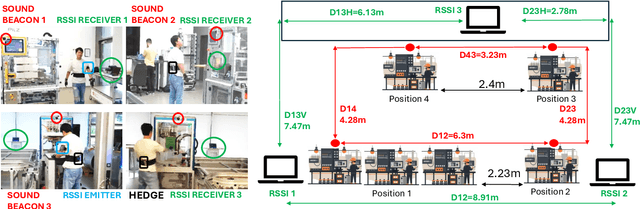
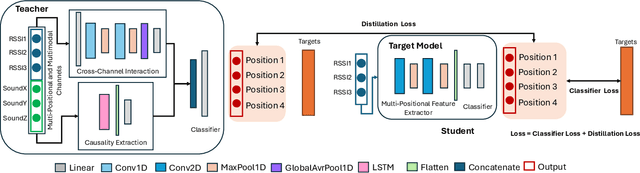
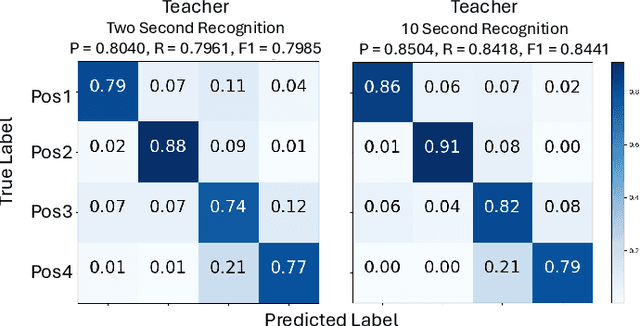
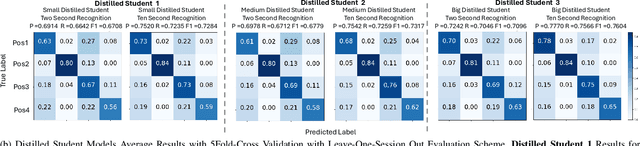
Smart factories leverage advanced technologies to optimize manufacturing processes and enhance efficiency. Implementing worker tracking systems, primarily through camera-based methods, ensures accurate monitoring. However, concerns about worker privacy and technology protection make it necessary to explore alternative approaches. We propose a non-visual, scalable solution using Bluetooth Low Energy (BLE) and ultrasound coordinates. BLE position estimation offers a very low-power and cost-effective solution, as the technology is available on smartphones and is scalable due to the large number of smartphone users, facilitating worker localization and safety protocol transmission. Ultrasound signals provide faster response times and higher accuracy but require custom hardware, increasing costs. To combine the benefits of both modalities, we employ knowledge distillation (KD) from ultrasound signals to BLE RSSI data. Once the student model is trained, the model only takes as inputs the BLE-RSSI data for inference, retaining the advantages of ubiquity and low cost of BLE RSSI. We tested our approach using data from an experiment with twelve participants in a smart factory test bed environment. We obtained an increase of 11.79% in the F1-score compared to the baseline (target model without KD and trained with BLE-RSSI data only).
Remaining Useful Life Prediction of Lithium-ion Batteries using Spatio-temporal Multimodal Attention Networks
Oct 29, 2023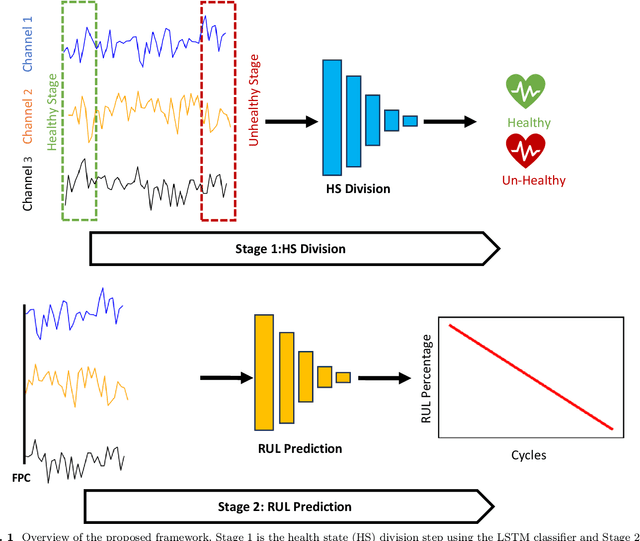
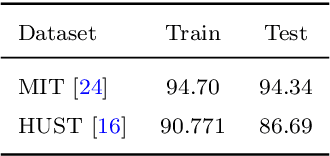

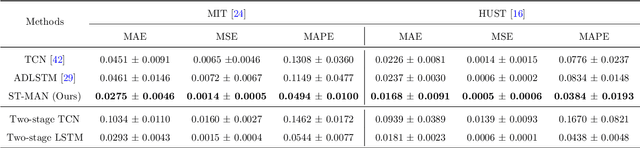
Lithium-ion batteries are widely used in various applications, including electric vehicles and renewable energy storage. The prediction of the remaining useful life (RUL) of batteries is crucial for ensuring reliable and efficient operation, as well as reducing maintenance costs. However, determining the life cycle of batteries in real-world scenarios is challenging, and existing methods have limitations in predicting the number of cycles iteratively. In addition, existing works often oversimplify the datasets, neglecting important features of the batteries such as temperature, internal resistance, and material type. To address these limitations, this paper proposes a two-stage remaining useful life prediction scheme for Lithium-ion batteries using a spatio-temporal multimodal attention network (ST-MAN). The proposed model is designed to iteratively predict the number of cycles required for the battery to reach the end of its useful life, based on available data. The proposed ST-MAN is to capture the complex spatio-temporal dependencies in the battery data, including the features that are often neglected in existing works. Experimental results demonstrate that the proposed ST-MAN model outperforms existing CNN and LSTM-based methods, achieving state-of-the-art performance in predicting the remaining useful life of Li-ion batteries. The proposed method has the potential to improve the reliability and efficiency of battery operations and is applicable in various industries, including automotive and renewable energy.
Two-stage Early Prediction Framework of Remaining Useful Life for Lithium-ion Batteries
Aug 07, 2023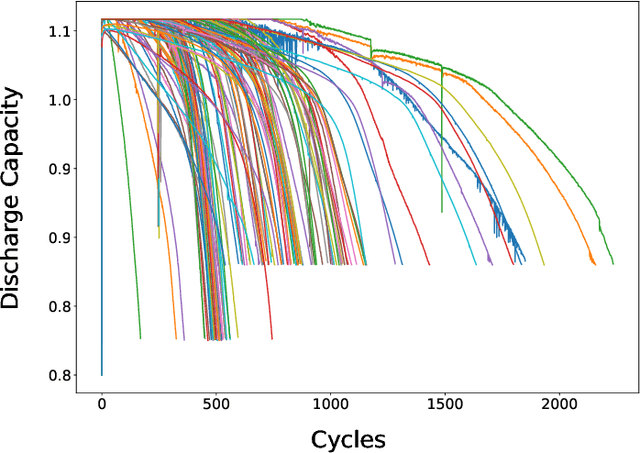
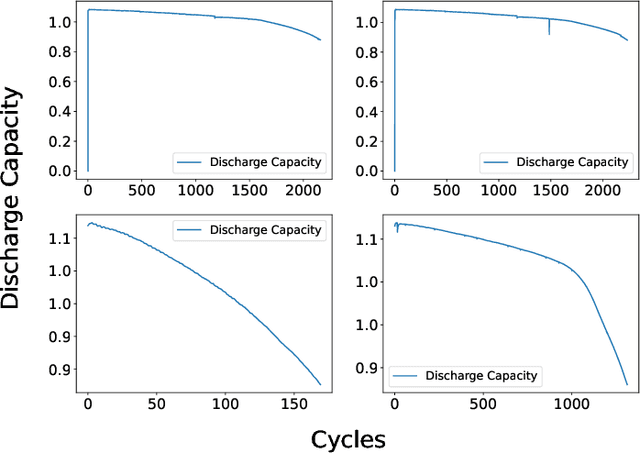
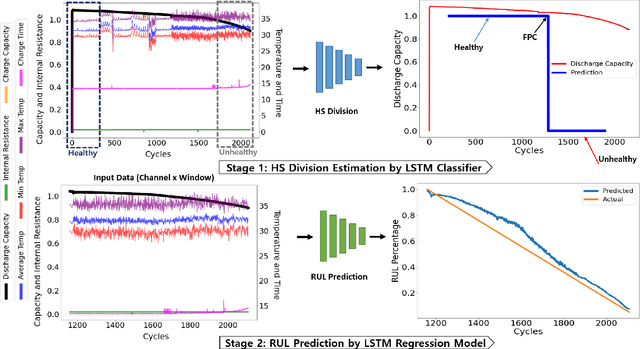
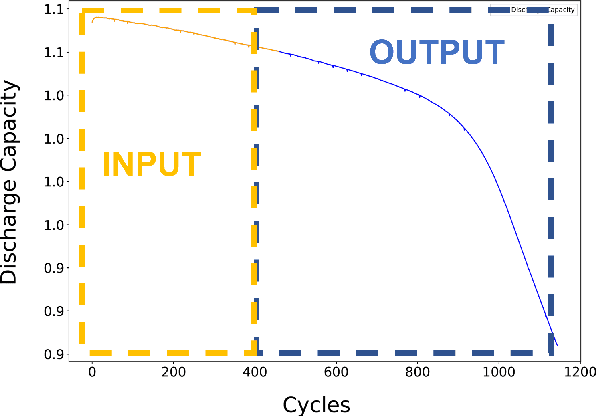
Early prediction of remaining useful life (RUL) is crucial for effective battery management across various industries, ranging from household appliances to large-scale applications. Accurate RUL prediction improves the reliability and maintainability of battery technology. However, existing methods have limitations, including assumptions of data from the same sensors or distribution, foreknowledge of the end of life (EOL), and neglect to determine the first prediction cycle (FPC) to identify the start of the unhealthy stage. This paper proposes a novel method for RUL prediction of Lithium-ion batteries. The proposed framework comprises two stages: determining the FPC using a neural network-based model to divide the degradation data into distinct health states and predicting the degradation pattern after the FPC to estimate the remaining useful life as a percentage. Experimental results demonstrate that the proposed method outperforms conventional approaches in terms of RUL prediction. Furthermore, the proposed method shows promise for real-world scenarios, providing improved accuracy and applicability for battery management.
MeciFace: Mechanomyography and Inertial Fusion based Glasses for Edge Real-Time Recognition of Facial and Eating Activities
Jun 19, 2023
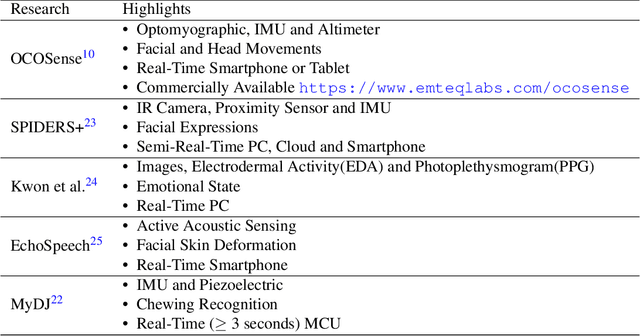

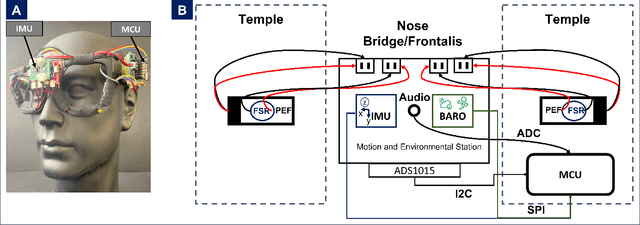
We present MeciFace, a low-power (0.55 Watts), privacy-conscious, real-time on-the-edge (RTE) wearable solution with a tiny memory footprint (11-19 KB), designed to monitor facial expressions and eating activities. We employ lightweight convolutional neural networks as the backbone models for both facial and eating scenarios. The system yielded an F1-score of 86% for the RTE evaluation in the facial expression case. In addition, we obtained an F1-score of 90% for eating/drinking monitoring for the RTE of an unseen user.
CaptAinGlove: Capacitive and Inertial Fusion-Based Glove for Real-Time on Edge Hand Gesture Recognition for Drone Control
Jun 07, 2023We present CaptAinGlove, a textile-based, low-power (1.15Watts), privacy-conscious, real-time on-the-edge (RTE) glove-based solution with a tiny memory footprint (2MB), designed to recognize hand gestures used for drone control. We employ lightweight convolutional neural networks as the backbone models and a hierarchical multimodal fusion to reduce power consumption and improve accuracy. The system yields an F1-score of 80% for the offline evaluation of nine classes; eight hand gesture commands and null activity. For the RTE, we obtained an F1-score of 67% (one user).