 Add to Chrome
 Add to Firefox
 Add to Edge
Enabling and Inhibitory Pathways of University Students' Willingness to Disclose AI Use: A Cognition-Affect-Conation Perspective
Apr 23, 2026
The increasing integration of artificial intelligence (AI) in higher education has raised important questions regarding students' transparency in reporting AI-assisted work. This study investigates the psychological mechanisms underlying university students' willingness to disclose AI use by applying the Cognition--Affect--Conation (CAC) framework. A sequential explanatory mixed-methods design was employed. In the quantitative phase, survey data were collected from 546 university students and analysed using structural equation modelling to examine the relationships among cognitive perceptions, affective responses, and disclosure intention. In the qualitative phase, semi-structured interviews with 22 students were conducted to further interpret the quantitative findings. The results indicate that psychological safety significantly increases students' willingness to disclose AI use and is positively shaped by perceived fairness, perceived teacher support, and perceived organisational support. Conversely, evaluation apprehension reduces disclosure intention and psychological safety, and is strengthened by perceived stigma, perceived uncertainty, and privacy concern. Qualitative findings further reveal that institutional clarity and supportive instructional practices encourage openness, whereas policy ambiguity and fear of negative evaluation often lead students to adopt cautious or strategic disclosure practices. Overall, the study highlights the dual role of enabling and inhibitory psychological mechanisms in shaping AI-use disclosure and underscores the importance of supportive institutional environments and clear guidance for promoting responsible AI transparency in higher education.

Enabling and Inhibitory Pathways of Students' AI Use Concealment Intention in Higher Education: Evidence from SEM and fsQCA
Apr 13, 2026This study investigates students' AI use concealment intention in higher education by integrating the cognition-affect-conation (CAC) framework with a dual-method approach combining structural equation modelling (SEM) and fuzzy-set qualitative comparative analysis (fsQCA). Drawing on data from 1346 university students, the findings reveal two opposing mechanisms shaping concealment intention. The enabling pathway shows that perceived stigma, perceived risk, and perceived policy uncertainty increase fear of negative evaluation, which in turn promotes concealment. In contrast, the inhibitory pathway demonstrates that AI self-efficacy, perceived fairness, and perceived social support enhance psychological safety, thereby reducing concealment intention. SEM results confirm the hypothesised relationships and mediation effects, while fsQCA identifies multiple configurational pathways, highlighting equifinality and the central role of fear of negative evaluation across conditions. The study contributes to the literature by conceptualising concealment as a distinct behavioural outcome and by providing a nuanced explanation that integrates both net-effect and configurational perspectives. Practical implications emphasise the need for clear institutional policies, destigmatisation of appropriate AI use, and the cultivation of supportive learning environments to promote transparency.
Examining EAP Students' AI Disclosure Intention: A Cognition-Affect-Conation Perspective
Apr 13, 2026The growing use of generative artificial intelligence (AI) in academic writing has raised increasing concerns regarding transparency and academic integrity in higher education. This study examines the psychological factors influencing English for Academic Purposes (EAP) students' intention to disclose their use of AI tools. Drawing on the cognition-affect-conation framework, the study proposes a model integrating both enabling and inhibiting factors shaping disclosure intention. A sequential explanatory mixed-methods design was employed. Quantitative data from 324 EAP students at an English-medium instruction university in China were analysed using structural equation modelling, followed by semi-structured interviews with 15 students to further interpret the findings. The quantitative results indicate that psychological safety positively predicts AI disclosure intention, whereas fear of negative evaluation negatively predicts it. The qualitative findings further reveal that supportive teacher practices and clear guidance foster psychological safety, while policy ambiguity and reputational concerns intensify fear of negative evaluation and discourage disclosure. These findings highlight the importance of clear institutional policies and supportive pedagogical environments in promoting transparent AI use.
Online Dynamic Network Embedding
Jun 30, 2020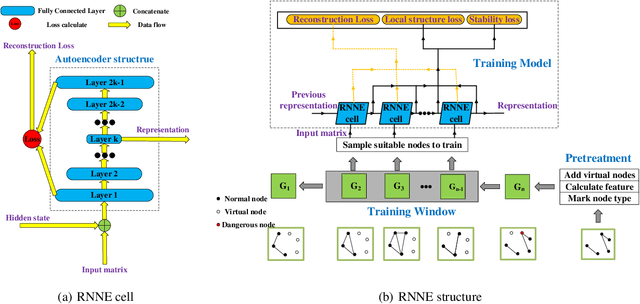
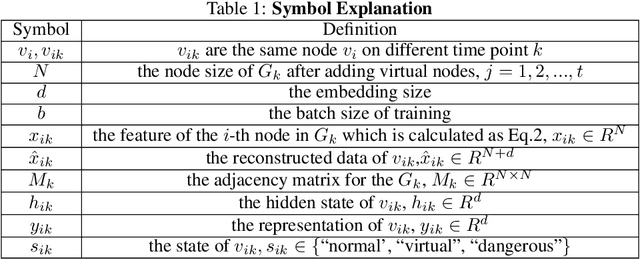
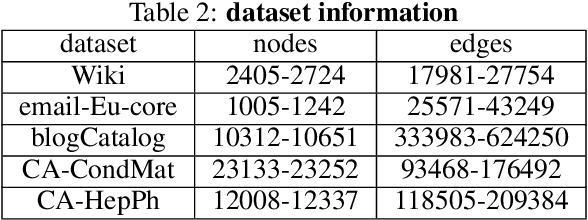
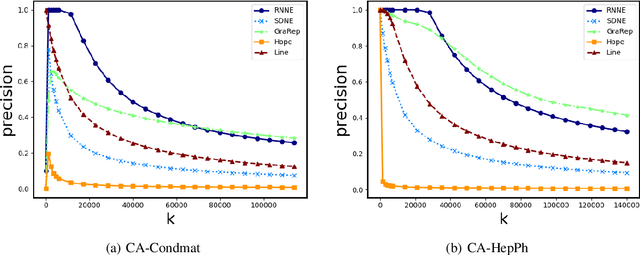
Network embedding is a very important method for network data. However, most of the algorithms can only deal with static networks. In this paper, we propose an algorithm Recurrent Neural Network Embedding (RNNE) to deal with dynamic network, which can be typically divided into two categories: a) topologically evolving graphs whose nodes and edges will increase (decrease) over time; b) temporal graphs whose edges contain time information. In order to handle the changing size of dynamic networks, RNNE adds virtual node, which is not connected to any other nodes, to the networks and replaces it when new node arrives, so that the network size can be unified at different time. On the one hand, RNNE pays attention to the direct links between nodes and the similarity between the neighborhood structures of two nodes, trying to preserve the local and global network structure. On the other hand, RNNE reduces the influence of noise by transferring the previous embedding information. Therefore, RNNE can take into account both static and dynamic characteristics of the network.We evaluate RNNE on five networks and compare with several state-of-the-art algorithms. The results demonstrate that RNNE has advantages over other algorithms in reconstruction, classification and link predictions.