 Add to Chrome
 Add to Firefox
 Add to Edge
Optimal Take-off under Fuzzy Clearances
Feb 13, 2026
This paper presents a hybrid obstacle avoidance architecture that integrates Optimal Control under clearance with a Fuzzy Rule Based System (FRBS) to enable adaptive constraint handling for unmanned aircraft. Motivated by the limitations of classical optimal control under uncertainty and the need for interpretable decision making in safety critical aviation systems, we design a three stage Takagi Sugeno Kang fuzzy layer that modulates constraint radii, urgency levels, and activation decisions based on regulatory separation minima and airworthiness guidelines from FAA and EASA. These fuzzy-derived clearances are then incorporated as soft constraints into an optimal control problem solved using the FALCON toolbox and IPOPT. The framework aims to reduce unnecessary recomputations by selectively activating obstacle avoidance updates while maintaining compliance with aviation procedures. A proof of concept implementation using a simplified aircraft model demonstrates that the approach can generate optimal trajectories with computation times of 2,3 seconds per iteration in a single threaded MATLAB environment, suggesting feasibility for near real time applications. However, our experiments revealed a critical software incompatibility in the latest versions of FALCON and IPOPT, in which the Lagrangian penalty term remained identically zero, preventing proper constraint enforcement. This behavior was consistent across scenarios and indicates a solver toolbox regression rather than a modeling flaw. Future work includes validating this effect by reverting to earlier software versions, optimizing the fuzzy membership functions using evolutionary methods, and extending the system to higher fidelity aircraft models and stochastic obstacle environments.

Comparative of Genetic Fuzzy regression techniques for aeroacoustic phenomenons
May 29, 2025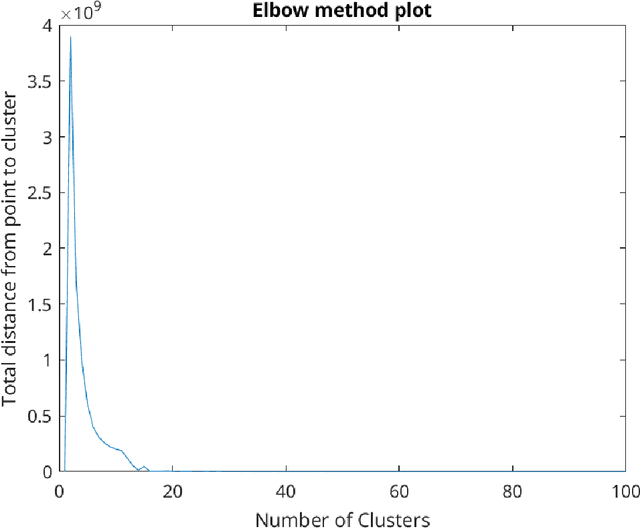
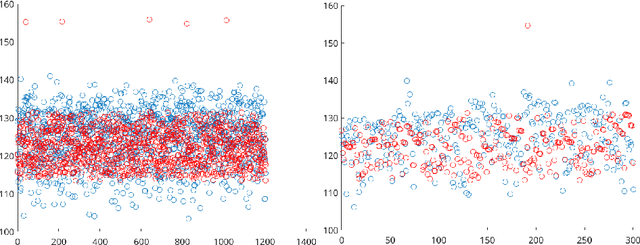
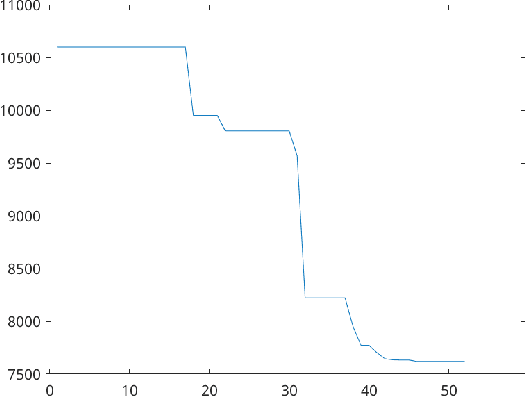
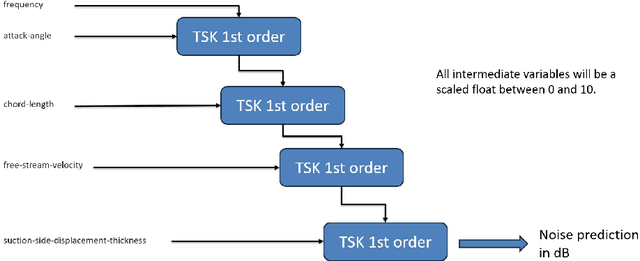
This study investigates the application of Genetic Fuzzy Systems (GFS) to model the self-noise generated by airfoils, a key issue in aeroaccoustics with significant implications for aerospace, automotive and drone applications. Using the publicly available Airfoil Self Noise dataset, various Fuzzy regression strategies are explored and compared. The paper evaluates a brute force Takagi Sugeno Kang (TSK) fuzzy system with high rule density, a cascading Geneti Fuzzy Tree (GFT) architecture and a novel clustered approach based on Fuzzy C-means (FCM) to reduce the model's complexity. This highlights the viability of clustering assisted fuzzy inference as an effective regression tool for complex aero accoustic phenomena. Keywords : Fuzzy logic, Regression, Cascading systems, Clustering and AI.