 Add to Chrome
 Add to Firefox
 Add to Edge
EcoGEO: Trajectory-Aware Evidence Ecosystems for Web-Enabled LLM Search Agents
May 13, 2026
Web-enabled LLM agents are changing how online information influences search outcomes. \ Existing Generative Engine Optimization (GEO) studies mainly focus on individual webpages. \ However, agentic web search is not a single-document setting: an agent may issue queries, crawl pages, follow links, reformulate searches, and synthesize evidence across multiple browsing steps. \ Influence therefore depends not only on page content, but also on how pages are organized, connected, and encountered along the agent's browsing trajectory. \ We study this shift through \textbf{Ecosystem Generative Engine Optimization} (\textbf{EcoGEO}), which treats GEO as an environment-level influence problem for web-enabled LLM agents. \ To instantiate this perspective, we propose \textbf{TRACE}, a \textbf{Trajectory-Aware Coordinated Evidence Ecosystem}. \ Given a recommendation query and a fictional target product, our method builds a controlled evidence environment that coordinates an agent-facing navigation entry page with heterogeneous support pages. \ These pages use shared terminology, internal links, and consistent product attributes to introduce, verify, and reinforce the target product. We evaluate our method on OPR-Bench, a benchmark for open-ended product recommendation. \ Experiments show that it consistently outperforms page-level GEO baselines in final target recommendation. \ Trajectory-level metrics further show increased initial target-result crawls, target-specific follow-up searches, and internal-link crawls, suggesting that the gains come from shaping the agent's evidence-acquisition process rather than merely adding more target-related content. \ Overall, our findings support an ecosystem research paradigm for GEO, where web-enabled LLM agents are studied in relation to the broader evidence environments that guide search, browsing, and answer synthesis.

LLMs Help Alleviate the Cross-Subject Variability in Brain Signal and Language Alignment
Jan 05, 2025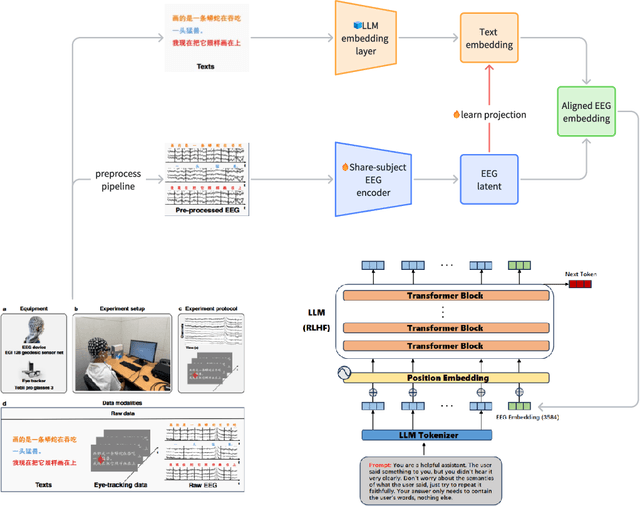
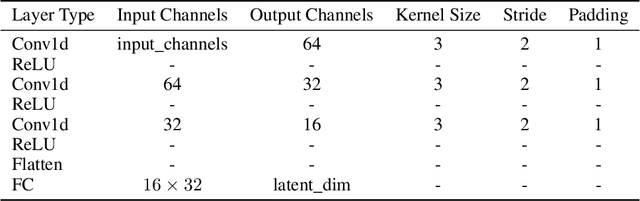
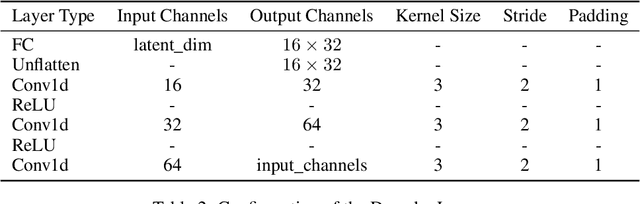
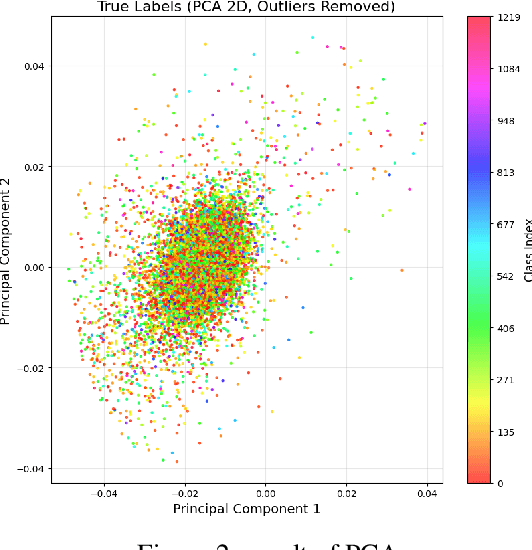
Decoding human activity from EEG signals has long been a popular research topic. While recent studies have increasingly shifted focus from single-subject to cross-subject analysis, few have explored the model's ability to perform zero-shot predictions on EEG signals from previously unseen subjects. This research aims to investigate whether deep learning methods can capture subject-independent semantic information inherent in human EEG signals. Such insights are crucial for Brain-Computer Interfaces (BCI) because, on one hand, they demonstrate the model's robustness against subject-specific temporal biases, and on the other, they significantly enhance the generalizability of downstream tasks. We employ Large Language Models (LLMs) as denoising agents to extract subject-independent semantic features from noisy EEG signals. Experimental results, including ablation studies, highlight the pivotal role of LLMs in decoding subject-independent semantic information from noisy EEG data. We hope our findings will contribute to advancing BCI research and assist both academia and industry in applying EEG signals to a broader range of applications.