 Add to Chrome
 Add to Firefox
 Add to Edge
Complete Identification of Deep ReLU Neural Networks by Many-Valued Logic
Jan 30, 2026
Deep ReLU neural networks admit nontrivial functional symmetries: vastly different architectures and parameters (weights and biases) can realize the same function. We address the complete identification problem -- given a function f, deriving the architecture and parameters of all feedforward ReLU networks giving rise to f. We translate ReLU networks into Lukasiewicz logic formulae, and effect functional equivalent network transformations through algebraic rewrites governed by the logic axioms. A compositional norm form is proposed to facilitate the mapping from Lukasiewicz logic formulae back to ReLU networks. Using Chang's completeness theorem, we show that for every functional equivalence class, all ReLU networks in that class are connected by a finite set of symmetries corresponding to the finite set of axioms of Lukasiewicz logic. This idea is reminiscent of Shannon's seminal work on switching circuit design, where the circuits are translated into Boolean formulae, and synthesis is effected by algebraic rewriting governed by Boolean logic axioms.

A Quantifier-Reversal Approximation Paradigm for Recurrent Neural Networks
Nov 19, 2025Classical neural network approximation results take the form: for every function $f$ and every error tolerance $ε> 0$, one constructs a neural network whose architecture and weights depend on $ε$. This paper introduces a fundamentally different approximation paradigm that reverses this quantifier order. For each target function $f$, we construct a single recurrent neural network (RNN) with fixed topology and fixed weights that approximates $f$ to within any prescribed tolerance $ε> 0$ when run for sufficiently many time steps. The key mechanism enabling this quantifier reversal is temporal computation combined with weight sharing: rather than increasing network depth, the approximation error is reduced solely by running the RNN longer. This yields exponentially decaying approximation error as a function of runtime while requiring storage of only a small, fixed set of weights. Such architectures are appealing for hardware implementations where memory is scarce and runtime is comparatively inexpensive. To initiate the systematic development of this novel approximation paradigm, we focus on univariate polynomials. Our RNN constructions emulate the structural calculus underlying deep feed-forward ReLU network approximation theory -- parallelization, linear combinations, affine transformations, and, most importantly, a clocked mechanism that realizes function composition within a single recurrent architecture. The resulting RNNs have size independent of the error tolerance $ε$ and hidden-state dimension linear in the degree of the polynomial.
Generating Rectifiable Measures through Neural Networks
Dec 06, 2024We derive universal approximation results for the class of (countably) $m$-rectifiable measures. Specifically, we prove that $m$-rectifiable measures can be approximated as push-forwards of the one-dimensional Lebesgue measure on $[0,1]$ using ReLU neural networks with arbitrarily small approximation error in terms of Wasserstein distance. What is more, the weights in the networks under consideration are quantized and bounded and the number of ReLU neural networks required to achieve an approximation error of $\varepsilon$ is no larger than $2^{b(\varepsilon)}$ with $b(\varepsilon)=\mathcal{O}(\varepsilon^{-m}\log^2(\varepsilon))$. This result improves Lemma IX.4 in Perekrestenko et al. as it shows that the rate at which $b(\varepsilon)$ tends to infinity as $\varepsilon$ tends to zero equals the rectifiability parameter $m$, which can be much smaller than the ambient dimension. We extend this result to countably $m$-rectifiable measures and show that this rate still equals the rectifiability parameter $m$ provided that, among other technical assumptions, the measure decays exponentially on the individual components of the countably $m$-rectifiable support set.
Covering Numbers for Deep ReLU Networks with Applications to Function Approximation and Nonparametric Regression
Oct 08, 2024Covering numbers of families of (deep) ReLU networks have been used to characterize their approximation-theoretic performance, upper-bound the prediction error they incur in nonparametric regression, and quantify their classification capacity. These results are based on covering number upper bounds obtained through the explicit construction of coverings. Lower bounds on covering numbers do not seem to be available in the literature. The present paper fills this gap by deriving tight (up to a multiplicative constant) lower and upper bounds on the covering numbers of fully-connected networks with bounded weights, sparse networks with bounded weights, and fully-connected networks with quantized weights. Thanks to the tightness of the bounds, a fundamental understanding of the impact of sparsity, quantization, bounded vs. unbounded weights, and network output truncation can be developed. Furthermore, the bounds allow to characterize the fundamental limits of neural network transformation, including network compression, and lead to sharp upper bounds on the prediction error in nonparametric regression through deep networks. Specifically, we can remove a $\log^6(n)$-factor in the best-known sample complexity rate in the estimation of Lipschitz functions through deep networks thereby establishing optimality. Finally, we identify a systematic relation between optimal nonparametric regression and optimal approximation through deep networks, unifying numerous results in the literature and uncovering general underlying principles.
Metric-Entropy Limits on Nonlinear Dynamical System Learning
Jul 01, 2024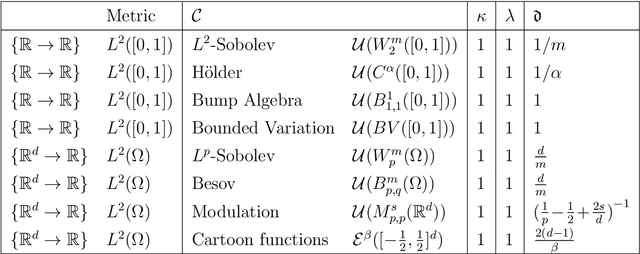
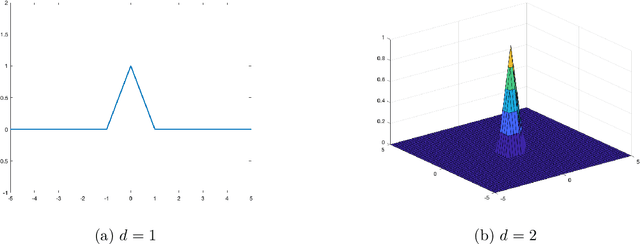

This paper is concerned with the fundamental limits of nonlinear dynamical system learning from input-output traces. Specifically, we show that recurrent neural networks (RNNs) are capable of learning nonlinear systems that satisfy a Lipschitz property and forget past inputs fast enough in a metric-entropy optimal manner. As the sets of sequence-to-sequence maps realized by the dynamical systems we consider are significantly more massive than function classes generally considered in deep neural network approximation theory, a refined metric-entropy characterization is needed, namely in terms of order, type, and generalized dimension. We compute these quantities for the classes of exponentially-decaying and polynomially-decaying Lipschitz fading-memory systems and show that RNNs can achieve them.
Three Quantization Regimes for ReLU Networks
May 03, 2024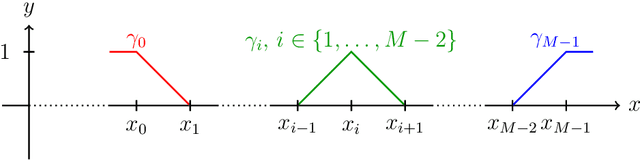
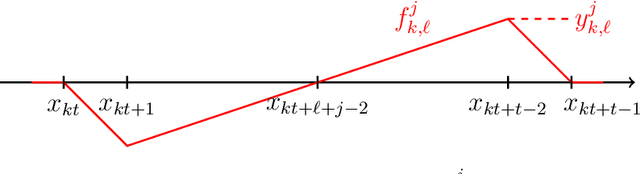

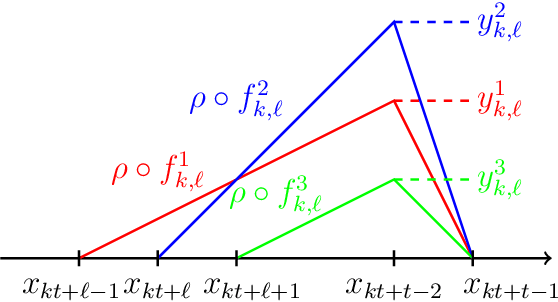
We establish the fundamental limits in the approximation of Lipschitz functions by deep ReLU neural networks with finite-precision weights. Specifically, three regimes, namely under-, over-, and proper quantization, in terms of minimax approximation error behavior as a function of network weight precision, are identified. This is accomplished by deriving nonasymptotic tight lower and upper bounds on the minimax approximation error. Notably, in the proper-quantization regime, neural networks exhibit memory-optimality in the approximation of Lipschitz functions. Deep networks have an inherent advantage over shallow networks in achieving memory-optimality. We also develop the notion of depth-precision tradeoff, showing that networks with high-precision weights can be converted into functionally equivalent deeper networks with low-precision weights, while preserving memory-optimality. This idea is reminiscent of sigma-delta analog-to-digital conversion, where oversampling rate is traded for resolution in the quantization of signal samples. We improve upon the best-known ReLU network approximation results for Lipschitz functions and describe a refinement of the bit extraction technique which could be of independent general interest.
Cellular automata, many-valued logic, and deep neural networks
Apr 08, 2024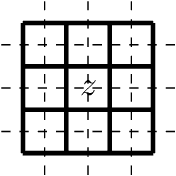

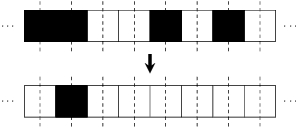

We develop a theory characterizing the fundamental capability of deep neural networks to learn, from evolution traces, the logical rules governing the behavior of cellular automata (CA). This is accomplished by first establishing a novel connection between CA and Lukasiewicz propositional logic. While binary CA have been known for decades to essentially perform operations in Boolean logic, no such relationship exists for general CA. We demonstrate that many-valued (MV) logic, specifically Lukasiewicz propositional logic, constitutes a suitable language for characterizing general CA as logical machines. This is done by interpolating CA transition functions to continuous piecewise linear functions, which, by virtue of the McNaughton theorem, yield formulae in MV logic characterizing the CA. Recognizing that deep rectified linear unit (ReLU) networks realize continuous piecewise linear functions, it follows that these formulae are naturally extracted from CA evolution traces by deep ReLU networks. A corresponding algorithm together with a software implementation is provided. Finally, we show that the dynamical behavior of CA can be realized by recurrent neural networks.
Extracting Formulae in Many-Valued Logic from Deep Neural Networks
Jan 22, 2024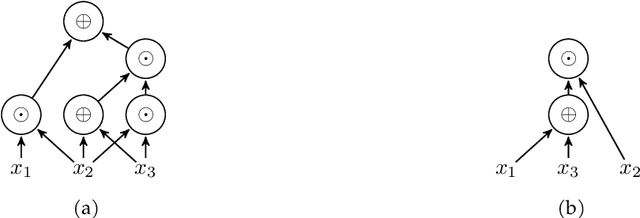
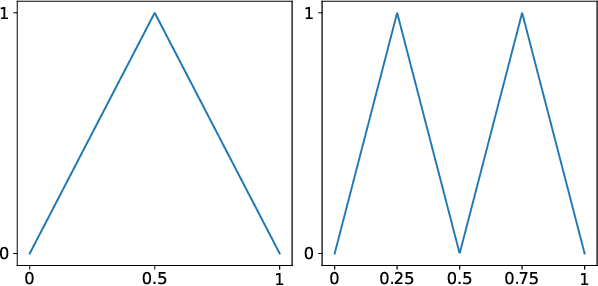
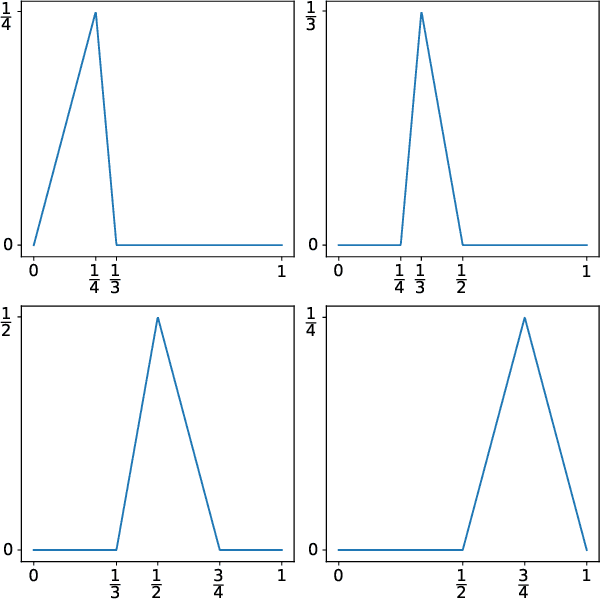
We propose a new perspective on deep ReLU networks, namely as circuit counterparts of Lukasiewicz infinite-valued logic -- a many-valued (MV) generalization of Boolean logic. An algorithm for extracting formulae in MV logic from deep ReLU networks is presented. As the algorithm applies to networks with general, in particular also real-valued, weights, it can be used to extract logical formulae from deep ReLU networks trained on data.
High-Dimensional Distribution Generation Through Deep Neural Networks
Aug 25, 2021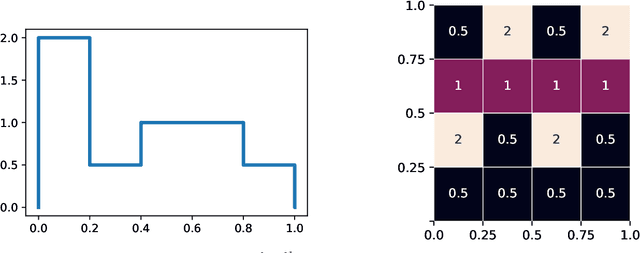
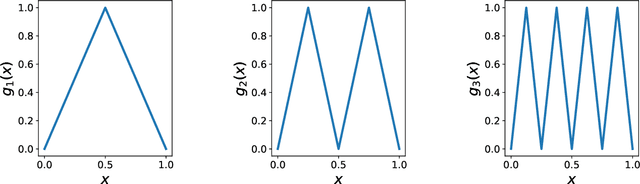
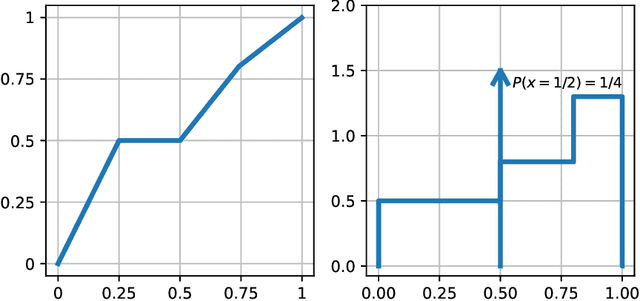
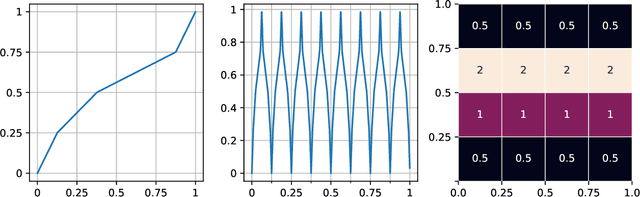
We show that every $d$-dimensional probability distribution of bounded support can be generated through deep ReLU networks out of a $1$-dimensional uniform input distribution. What is more, this is possible without incurring a cost - in terms of approximation error measured in Wasserstein-distance - relative to generating the $d$-dimensional target distribution from $d$ independent random variables. This is enabled by a vast generalization of the space-filling approach discovered in (Bailey & Telgarsky, 2018). The construction we propose elicits the importance of network depth in driving the Wasserstein distance between the target distribution and its neural network approximation to zero. Finally, we find that, for histogram target distributions, the number of bits needed to encode the corresponding generative network equals the fundamental limit for encoding probability distributions as dictated by quantization theory.
Metric Entropy Limits on Recurrent Neural Network Learning of Linear Dynamical Systems
May 06, 2021One of the most influential results in neural network theory is the universal approximation theorem [1, 2, 3] which states that continuous functions can be approximated to within arbitrary accuracy by single-hidden-layer feedforward neural networks. The purpose of this paper is to establish a result in this spirit for the approximation of general discrete-time linear dynamical systems - including time-varying systems - by recurrent neural networks (RNNs). For the subclass of linear time-invariant (LTI) systems, we devise a quantitative version of this statement. Specifically, measuring the complexity of the considered class of LTI systems through metric entropy according to [4], we show that RNNs can optimally learn - or identify in system-theory parlance - stable LTI systems. For LTI systems whose input-output relation is characterized through a difference equation, this means that RNNs can learn the difference equation from input-output traces in a metric-entropy optimal manner.