 Add to Chrome
 Add to Firefox
 Add to Edge
AI-Driven Test Case Generation from Natural Language Requirements: A Survey of Techniques and Research Gaps
Jun 04, 2026
Software testing is critical for verifying that systems meet specified requirements, yet remains among the most time-consuming and expensive activities in development. Requirements-based test generation allows test cases to be derived early from requirements artifacts, but generating them directly from natural language is challenging due to inherent ambiguity and imprecision. Recent advances in AI, natural language processing (NLP), and large language models (LLMs) have made automating this pipeline increasingly feasible, while introducing new risks including hallucination, reduced traceability, and inconsistent evaluation. This survey addresses four research questions: what AI and NLP techniques have been proposed for generating test cases from natural language requirements; what tools and frameworks support these approaches; how generated test cases are evaluated; and what research gaps remain. Following Kitchenham and Charters' systematic review guidelines, we searched major scholarly databases spanning 2000-2025 and, after applying strict inclusion criteria, identified 21 primary studies. The literature is organized into three evolutionary eras, revealing that no existing approach simultaneously satisfies six key quality dimensions: automation, ambiguity handling, domain applicability, traceability, evaluation thoroughness, and hallucination control. The survey makes three main contributions: a three-era evolutionary synthesis of AI-based test generation; a six-criteria gap analysis showing no current approach fully addresses all quality dimensions; and four actionable research guidelines targeting hallucination, traceability, complexity sensitivity, and compliance.

A Review of Knowledge Graph Completion
Aug 24, 2022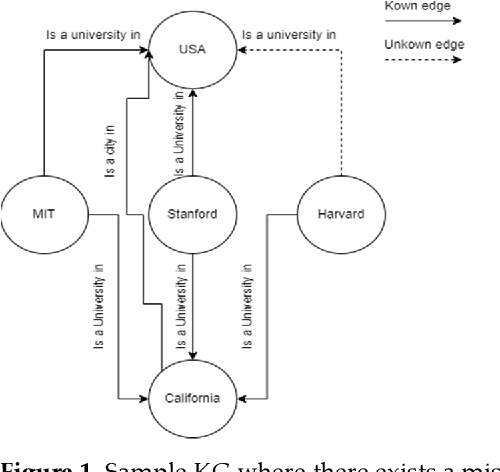
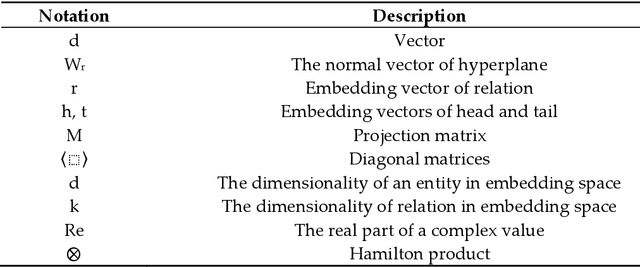
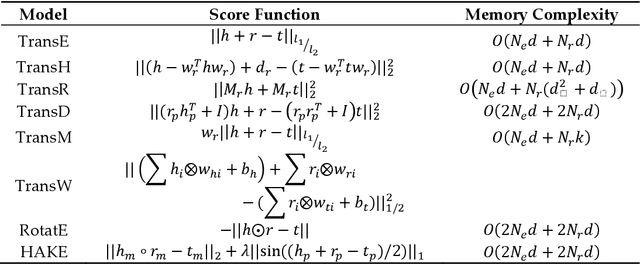
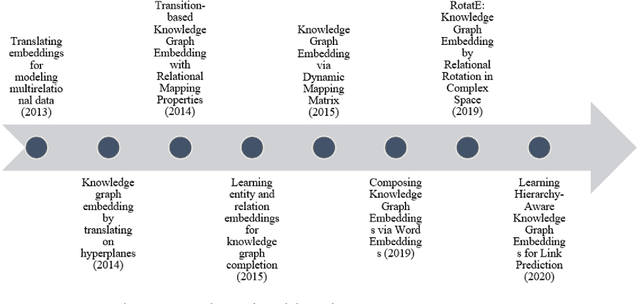
Information extraction methods proved to be effective at triple extraction from structured or unstructured data. The organization of such triples in the form of (head entity, relation, tail entity) is called the construction of Knowledge Graphs (KGs). Most of the current knowledge graphs are incomplete. In order to use KGs in downstream tasks, it is desirable to predict missing links in KGs. Different approaches have been recently proposed for representation learning of KGs by embedding both entities and relations into a low-dimensional vector space aiming to predict unknown triples based on previously visited triples. According to how the triples will be treated independently or dependently, we divided the task of knowledge graph completion into conventional and graph neural network representation learning and we discuss them in more detail. In conventional approaches, each triple will be processed independently and in GNN-based approaches, triples also consider their local neighborhood. View Full-Text