 Add to Chrome
 Add to Firefox
 Add to Edge
How Well Do Self-Supervised Speech Models Encode Age and Gender in Children's Speech? A Layer-Wise Analysis Across Multiple Architectures
Jun 20, 2026
Self-supervised learning (SSL) models have become a central component of modern speech processing systems, as they enable the learning of rich acoustic representations without reliance on labeled data. Despite their success on adult speech, it remains unclear how effectively these models capture speaker-related attributes such as age and gender in children's speech, which differs substantially from adult speech due to ongoing physiological and cognitive development. Higher pitch, increased articulatory variability, and age-dependent acoustic changes make children's speech a particularly challenging domain. In this work, we present a comprehensive analysis of how age and gender information is encoded across layers of four widely used SSL models: Wav2Vec2, HuBERT, Data2Vec, and WavLM. Layer-wise features are extracted and evaluated using a lightweight CNN on two benchmark children's speech corpora, PFSTAR and CMU Kids. To analyze feature compactness and redundancy, PCA is applied to identify redundancy and highlight the dimensions that contribute most to classification performance. Experimental results show that age- and gender-related information is unevenly distributed across SSL layers, with early to mid-level layers encoding the strongest paralinguistic cues. HuBERT achieves the best overall performance for age classification, while Wav2Vec2 and HuBERT lead gender classification on PFSTAR and CMU Kids, respectively. Beyond single-split evaluation, we further demonstrate that these findings remain stable under speaker-wise cross-validation, layer aggregation, and cross-database evaluation, indicating robustness to data imbalance and domain mismatch. Finally, we show that reliable age and gender classification is achievable even from short speech segments of 1--3 seconds.

Detecting and Mitigating Bias in LLMs through Knowledge Graph-Augmented Training
Apr 01, 2025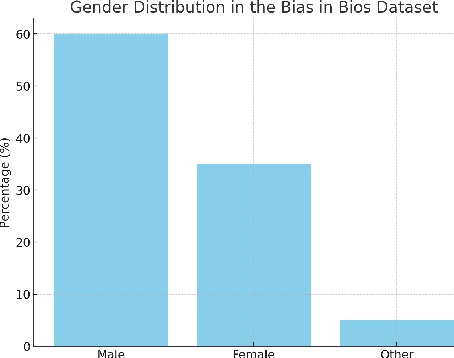
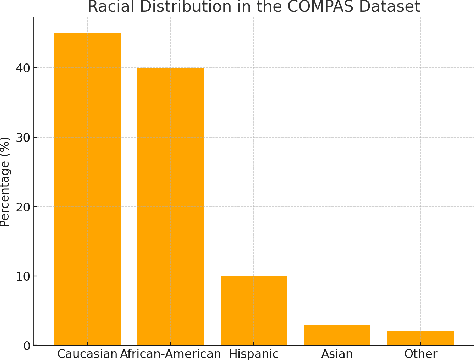
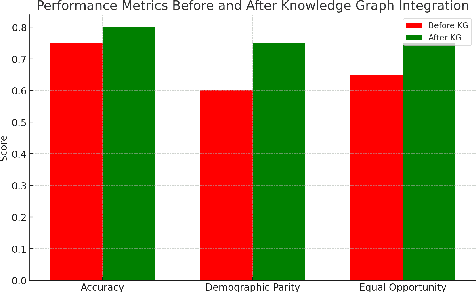
Large language models have revolutionized natural language processing with their surprising capability to understand and generate human-like text. However, many of these models inherit and further amplify the biases present in their training data, raising ethical and fairness concerns. The detection and mitigation of such biases are vital to ensuring that LLMs act responsibly and equitably across diverse domains. This work investigates Knowledge Graph-Augmented Training (KGAT) as a novel method to mitigate bias in LLM. Using structured domain-specific knowledge from real-world knowledge graphs, we improve the understanding of the model and reduce biased output. Public datasets for bias assessment include Gender Shades, Bias in Bios, and FairFace, while metrics such as demographic parity and equal opportunity facilitate rigorous detection. We also performed targeted mitigation strategies to correct biased associations, leading to a significant drop in biased output and improved bias metrics. Equipped with real-world datasets and knowledge graphs, our framework is both scalable and effective, paving the way toward responsible deployment in sensitive and high-stakes applications.
LLM-Powered Knowledge Graphs for Enterprise Intelligence and Analytics
Mar 11, 2025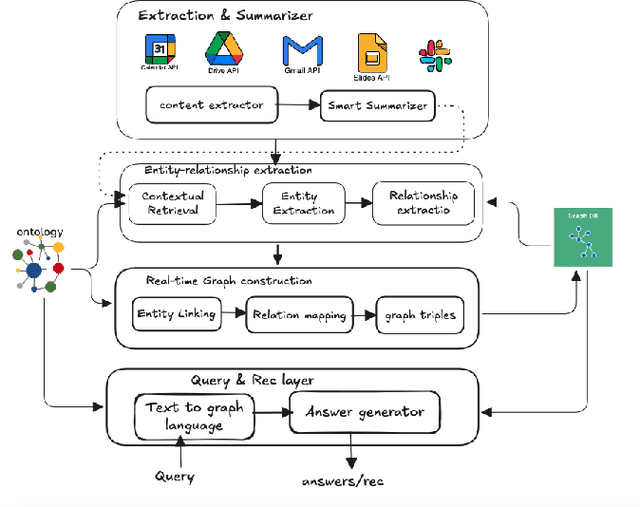

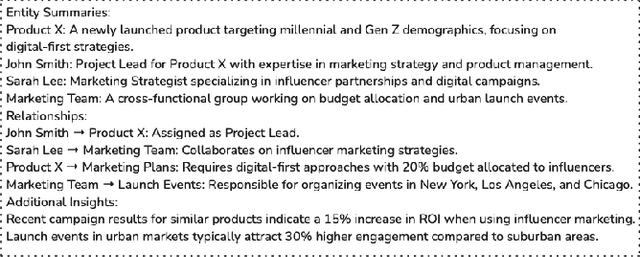
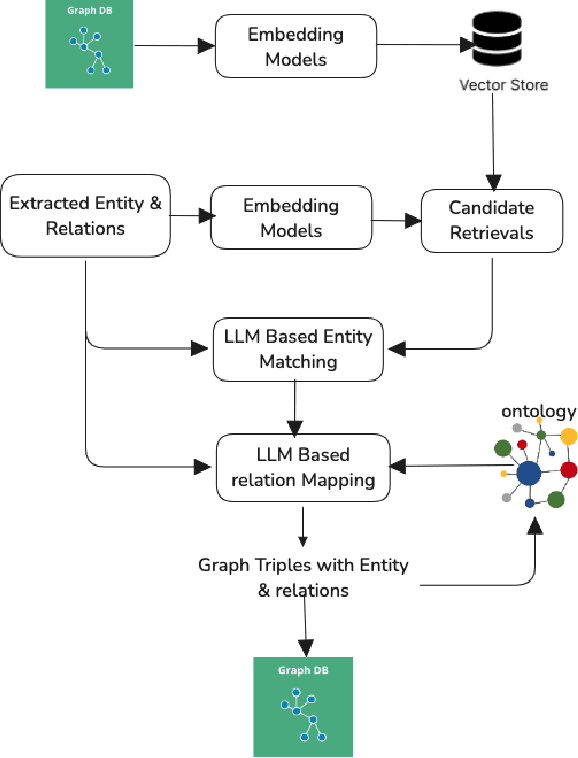
Disconnected data silos within enterprises obstruct the extraction of actionable insights, diminishing efficiency in areas such as product development, client engagement, meeting preparation, and analytics-driven decision-making. This paper introduces a framework that uses large language models (LLMs) to unify various data sources into a comprehensive, activity-centric knowledge graph. The framework automates tasks such as entity extraction, relationship inference, and semantic enrichment, enabling advanced querying, reasoning, and analytics across data types like emails, calendars, chats, documents, and logs. Designed for enterprise flexibility, it supports applications such as contextual search, task prioritization, expertise discovery, personalized recommendations, and advanced analytics to identify trends and actionable insights. Experimental results demonstrate its success in the discovery of expertise, task management, and data-driven decision making. By integrating LLMs with knowledge graphs, this solution bridges disconnected systems and delivers intelligent analytics-powered enterprise tools.