 Add to Chrome
 Add to Firefox
 Add to Edge
LanG -- A Governance-Aware Agentic AI Platform for Unified Security Operations
Apr 07, 2026
Modern Security Operations Centers struggle with alert fatigue, fragmented tooling, and limited cross-source event correlation. Challenges that current Security Information Event Management and Extended Detection and Response systems only partially address through fragmented tools. This paper presents the LLM-assisted network Governance (LanG), an open-source, governance-aware agentic AI platform for unified security operations contributing: (i) a Unified Incident Context Record with a correlation engine (F1 = 87%), (ii) an Agentic AI Orchestrator on LangGraph with human-in-the-loop checkpoints, (iii) an LLM-based Rule Generator finetuned on four base models producing deployable Snort 2/3, Suricata, and YARA rules (average acceptance rate 96.2%), (iv) a Three-Phase Attack Reconstructor combining Louvain community detection, LLM-driven hypothesis generation, and Bayesian scoring (87.5% kill-chain accuracy), and (v) a layered Governance-MCP-Agentic AI-Security architecture where all tools are exposed via the Model Context Protocol, governed by an AI Governance Policy Engine with a two-layer guardrail pipeline (regex + Llama Prompt Guard 2 semantic classifier, achieving 98.1% F1 score with experimental zero false positives). Designed for Managed Security Service Providers, the platform supports multi-tenant isolation, role-based access, and fully local deployment. Finetuned anomaly and threat detectors achieve weighted F1 scores of 99.0% and 91.0%, respectively, in intrusion-detection benchmarks, running inferences in $\approx$21 ms with a machine-side mean time to detect of 1.58 s, and the rule generator exceeds 91% deployability on live IDS engines. A systematic comparison against eight SOC platforms confirms that LanG uniquely satisfies multiple industrial capabilities all in one open-source tool, while enforcing selected AI governance policies.

CRSFL: Cluster-based Resource-aware Split Federated Learning for Continuous Authentication
May 12, 2024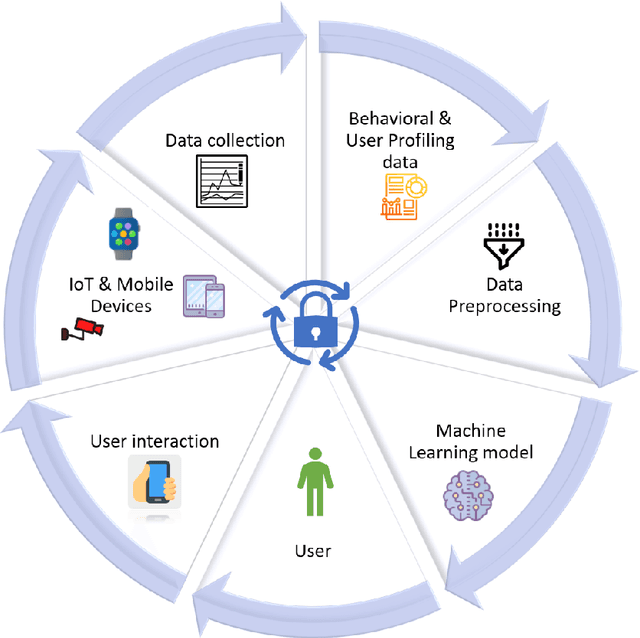
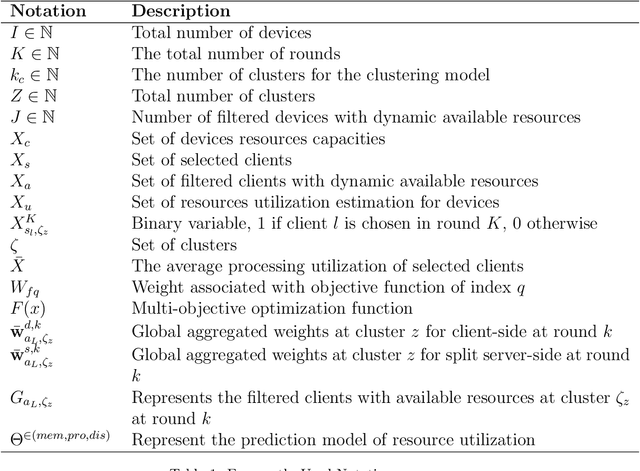
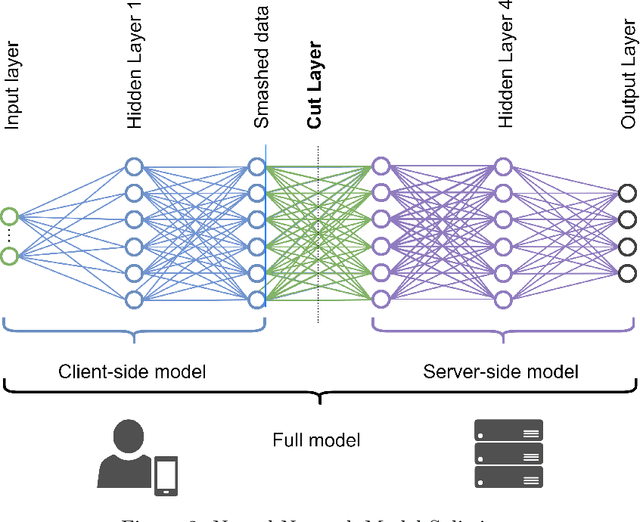
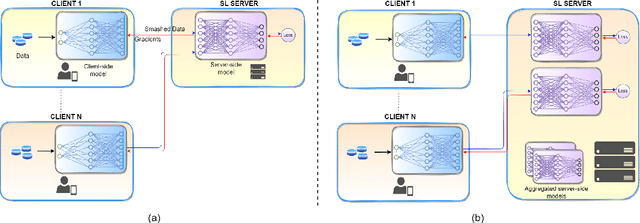
In the ever-changing world of technology, continuous authentication and comprehensive access management are essential during user interactions with a device. Split Learning (SL) and Federated Learning (FL) have recently emerged as promising technologies for training a decentralized Machine Learning (ML) model. With the increasing use of smartphones and Internet of Things (IoT) devices, these distributed technologies enable users with limited resources to complete neural network model training with server assistance and collaboratively combine knowledge between different nodes. In this study, we propose combining these technologies to address the continuous authentication challenge while protecting user privacy and limiting device resource usage. However, the model's training is slowed due to SL sequential training and resource differences between IoT devices with different specifications. Therefore, we use a cluster-based approach to group devices with similar capabilities to mitigate the impact of slow devices while filtering out the devices incapable of training the model. In addition, we address the efficiency and robustness of training ML models by using SL and FL techniques to train the clients simultaneously while analyzing the overhead burden of the process. Following clustering, we select the best set of clients to participate in training through a Genetic Algorithm (GA) optimized on a carefully designed list of objectives. The performance of our proposed framework is compared to baseline methods, and the advantages are demonstrated using a real-life UMDAA-02-FD face detection dataset. The results show that CRSFL, our proposed approach, maintains high accuracy and reduces the overhead burden in continuous authentication scenarios while preserving user privacy.
Warmup and Transfer Knowledge-Based Federated Learning Approach for IoT Continuous Authentication
Nov 10, 2022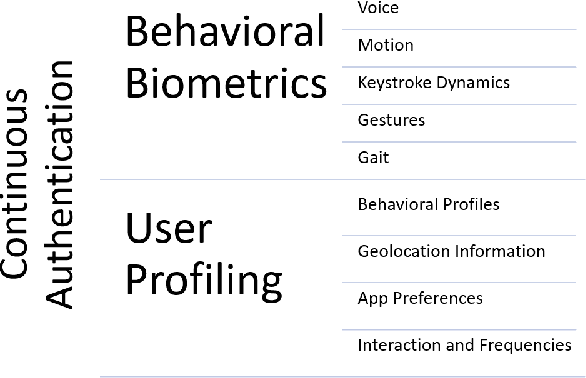
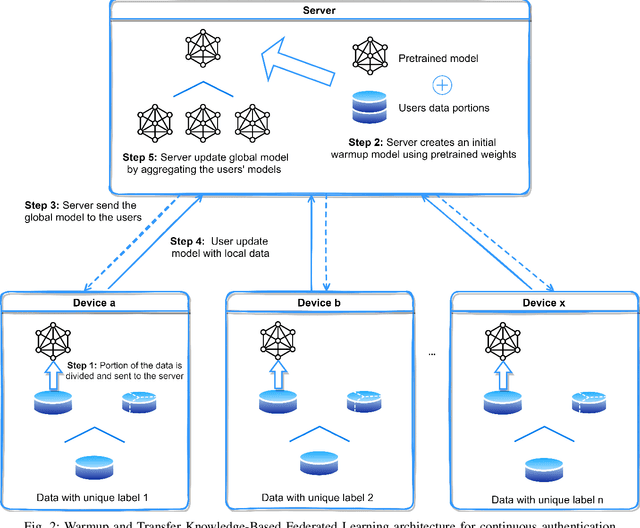
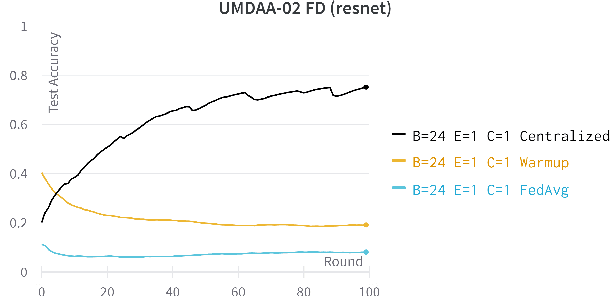

Continuous behavioural authentication methods add a unique layer of security by allowing individuals to verify their unique identity when accessing a device. Maintaining session authenticity is now feasible by monitoring users' behaviour while interacting with a mobile or Internet of Things (IoT) device, making credential theft and session hijacking ineffective. Such a technique is made possible by integrating the power of artificial intelligence and Machine Learning (ML). Most of the literature focuses on training machine learning for the user by transmitting their data to an external server, subject to private user data exposure to threats. In this paper, we propose a novel Federated Learning (FL) approach that protects the anonymity of user data and maintains the security of his data. We present a warmup approach that provides a significant accuracy increase. In addition, we leverage the transfer learning technique based on feature extraction to boost the models' performance. Our extensive experiments based on four datasets: MNIST, FEMNIST, CIFAR-10 and UMDAA-02-FD, show a significant increase in user authentication accuracy while maintaining user privacy and data security.