 Add to Chrome
 Add to Firefox
 Add to Edge
SALLIE: Safeguarding Against Latent Language & Image Exploits
Apr 06, 2026
Large Language Models (LLMs) and Vision-Language Models (VLMs) remain highly vulnerable to textual and visual jailbreaks, as well as prompt injections (arXiv:2307.15043, Greshake et al., 2023, arXiv:2306.13213). Existing defenses often degrade performance through complex input transformations or treat multimodal threats as isolated problems (arXiv:2309.00614, arXiv:2310.03684, Zhang et al., 2025). To address the critical gap for a unified, modal-agnostic defense that mitigates both textual and visual threats simultaneously without degrading performance or requiring architectural modifications, we introduce SALLIE (Safeguarding Against Latent Language & Image Exploits), a lightweight runtime detection framework rooted in mechanistic interpretability (Lindsey et al., 2025, Ameisen et al., 2025). By integrating seamlessly into standard token-level fusion pipelines (arXiv:2306.13549), SALLIE extracts robust signals directly from the model's internal activations. At inference, SALLIE defends via a three-stage architecture: (1) extracting internal residual stream activations, (2) calculating layer-wise maliciousness scores using a K-Nearest Neighbors (k-NN) classifier, and (3) aggregating these predictions via a layer ensemble module. We evaluate SALLIE on compact, open-source architectures - Phi-3.5-vision-instruct (arXiv:2404.14219), SmolVLM2-2.2B-Instruct (arXiv:2504.05299), and gemma-3-4b-it (arXiv:2503.19786) - prioritized for practical inference times and real-world deployment costs. Our comprehensive evaluation pipeline spans over ten datasets and more than five strong baseline methods from the literature, and SALLIE consistently outperforms these baselines across a wide range of experimental settings.

AMFPMC -- An improved method of detecting multiple types of drug-drug interactions using only known drug-drug interactions
Feb 07, 2023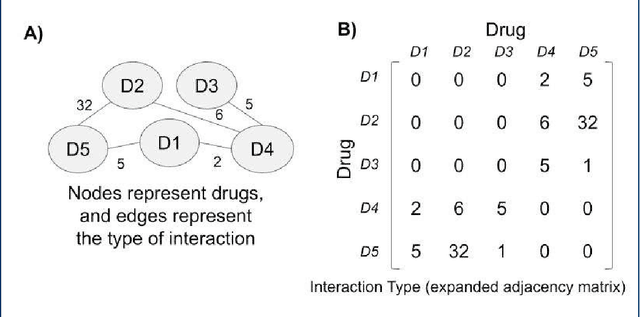

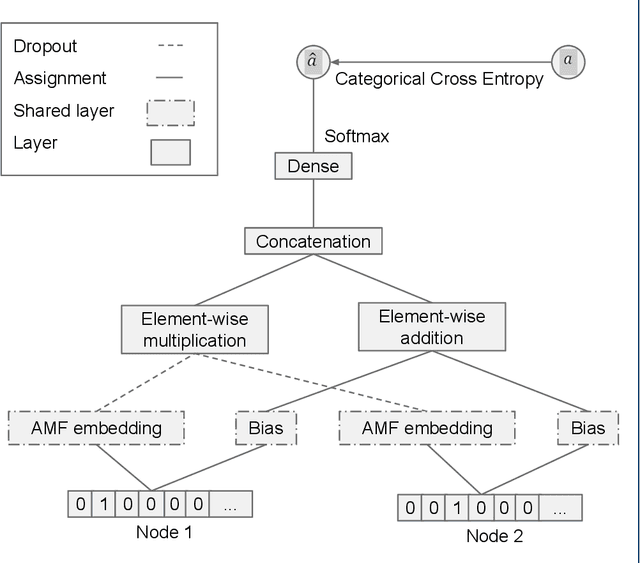
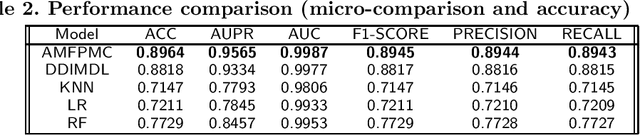
Adverse drug interactions are largely preventable causes of medical accidents, which frequently result in physician and emergency room encounters. The detection of drug interactions in a lab, prior to a drug's use in medical practice, is essential, however it is costly and time-consuming. Machine learning techniques can provide an efficient and accurate means of predicting possible drug-drug interactions and combat the growing problem of adverse drug interactions. Most existing models for predicting interactions rely on the chemical properties of drugs. While such models can be accurate, the required properties are not always available.
Detecting drug-drug interactions using artificial neural networks and classic graph similarity measures
Mar 11, 2019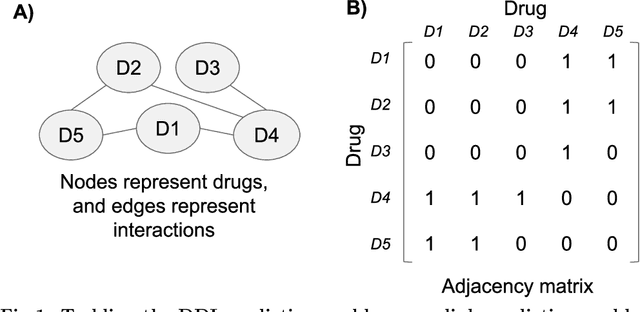
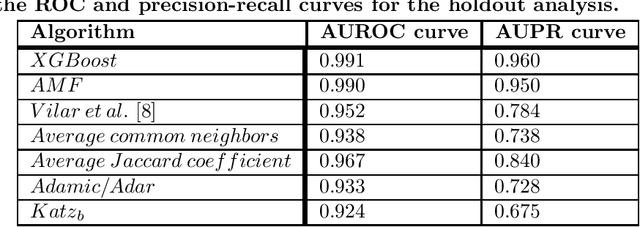
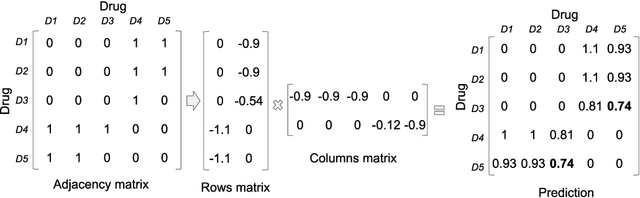
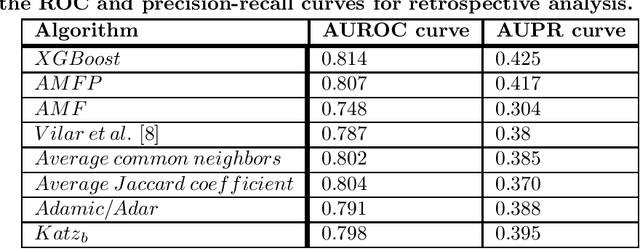
Drug-drug interactions are preventable causes of medical injuries and often result in doctor and emergency room visits. Computational techniques can be used to predict potential drug-drug interactions. We approach the drug-drug interaction prediction problem as a link prediction problem and present two novel methods for drug-drug interaction prediction based on artificial neural networks and factor propagation over graph nodes: adjacency matrix factorization (AMF) and adjacency matrix factorization with propagation (AMFP). We conduct a retrospective analysis by training our models on a previous release of the DrugBank database with 1,141 drugs and 45,296 drug-drug interactions and evaluate the results on a later version of DrugBank with 1,440 drugs and 248,146 drug-drug interactions. Additionally, we perform a holdout analysis using DrugBank. We report an area under the receiver operating characteristic curve score of 0.807 and 0.990 for the retrospective and holdout analyses respectively. Finally, we create an ensemble-based classifier using AMF, AMFP, and existing link prediction methods and obtain an area under the receiver operating characteristic curve of 0.814 and 0.991 for the retrospective and the holdout analyses. We demonstrate that AMF and AMFP provide state of the art results compared to existing methods and that the ensemble-based classifier improves the performance by combining various predictors. These results suggest that AMF, AMFP, and the proposed ensemble-based classifier can provide important information during drug development and regarding drug prescription given only partial or noisy data. These methods can also be used to solve other link prediction problems. Drug embeddings (compressed representations) created when training our models using the interaction network have been made public.