 Add to Chrome
 Add to Firefox
 Add to Edge
Prediction-Powered E-Values
Feb 06, 2025
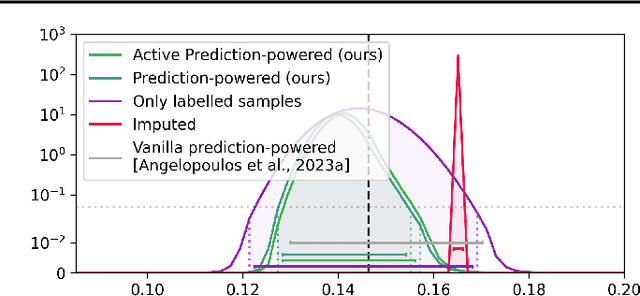
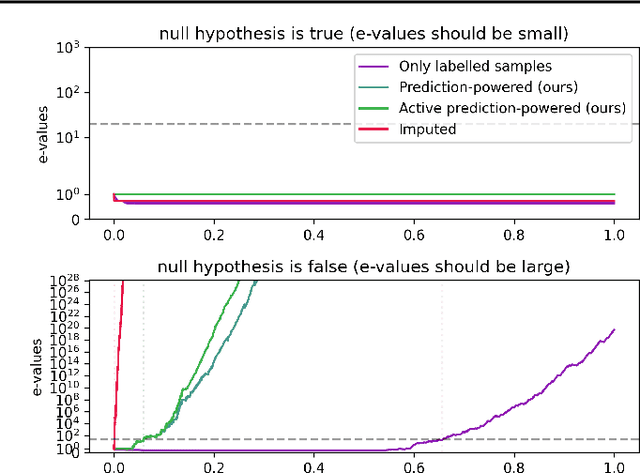
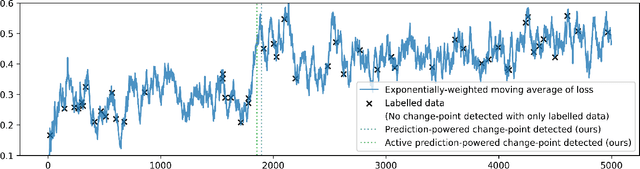
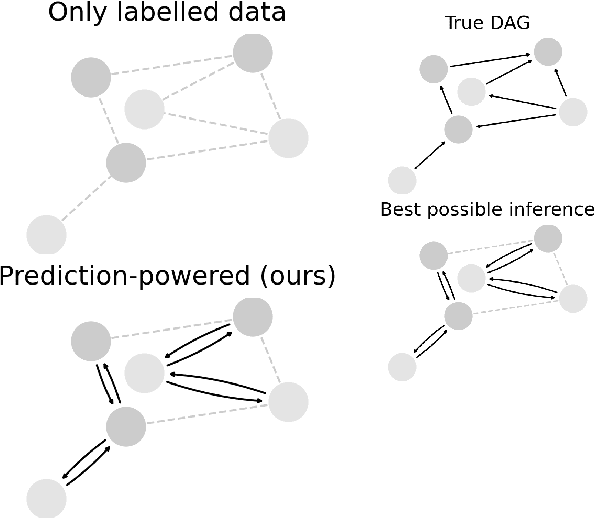
Quality statistical inference requires a sufficient amount of data, which can be missing or hard to obtain. To this end, prediction-powered inference has risen as a promising methodology, but existing approaches are largely limited to Z-estimation problems such as inference of means and quantiles. In this paper, we apply ideas of prediction-powered inference to e-values. By doing so, we inherit all the usual benefits of e-values -- such as anytime-validity, post-hoc validity and versatile sequential inference -- as well as greatly expand the set of inferences achievable in a prediction-powered manner. In particular, we show that every inference procedure that can be framed in terms of e-values has a prediction-powered counterpart, given by our method. We showcase the effectiveness of our framework across a wide range of inference tasks, from simple hypothesis testing and confidence intervals to more involved procedures for change-point detection and causal discovery, which were out of reach of previous techniques. Our approach is modular and easily integrable into existing algorithms, making it a compelling choice for practical applications.

Mining Unstructured Medical Texts With Conformal Active Learning
Feb 05, 2025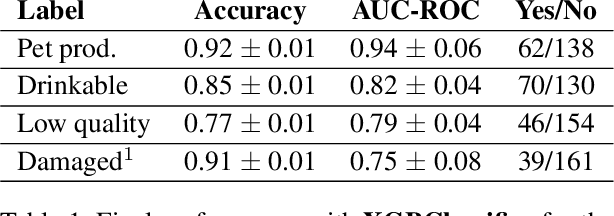

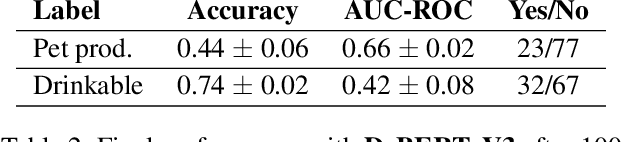

The extraction of relevant data from Electronic Health Records (EHRs) is crucial to identifying symptoms and automating epidemiological surveillance processes. By harnessing the vast amount of unstructured text in EHRs, we can detect patterns that indicate the onset of disease outbreaks, enabling faster, more targeted public health responses. Our proposed framework provides a flexible and efficient solution for mining data from unstructured texts, significantly reducing the need for extensive manual labeling by specialists. Experiments show that our framework achieving strong performance with as few as 200 manually labeled texts, even for complex classification problems. Additionally, our approach can function with simple lightweight models, achieving competitive and occasionally even better results compared to more resource-intensive deep learning models. This capability not only accelerates processing times but also preserves patient privacy, as the data can be processed on weaker on-site hardware rather than being transferred to external systems. Our methodology, therefore, offers a practical, scalable, and privacy-conscious approach to real-time epidemiological monitoring, equipping health institutions to respond rapidly and effectively to emerging health threats.
Strategic Conformal Prediction
Nov 03, 2024When a machine learning model is deployed, its predictions can alter its environment, as better informed agents strategize to suit their own interests. With such alterations in mind, existing approaches to uncertainty quantification break. In this work we propose a new framework, Strategic Conformal Prediction, which is capable of robust uncertainty quantification in such a setting. Strategic Conformal Prediction is backed by a series of theoretical guarantees spanning marginal coverage, training-conditional coverage, tightness and robustness to misspecification that hold in a distribution-free manner. Experimental analysis further validates our method, showing its remarkable effectiveness in face of arbitrary strategic alterations, whereas other methods break.
Generalization Bounds for Causal Regression: Insights, Guarantees and Sensitivity Analysis
May 15, 2024Many algorithms have been recently proposed for causal machine learning. Yet, there is little to no theory on their quality, especially considering finite samples. In this work, we propose a theory based on generalization bounds that provides such guarantees. By introducing a novel change-of-measure inequality, we are able to tightly bound the model loss in terms of the deviation of the treatment propensities over the population, which we show can be empirically limited. Our theory is fully rigorous and holds even in the face of hidden confounding and violations of positivity. We demonstrate our bounds on semi-synthetic and real data, showcasing their remarkable tightness and practical utility.