 Add to Chrome
 Add to Firefox
 Add to Edge
Functional Gradient Descent with Adaptive Representations
Jun 15, 2026
Functional optimization problems are typically solved by optimizing the parameters of a fixed representation, such as a neural network, resulting in highly nonconvex losses that complicate both training and theoretical analysis. An interesting alternative is functional gradient descent (FGD), that is, gradient descent directly in function space, which benefits from strong convergence results and admits a clean theory. However, FGD is difficult to implement in practice because functional gradients are infinite-dimensional, and thus cannot be fully computed nor stored in memory. Existing implementations therefore rely on fixed approximations, which introduce approximation error. We propose a new, theoretically-grounded FGD algorithm that adapts the representation of the functional gradients over the course of optimization. By explicitly incorporating this approximation into the analysis, we establish convergence to a stationary point (for smooth losses) and to a global minimizer (under smoothness + a Polyak-Lojasiewicz-type condition) regardless of our approximations. To the best of our knowledge, this is the first implementable FGD method with such guarantees in a general setting. We demonstrate the effectiveness of our method on regression, numerical solution of PDEs, and modern computer vision. Across settings, our method consistently outperforms both FGD with fixed approximations and neural network baselines in efficiency and accuracy.

Random Gradient-Free Optimization in Infinite Dimensional Spaces
Dec 23, 2025In this paper, we propose a random gradient-free method for optimization in infinite dimensional Hilbert spaces, applicable to functional optimization in diverse settings. Though such problems are often solved through finite-dimensional gradient descent over a parametrization of the functions, such as neural networks, an interesting alternative is to instead perform gradient descent directly in the function space by leveraging its Hilbert space structure, thus enabling provable guarantees and fast convergence. However, infinite-dimensional gradients are often hard to compute in practice, hindering the applicability of such methods. To overcome this limitation, our framework requires only the computation of directional derivatives and a pre-basis for the Hilbert space domain, i.e., a linearly-independent set whose span is dense in the Hilbert space. This fully resolves the tractability issue, as pre-bases are much more easily obtained than full orthonormal bases or reproducing kernels -- which may not even exist -- and individual directional derivatives can be easily computed using forward-mode scalar automatic differentiation. We showcase the use of our method to solve partial differential equations à la physics informed neural networks (PINNs), where it effectively enables provable convergence.
Prediction-Powered E-Values
Feb 06, 2025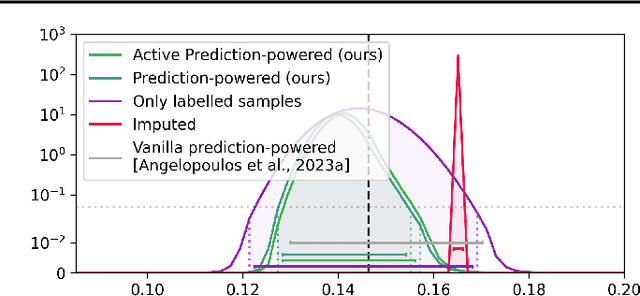
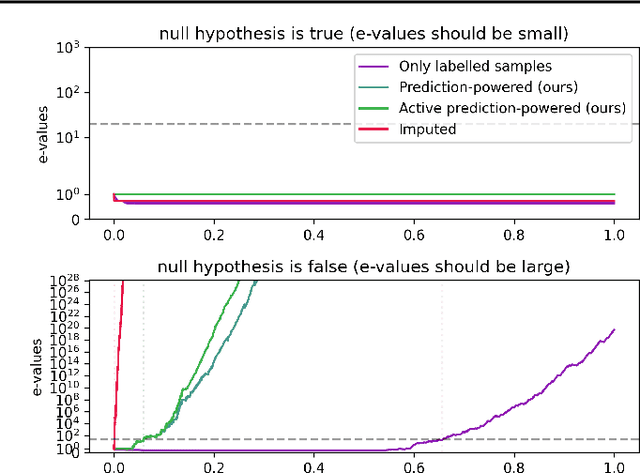
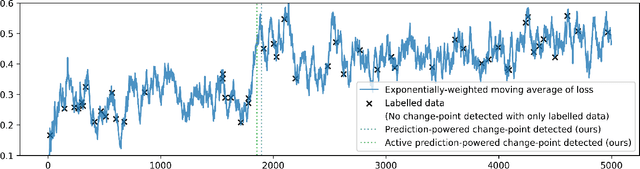
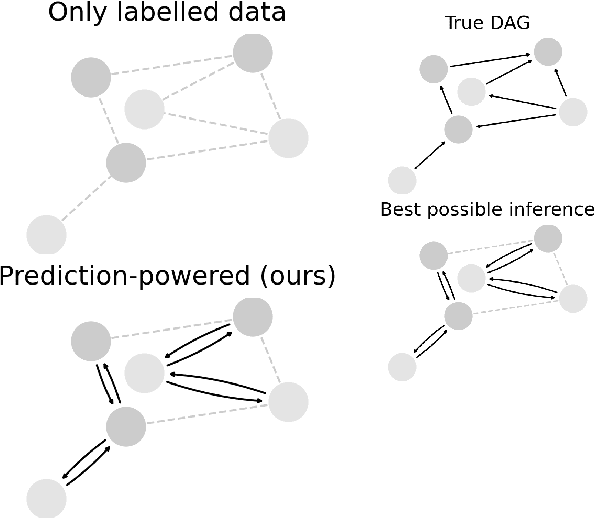
Quality statistical inference requires a sufficient amount of data, which can be missing or hard to obtain. To this end, prediction-powered inference has risen as a promising methodology, but existing approaches are largely limited to Z-estimation problems such as inference of means and quantiles. In this paper, we apply ideas of prediction-powered inference to e-values. By doing so, we inherit all the usual benefits of e-values -- such as anytime-validity, post-hoc validity and versatile sequential inference -- as well as greatly expand the set of inferences achievable in a prediction-powered manner. In particular, we show that every inference procedure that can be framed in terms of e-values has a prediction-powered counterpart, given by our method. We showcase the effectiveness of our framework across a wide range of inference tasks, from simple hypothesis testing and confidence intervals to more involved procedures for change-point detection and causal discovery, which were out of reach of previous techniques. Our approach is modular and easily integrable into existing algorithms, making it a compelling choice for practical applications.
Strategic Conformal Prediction
Nov 03, 2024When a machine learning model is deployed, its predictions can alter its environment, as better informed agents strategize to suit their own interests. With such alterations in mind, existing approaches to uncertainty quantification break. In this work we propose a new framework, Strategic Conformal Prediction, which is capable of robust uncertainty quantification in such a setting. Strategic Conformal Prediction is backed by a series of theoretical guarantees spanning marginal coverage, training-conditional coverage, tightness and robustness to misspecification that hold in a distribution-free manner. Experimental analysis further validates our method, showing its remarkable effectiveness in face of arbitrary strategic alterations, whereas other methods break.
Generalization Bounds for Causal Regression: Insights, Guarantees and Sensitivity Analysis
May 15, 2024Many algorithms have been recently proposed for causal machine learning. Yet, there is little to no theory on their quality, especially considering finite samples. In this work, we propose a theory based on generalization bounds that provides such guarantees. By introducing a novel change-of-measure inequality, we are able to tightly bound the model loss in terms of the deviation of the treatment propensities over the population, which we show can be empirically limited. Our theory is fully rigorous and holds even in the face of hidden confounding and violations of positivity. We demonstrate our bounds on semi-synthetic and real data, showcasing their remarkable tightness and practical utility.