 Add to Chrome
 Add to Firefox
 Add to Edge
Depictions of Depression in Generative AI Video Models: A Preliminary Study of OpenAI's Sora 2
Mar 19, 2026
Generative video models are increasingly capable of producing complex depictions of mental health experiences, yet little is known about how these systems represent conditions like depression. This study characterizes how OpenAI's Sora 2 generative video model depicts depression and examines whether depictions differ between the consumer App and developer API access points. We generated 100 videos using the single-word prompt "Depression" across two access points: the consumer App (n=50) and developer API (n=50). Two trained coders independently coded narrative structure, visual environments, objects, figure demographics, and figure states. Computational features across visual aesthetics, audio, semantic content, and temporal dynamics were extracted and compared between modalities. App-generated videos exhibited a pronounced recovery bias: 78% (39/50) featured narrative arcs progressing from depressive states toward resolution, compared with 14% (7/50) of API outputs. App videos brightened over time (slope = 2.90 brightness units/second vs. -0.18 for API; d = 1.59, q < .001) and contained three times more motion (d = 2.07, q < .001). Across both modalities, videos converged on a narrow visual vocabulary and featured recurring objects including hoodies (n=194), windows (n=148), and rain (n=83). Figures were predominantly young adults (88% aged 20-30) and nearly always alone (98%). Gender varied by access point: App outputs skewed male (68%), API outputs skewed female (59%). Sora 2 does not invent new visual grammars for depression but compresses and recombines cultural iconographies, while platform-level constraints substantially shape which narratives reach users. Clinicians should be aware that AI-generated mental health video content reflects training data and platform design rather than clinical knowledge, and that patients may encounter such content during vulnerable periods.

Automated Fabrication of Magnetic Soft Microrobots
Apr 08, 2025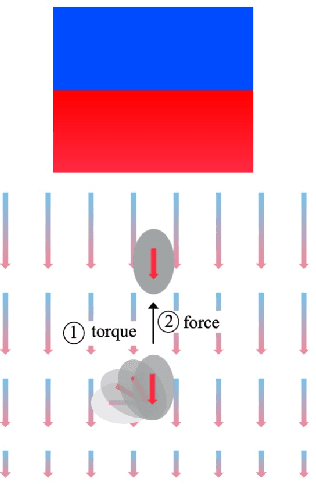
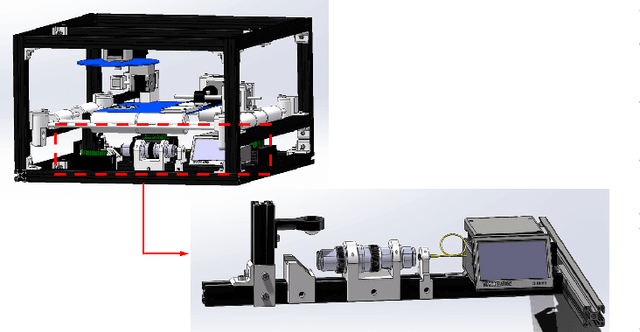
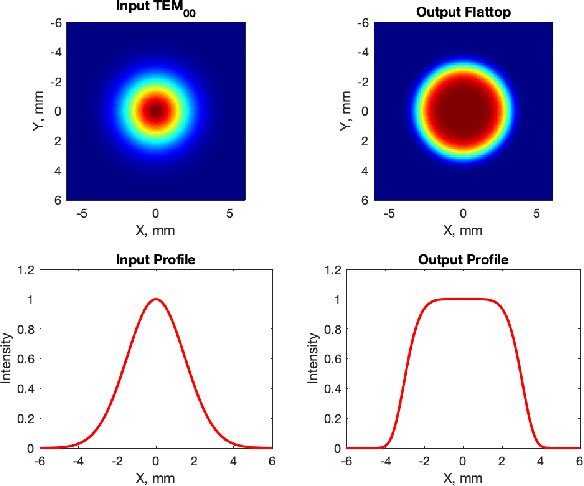
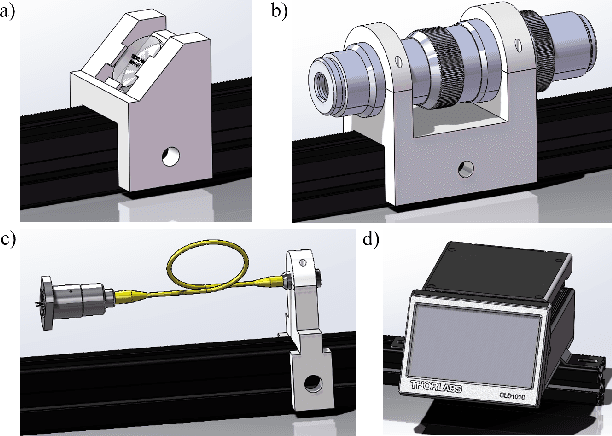
The advent of 3D printing has revolutionized many industries and has had similar improvements for soft robots. However, many challenges persist for these functional devices. Magnetic soft robots require the addition of magnetic particles that must be correctly oriented. There is a significant gap in the automated fabrication of 3D geometric structures with 3D magnetization direction. A fully automated 3D printer was designed to improve accuracy, speed, and reproducibility. This design was able to achieve a circular spot size (voxels) of 1.6mm in diameter. An updated optical system can improve the resolution to a square spot size of 50$\mu$m by 50$\mu$m. The new system achieves higher resolution designs as shown through magneto-mechanical simulations. Various microrobots including 'worm', 'gripper' and 'zipper' designs are evaluated with the new spot size.