 Add to Chrome
 Add to Firefox
 Add to Edge
Robust Reputation-Driven Crowdsourced Federated Learning
Aug 11, 2026
Crowdsourced Federated Learning (CrowdFL) extends traditional federated learning by enabling open and heterogeneous participation through a crowdsourcing paradigm. In this setting, reputation-driven incentive mechanisms are commonly employed to guide worker selection and enhance trustworthiness. While such approaches improve participant reliability, existing frameworks largely overlook the quantification of their robustness against stealthy adversaries, particularly those capable of evading standard detection mechanisms. To fill this gap, this paper proposes R2CFL, a robust reputation-driven CrowdFL framework. R2CFL introduces a robust reputation model coupled with a nearest neighbor mixing (R2-NNM) defense mechanism that links reputation evolution with the filtering of updates during aggregation. The proposed mechanism prevents stealthy attackers from gradually accumulating trust and influencing future tasks. Experimental results demonstrate that R2-NNM matches or surpasses state-of-the-art Byzantine-robust and backdoor defense mechanisms against adaptive attackers. Furthermore, when integrated with existing detect-and-filter defenses, the proposed reputation model faithfully captures the statistical robustness of the underlying defense by producing reputation scores that closely reflect its true positive and false positive characteristics.

TACTIC-KG: Toward Small Agent Teams for Cyber Threat Intelligence Knowledge Graph Construction
Jul 06, 2026Cyber Threat Intelligence (CTI) reports are predominantly unstructured, heterogeneous, and noisy, which limits their direct usability for automated analysis and reasoning. Cybersecurity Knowledge Graphs (CSKGs) provide a structured representation of adversarial entities, actions, and relations, but constructing such graphs from free-text CTI remains a challenge. Recent approaches rely on monolithic Large Language Models (LLMs) to perform end-to-end extraction and completion, leading to high cost, limited controllability, and unstable performance. This paper introduces TACTIC-KG, an agentic framework for CSKG construction that decomposes the task into modular, specialized LLM agents responsible for extraction, typing, verification, and curation. Using lightweight models (3B--8B), TACTIC-KG improves stability, recall, and graph consistency while reducing deployment cost. We implement and evaluate TACTIC-KG against recent state-of-the-art systems. Experiments on human-annotated CTI reports show that agent specialization consistently outperforms larger monolithic in-context-learning (ICL) baselines in extraction F1-score, typing accuracy, and structural graph similarity.
Anomalous Communications Detection in IoT Networks Using Sparse Autoencoders
Dec 26, 2019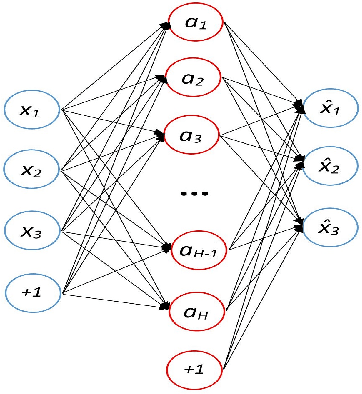
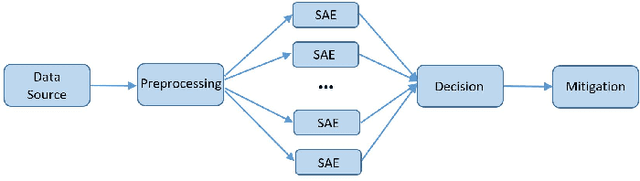
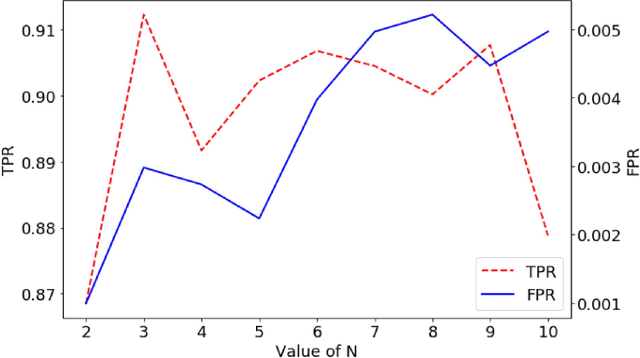
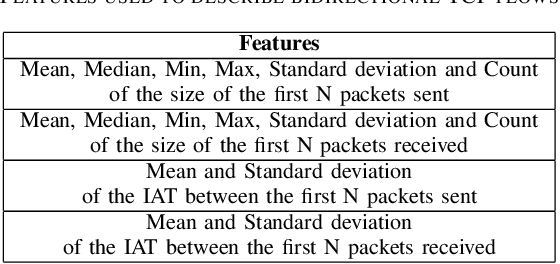
Nowadays, IoT devices have been widely deployed for enabling various smart services, such as, smart home or e-healthcare. However, security remains as one of the paramount concern as many IoT devices are vulnerable. Moreover, IoT malware are constantly evolving and getting more sophisticated. IoT devices are intended to perform very specific tasks, so their networking behavior is expected to be reasonably stable and predictable. Any significant behavioral deviation from the normal patterns would indicate anomalous events. In this paper, we present a method to detect anomalous network communications in IoT networks using a set of sparse autoencoders. The proposed approach allows us to differentiate malicious communications from legitimate ones. So that, if a device is compromised only malicious communications can be dropped while the service provided by the device is not totally interrupted. To characterize network behavior, bidirectional TCP flows are extracted and described using statistics on the size of the first N packets sent and received, along with statistics on the corresponding inter-arrival times between packets. A set of sparse autoencoders is then trained to learn the profile of the legitimate communications generated by an experimental smart home network. Depending on the value of N, the developed model achieves attack detection rates ranging from 86.9% to 91.2%, and false positive rates ranging from 0.1% to 0.5%.