 Add to Chrome
 Add to Firefox
 Add to Edge
Task-Oriented Wireless Transmission of 3D Point Clouds: Geometric Versus Semantic Robustness
Mar 13, 2026
Wireless transmission of high-dimensional 3D point clouds (PCs) is increasingly required in industrial collaborative robotics systems. Conventional compression methods prioritize geometric fidelity, although many practical applications ultimately depend on reliable task-level inference rather than exact coordinate reconstruction. In this paper, we propose an end-to-end semantic communication framework for wireless 3D PC transmission and conduct a systematic study of the relationship between geometric reconstruction fidelity and semantic robustness under channel impairments. The proposed architecture jointly supports geometric recovery and object classification from a shared transmitted representation, enabling direct comparison between coordinate-level and task-level sensitivity to noise. Experimental evaluation on a real industrial dataset reveals a pronounced asymmetry: semantic inference remains stable across a broad signal-to-noise ratio (SNR) range even when geometric reconstruction quality degrades significantly. These results demonstrate that reliable task execution does not require high-fidelity geometric recovery and provide design insights for task-oriented wireless perception systems in bandwidth- and power-constrained industrial environments.

Scalability and Sample Efficiency Analysis of Graph Neural Networks for Power System State Estimation
Mar 02, 2023
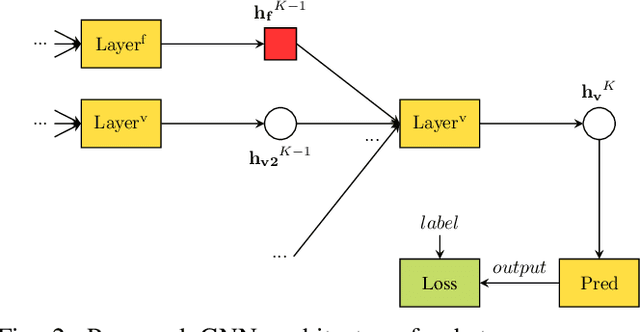


Data-driven state estimation (SE) is becoming increasingly important in modern power systems, as it allows for more efficient analysis of system behaviour using real-time measurement data. This paper thoroughly evaluates a phasor measurement unit-only state estimator based on graph neural networks (GNNs) applied over factor graphs. To assess the sample efficiency of the GNN model, we perform multiple training experiments on various training set sizes. Additionally, to evaluate the scalability of the GNN model, we conduct experiments on power systems of various sizes. Our results show that the GNN-based state estimator exhibits high accuracy and efficient use of data. Additionally, it demonstrated scalability in terms of both memory usage and inference time, making it a promising solution for data-driven SE in modern power systems.
Supporting Future Electrical Utilities: Using Deep Learning Methods in EMS and DMS Algorithms
Mar 01, 2023


Electrical power systems are increasing in size, complexity, as well as dynamics due to the growing integration of renewable energy resources, which have sporadic power generation. This necessitates the development of near real-time power system algorithms, demanding lower computational complexity regarding the power system size. Considering the growing trend in the collection of historical measurement data and recent advances in the rapidly developing deep learning field, the main goal of this paper is to provide a review of recent deep learning-based power system monitoring and optimization algorithms. Electrical utilities can benefit from this review by re-implementing or enhancing the algorithms traditionally used in energy management systems (EMS) and distribution management systems (DMS).