 Add to Chrome
 Add to Firefox
 Add to Edge
DreamSat-Pose: Spacecraft Pose Estimation from Single-View 3D Reconstructions and Learned 2D-3D Feature Matching
Jul 15, 2026
6-DoF pose estimation is a critical task in autonomous rendezvous and proximity operations. In the case of an unknown target, this task becomes challenging as it shall be paired with the reconstruction of the target shape model. In this article, we propose a novel framework for single-shot shape and pose estimation of unknown spacecraft objects. Given a single image, we first reconstruct a 3D shape model of the target, then estimate the relative six-degrees-of-freedom pose by learning dense 2D-3D correspondences. The image features are extracted using a frozen DINOv3 vision transformer, while the geometric features are computed from the reconstructed point cloud using a trainable dynamic graph convolutional neural network encoder. A dual-stream transformer matcher refines descriptors through alternating self- and cross-attention, producing soft correspondences that are passed to a Perspective-$n$-Point solver for pose recovery. We evaluate the method on the SPE3R dataset and consider FoundationPose as a representative baseline for current state-of-the-art capabilities. Results show reliable pose estimates achieving 0.157 degrees mean pointing error using only a single image and reconstructed geometry, demonstrating strong generalization to unseen spacecraft.

DreamSat: Towards a General 3D Model for Novel View Synthesis of Space Objects
Oct 07, 2024
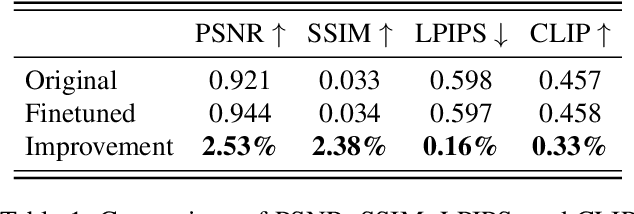

Novel view synthesis (NVS) enables to generate new images of a scene or convert a set of 2D images into a comprehensive 3D model. In the context of Space Domain Awareness, since space is becoming increasingly congested, NVS can accurately map space objects and debris, improving the safety and efficiency of space operations. Similarly, in Rendezvous and Proximity Operations missions, 3D models can provide details about a target object's shape, size, and orientation, allowing for better planning and prediction of the target's behavior. In this work, we explore the generalization abilities of these reconstruction techniques, aiming to avoid the necessity of retraining for each new scene, by presenting a novel approach to 3D spacecraft reconstruction from single-view images, DreamSat, by fine-tuning the Zero123 XL, a state-of-the-art single-view reconstruction model, on a high-quality dataset of 190 high-quality spacecraft models and integrating it into the DreamGaussian framework. We demonstrate consistent improvements in reconstruction quality across multiple metrics, including Contrastive Language-Image Pretraining (CLIP) score (+0.33%), Peak Signal-to-Noise Ratio (PSNR) (+2.53%), Structural Similarity Index (SSIM) (+2.38%), and Learned Perceptual Image Patch Similarity (LPIPS) (+0.16%) on a test set of 30 previously unseen spacecraft images. Our method addresses the lack of domain-specific 3D reconstruction tools in the space industry by leveraging state-of-the-art diffusion models and 3D Gaussian splatting techniques. This approach maintains the efficiency of the DreamGaussian framework while enhancing the accuracy and detail of spacecraft reconstructions. The code for this work can be accessed on GitHub (https://github.com/ARCLab-MIT/space-nvs).