 Add to Chrome
 Add to Firefox
 Add to Edge
K-Inverse-RFM: A Modified RFM that Bridges the Gap to Neural Networks for Data-Corrupted Mathematical Tasks
Jul 01, 2026
Recursive Feature Machines (RFMs) are a class of kernel machines that utilize the Average Gradient Outer Product (AGOP) as a mechanism for feature learning. They have been shown to effectively replicate the learning dynamics and feature representations of Feedforward Neural Networks (FNNs) across various settings. However, despite comparable capacity for feature learning and the similarities in the features they acquire, RFMs exhibit significantly lower performance than neural networks in certain data-corrupted scenarios. In this work, we investigate these limitations in mathematical problems. As a solution, we introduce a remarkably effective transformation applied to the training labels which promotes learning in noisy, complexly represented, and class-imbalanced data. This simple yet powerful adjustment enables RFMs to close the performance gap with FNNs and, in some cases, even surpass them.

Measuring Risk of Bias in Biomedical Reports: The RoBBR Benchmark
Nov 28, 2024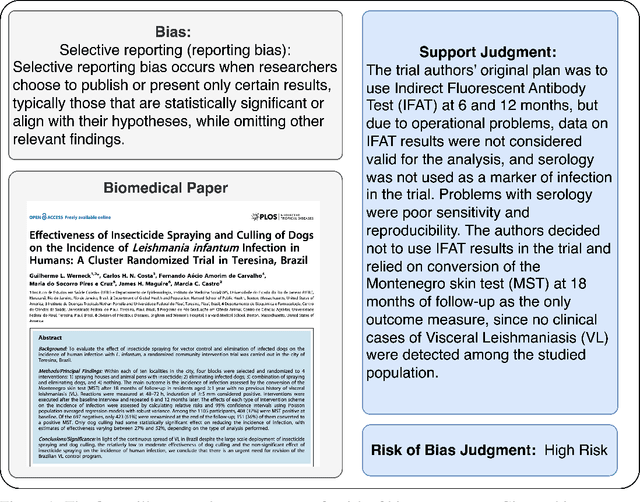

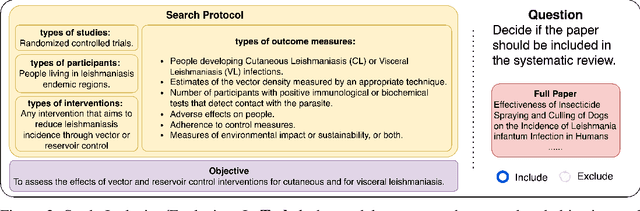
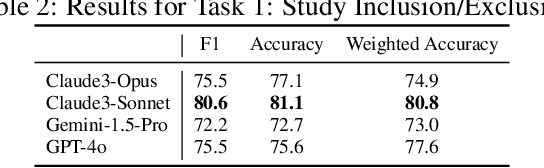
Systems that answer questions by reviewing the scientific literature are becoming increasingly feasible. To draw reliable conclusions, these systems should take into account the quality of available evidence, placing more weight on studies that use a valid methodology. We present a benchmark for measuring the methodological strength of biomedical papers, drawing on the risk-of-bias framework used for systematic reviews. The four benchmark tasks, drawn from more than 500 papers, cover the analysis of research study methodology, followed by evaluation of risk of bias in these studies. The benchmark contains 2000 expert-generated bias annotations, and a human-validated pipeline for fine-grained alignment with research paper content. We evaluate a range of large language models on the benchmark, and find that these models fall significantly short of expert-level performance. By providing a standardized tool for measuring judgments of study quality, the benchmark can help to guide systems that perform large-scale aggregation of scientific data. The dataset is available at https://github.com/RoBBR-Benchmark/RoBBR.