 Add to Chrome
 Add to Firefox
 Add to Edge
Trainable Spline Representations for Physics-Informed Learning
Jul 17, 2026
This work introduces Physics-Informed Splines (PI-Splines), a structured spline-based architecture for physics-informed learning. Instead of representing the solution of a differential equation with a neural network, PI-Splines directly parametrize the unknown field through a tensor-product B-spline expansion with trainable control coefficients. This formulation preserves the residual-based training paradigm of Physics-Informed Neural Networks while providing compact support, explicit smoothness control, analytical derivatives, and a direct geometric interpretation of the trainable parameters. When compatible with the spline representation, boundary conditions can be imposed strongly by fixing suitable boundary control coefficients. The proposed method is evaluated on several benchmark problems of increasing difficulty and compared with standard physics-informed frameworks under matched governing equations, collocation sets, loss terms, and optimization procedures, so as to isolate the effect of the approximation architecture. Numerical experiments show that PI-Splines provide a competitive and stable alternative to neural physics-informed architectures, particularly in settings where structured representations, locality, and parameter efficiency are desirable.

A Quadratic Order Reduction -- Gaussian Process Ordinary Differential Equation framework for the inference of Large Continuous Dynamical Systems
Jun 11, 2026Forecasting the evolution of complex dynamical systems remains a fundamentally challenging task, primarily due to pronounced nonlinear interactions, high-dimensional state spaces, and the concomitant requirement for rigorous and reliable uncertainty quantification. Contemporary reduced-order modelling (ROM) frameworks frequently exhibit inherent trade-offs among predictive accuracy, numerical stability, and interpretability, and thus often fail to achieve an optimal balance among these competing objectives. To address these limitations, we propose a framework for forecasting complex dynamical systems via a kernel autonomous ordinary differential equation approach based on Gaussian Processes and Quadratic Order Model Reduction. Our base method, the Gaussian Process Ordinary Differential Equations model, allows accurate short-term forecasting with uncertainty quantification, and it provably converges to the real autonomous equation in the smooth case. We integrate it with quadratic order reduced-order modelling and sphere projection for learning the latent dynamics efficiently while preserving stability. Numerical experiments demonstrate that our full model outperforms ROM forecasting methods such as Extended Dynamic Mode Decomposition, Bagging Optimised Dynamic Mode Decomposition and Linear and Nonlinear Disambiguation Optimisation in terms of accuracy or computational costs. These results demonstrate the potential of the framework as a robust and stable tool for forecasting complex dynamical systems with rigorous uncertainty quantification.
Evaluating passing decision-making in professional football: An enhanced MPNN approach to Receiver Selection
May 25, 2026The process of decision-making in football is characterized by a complex interplay between spatial positioning, opponent pressure, and player intent. This work introduces a Graph Neural Network (GNN) framework designed to predict Receiver Selection, the optimal passing target, by modeling on-field interactions as dynamic graphs. Each player is represented as a node with positional and contextual features, while potential passing lines form weighted edges characterized by distance, angle, and pressure metrics. A Message-Passing Neural Network (MPNN) has been developed and trained using a combination of tracking data and event data from professional matches, synchronized through a robust pipeline based on an optimized version of the Needleman-Wunsch Algorithm. The model achieves competitive accuracy in identifying the actual chosen receiver and state-of-the-art accuracy within its top three suggestions. Our model further offers quantification of each option's likelihood, threat, and creativity, enabling performance analysts to evaluate over 1,000 passes in seconds.
Model Order Reduction of Cerebrovascular Hemodynamics Using POD_Galerkin and Reservoir Computing_based Approach
Mar 19, 2026We investigate model order reduction (MOR) strategies for simulating unsteady hemodynamics within cerebrovascular systems, contrasting a physics-based intrusive approach with a data-driven non-intrusive framework. High-fidelity 3D Computational Fluid Dynamics (CFD) snapshots of an idealised basilar artery bifurcation are first compressed into a low-dimensional latent space using Proper Orthogonal Decomposition (POD). We evaluate the performance of a POD-Galerkin (POD-G) model, which projects the Navier-Stokes equations onto the reduced basis, against a POD-Reservoir Computing (POD-RC) model that learns the temporal evolution of coefficients through a recurrent architecture. A multi-harmonic and multi-amplitude training signal is introduced to improve training efficiency. Both methodologies achieve computational speed-ups on the order of 10^2 to 10^3 compared to full-order simulations, demonstrating their potential as efficient and accurate surrogates for predicting flow quantities such as wall shear stress.
Latent Dynamics Graph Convolutional Networks for model order reduction of parameterized time-dependent PDEs
Jan 16, 2026Graph Neural Networks (GNNs) are emerging as powerful tools for nonlinear Model Order Reduction (MOR) of time-dependent parameterized Partial Differential Equations (PDEs). However, existing methodologies struggle to combine geometric inductive biases with interpretable latent behavior, overlooking dynamics-driven features or disregarding spatial information. In this work, we address this gap by introducing Latent Dynamics Graph Convolutional Network (LD-GCN), a purely data-driven, encoder-free architecture that learns a global, low-dimensional representation of dynamical systems conditioned on external inputs and parameters. The temporal evolution is modeled in the latent space and advanced through time-stepping, allowing for time-extrapolation, and the trajectories are consistently decoded onto geometrically parameterized domains using a GNN. Our framework enhances interpretability by enabling the analysis of the reduced dynamics and supporting zero-shot prediction through latent interpolation. The methodology is mathematically validated via a universal approximation theorem for encoder-free architectures, and numerically tested on complex computational mechanics problems involving physical and geometric parameters, including the detection of bifurcating phenomena for Navier-Stokes equations. Code availability: https://github.com/lorenzotomada/ld-gcn-rom
BARNN: A Bayesian Autoregressive and Recurrent Neural Network
Jan 30, 2025

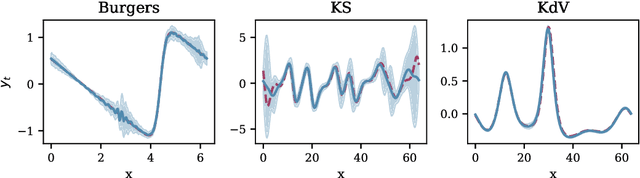

Autoregressive and recurrent networks have achieved remarkable progress across various fields, from weather forecasting to molecular generation and Large Language Models. Despite their strong predictive capabilities, these models lack a rigorous framework for addressing uncertainty, which is key in scientific applications such as PDE solving, molecular generation and Machine Learning Force Fields. To address this shortcoming we present BARNN: a variational Bayesian Autoregressive and Recurrent Neural Network. BARNNs aim to provide a principled way to turn any autoregressive or recurrent model into its Bayesian version. BARNN is based on the variational dropout method, allowing to apply it to large recurrent neural networks as well. We also introduce a temporal version of the "Variational Mixtures of Posteriors" prior (tVAMP-prior) to make Bayesian inference efficient and well-calibrated. Extensive experiments on PDE modelling and molecular generation demonstrate that BARNN not only achieves comparable or superior accuracy compared to existing methods, but also excels in uncertainty quantification and modelling long-range dependencies.
Optimal Transport-Based Displacement Interpolation with Data Augmentation for Reduced Order Modeling of Nonlinear Dynamical Systems
Nov 13, 2024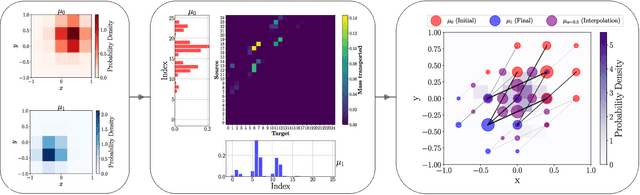
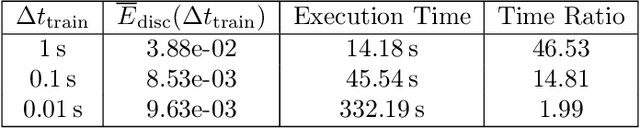
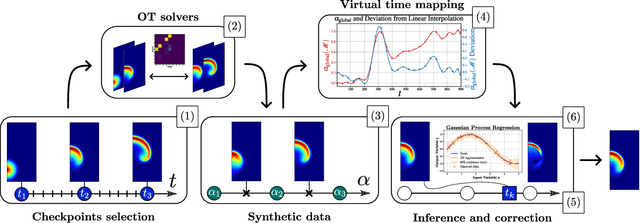
We present a novel reduced-order Model (ROM) that leverages optimal transport (OT) theory and displacement interpolation to enhance the representation of nonlinear dynamics in complex systems. While traditional ROM techniques face challenges in this scenario, especially when data (i.e., observational snapshots) is limited, our method addresses these issues by introducing a data augmentation strategy based on OT principles. The proposed framework generates interpolated solutions tracing geodesic paths in the space of probability distributions, enriching the training dataset for the ROM. A key feature of our approach is its ability to provide a continuous representation of the solution's dynamics by exploiting a virtual-to-real time mapping. This enables the reconstruction of solutions at finer temporal scales than those provided by the original data. To further improve prediction accuracy, we employ Gaussian Process Regression to learn the residual and correct the representation between the interpolated snapshots and the physical solution. We demonstrate the effectiveness of our methodology with atmospheric mesoscale benchmarks characterized by highly nonlinear, advection-dominated dynamics. Our results show improved accuracy and efficiency in predicting complex system behaviors, indicating the potential of this approach for a wide range of applications in computational physics and engineering.
Mesh-Informed Reduced Order Models for Aneurysm Rupture Risk Prediction
Oct 04, 2024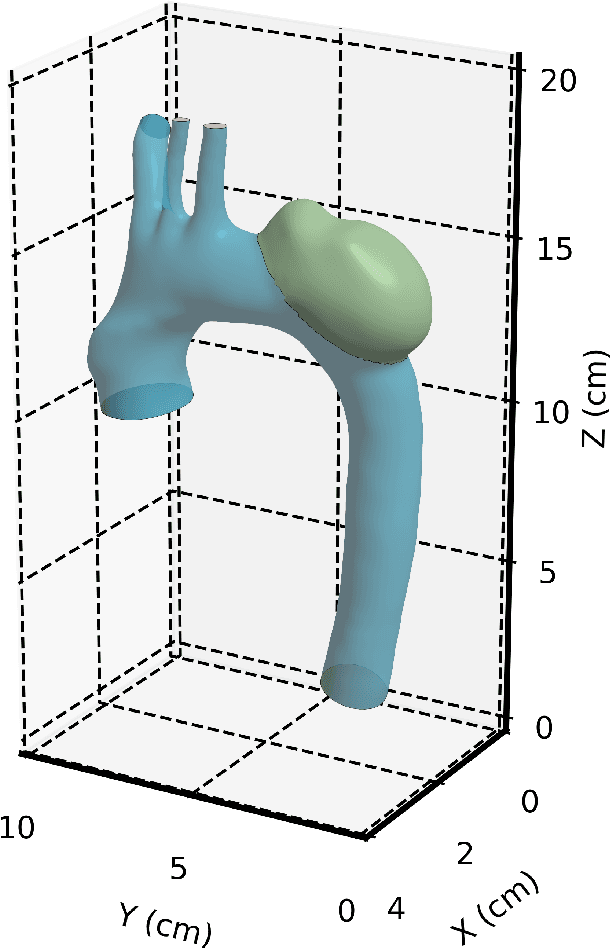
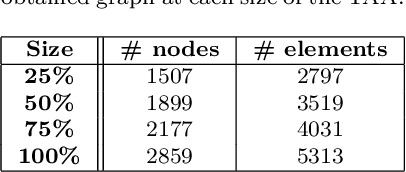
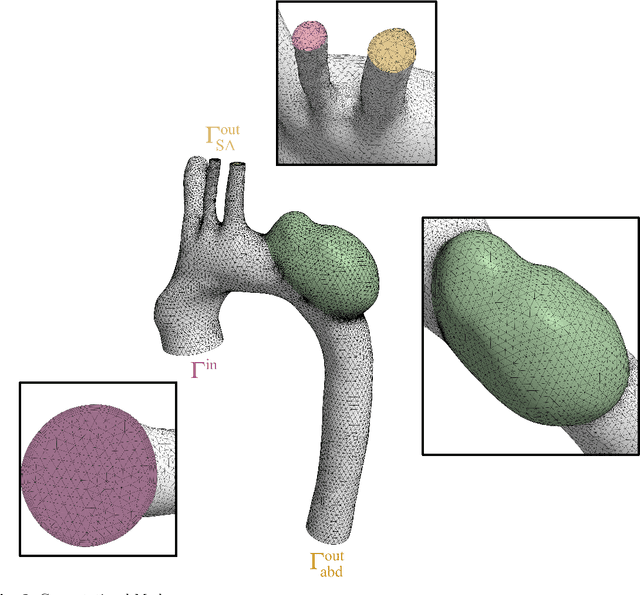
The complexity of the cardiovascular system needs to be accurately reproduced in order to promptly acknowledge health conditions; to this aim, advanced multifidelity and multiphysics numerical models are crucial. On one side, Full Order Models (FOMs) deliver accurate hemodynamic assessments, but their high computational demands hinder their real-time clinical application. In contrast, ROMs provide more efficient yet accurate solutions, essential for personalized healthcare and timely clinical decision-making. In this work, we explore the application of computational fluid dynamics (CFD) in cardiovascular medicine by integrating FOMs with ROMs for predicting the risk of aortic aneurysm growth and rupture. Wall Shear Stress (WSS) and the Oscillatory Shear Index (OSI), sampled at different growth stages of the abdominal aortic aneurysm, are predicted by means of Graph Neural Networks (GNNs). GNNs exploit the natural graph structure of the mesh obtained by the Finite Volume (FV) discretization, taking into account the spatial local information, regardless of the dimension of the input graph. Our experimental validation framework yields promising results, confirming our method as a valid alternative that overcomes the curse of dimensionality.
A Predictive Surrogate Model for Heat Transfer of an Impinging Jet on a Concave Surface
Feb 16, 2024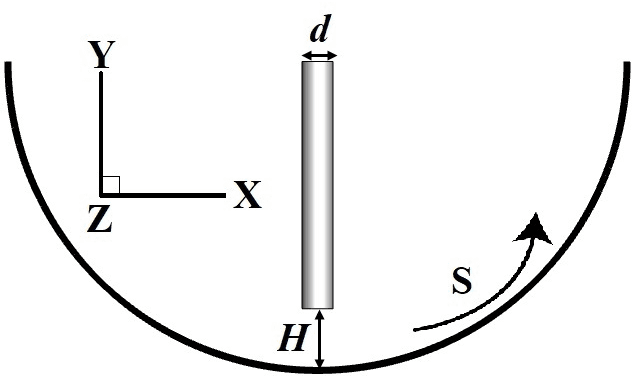
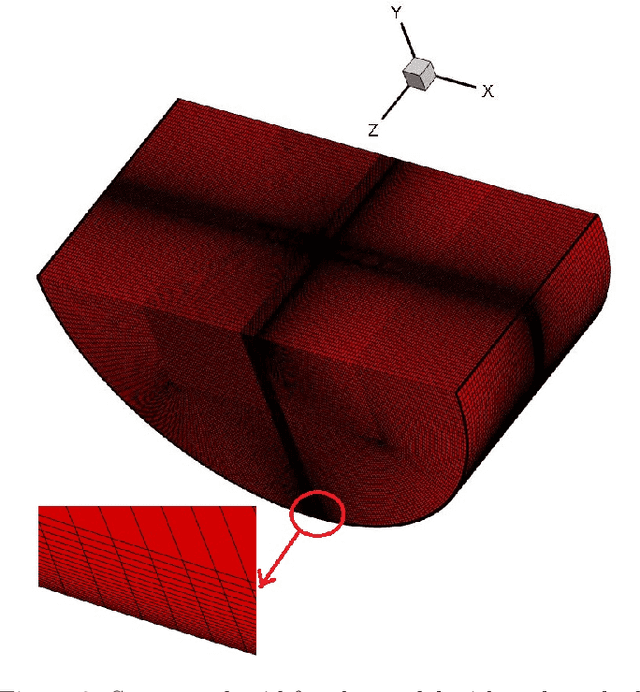
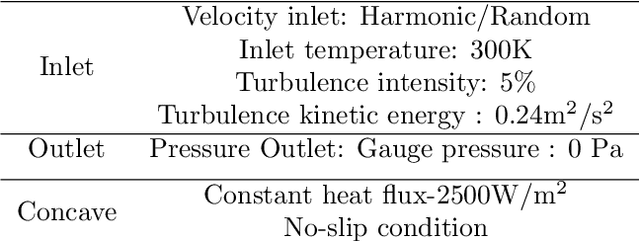
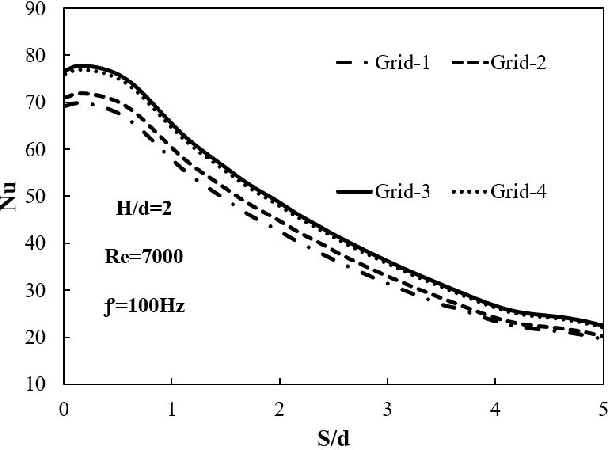
This paper aims to comprehensively investigate the efficacy of various Model Order Reduction (MOR) and deep learning techniques in predicting heat transfer in a pulsed jet impinging on a concave surface. Expanding on the previous experimental and numerical research involving pulsed circular jets, this investigation extends to evaluate Predictive Surrogate Models (PSM) for heat transfer across various jet characteristics. To this end, this work introduces two predictive approaches, one employing a Fast Fourier Transformation augmented Artificial Neural Network (FFT-ANN) for predicting the average Nusselt number under constant-frequency scenarios. Moreover, the investigation introduces the Proper Orthogonal Decomposition and Long Short-Term Memory (POD-LSTM) approach for random-frequency impingement jets. The POD-LSTM method proves to be a robust solution for predicting the local heat transfer rate under random-frequency impingement scenarios, capturing both the trend and value of temporal modes. The comparison of these approaches highlights the versatility and efficacy of advanced machine learning techniques in modelling complex heat transfer phenomena.
Deep Reinforcement Learning for the Heat Transfer Control of Pulsating Impinging Jets
Sep 25, 2023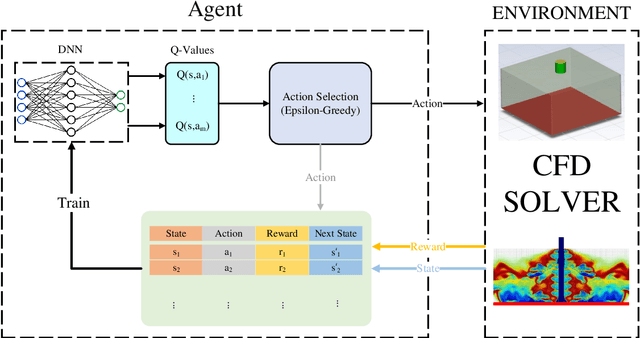

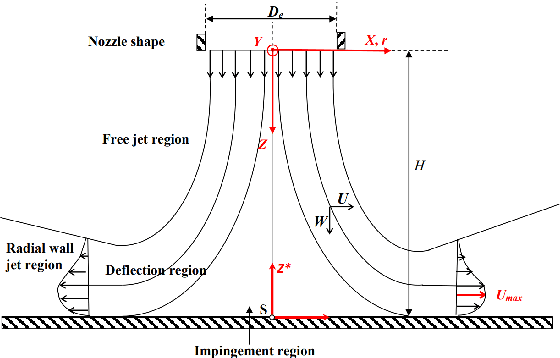
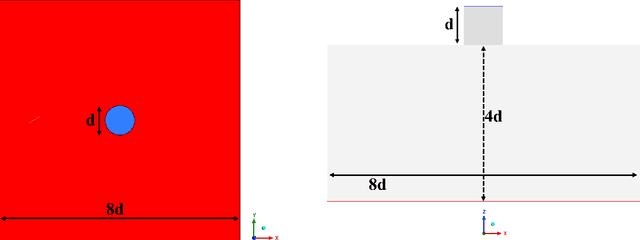
This research study explores the applicability of Deep Reinforcement Learning (DRL) for thermal control based on Computational Fluid Dynamics. To accomplish that, the forced convection on a hot plate prone to a pulsating cooling jet with variable velocity has been investigated. We begin with evaluating the efficiency and viability of a vanilla Deep Q-Network (DQN) method for thermal control. Subsequently, a comprehensive comparison between different variants of DRL is conducted. Soft Double and Duel DQN achieved better thermal control performance among all the variants due to their efficient learning and action prioritization capabilities. Results demonstrate that the soft Double DQN outperforms the hard Double DQN. Moreover, soft Double and Duel can maintain the temperature in the desired threshold for more than 98% of the control cycle. These findings demonstrate the promising potential of DRL in effectively addressing thermal control systems.